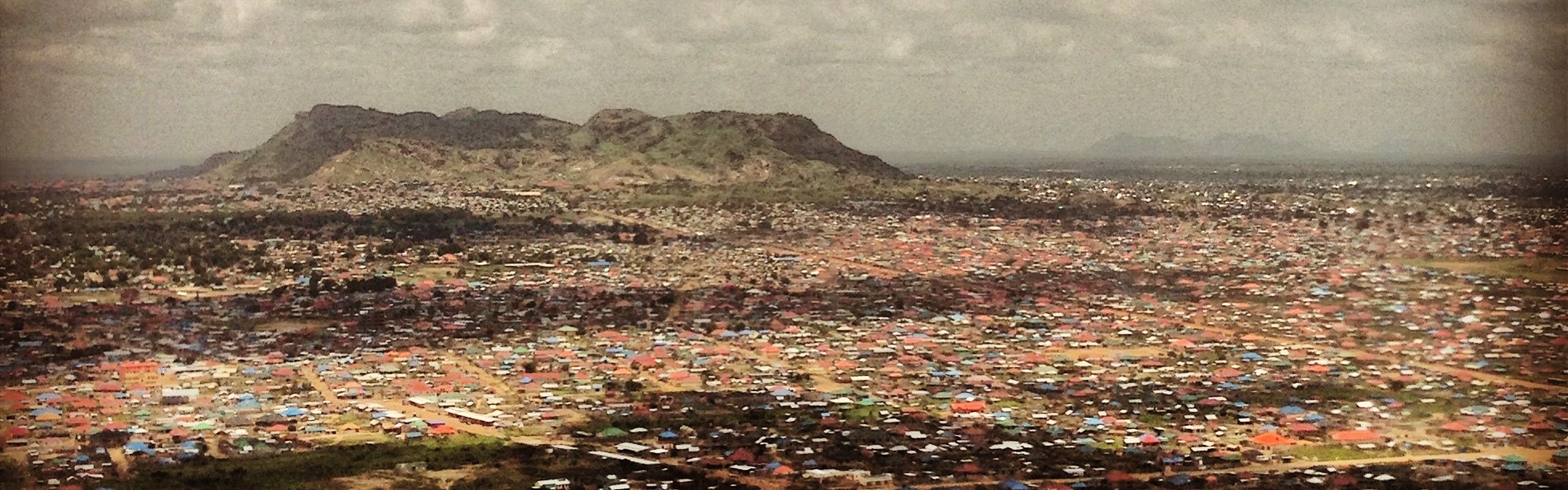

When I was told I was going to Nigeria, my colleague recommended “Nigeria: Dancing on the Brink” to better understand the country I would eventually call home. The book was written by John Campbell a former U.S. Ambassador to Nigeria. The book provided an overview of the political history of Nigeria and a glimpse into life on the ground.
Although Nigeria is a remarkable improvement to my time in the newly established South Sudan, Nigerians are constantly “dancing on the brink” and life in the most populous African country is never more than a few unfortunate events from disaster.
Since arriving in Nigeria, there has been a steady fuel crisis. Nigeria is one of the top oil producing nations on the African continent. The Niger Delta of Nigeria is a fertile and oil rich section of the country. Violence has been associated with the area as groups continue to fight over who controls the oil wells. However, Nigeria lacks any refining facilities so once the oil is extracted, it is sent abroad to be processed and then sent back to Nigeria. So every few weeks, there is a fuel crisis. Fuel lines can stretch for several kilometers and drivers wait for upwards of four or five hours to fill their tanks. So to relieve the outrageous lines, men with jerry cans stand on the side of the roads selling gasoline at ridiculous prices. It’s funny, they don’t stand in dark alleys or in secret locations but out in the open for all to see…When I ask why there is a fuel crisis, I am told that the ships are just off the coast. 🙂

And a fuel crisis affects the cost of goods, your ability to provide power at home and transportation. Nigeria lacks an efficient public transportation program so the average Nigerian is either forced to own a car or rely on taxis. During a fuel crisis, taxi drivers will raise the price by 200% to compensate for the time lost in queuing for fuel. It is ridiculous but I understand their desire to charge an emergency rate. I am one of the lucky ones in Nigeria. My organization provides housing for me in an apartment compound that has two generators. So, when the Power Holding Company of Nigeria (PHCN) has its constant power outages, the generator in the compound starts up and my power is quickly restored. However, for most of my colleagues and other Nigerians, there is no generator to provide instant relief to the 100 degree weather. And if you do have a generator, a fuel crisis only makes it more difficult to keep your refrigerator or air condition on.

I was recently told by a government minister that Nigeria is anti-climactic – there is a lot of buildup but nothing happens in the end. The 2015 elections was exactly that – a lot of back and forth and fear that Nigeria would plunge off the cliff. While the days after the elections were tensed and people encouraged to stay off the streets, in the end, Nigerians woke up after the announcement of the winner and went back to work.
And not to mention the numerous security agencies and government institutions that require a bribe to accomplish basic tasks (see my earlier blog on bribes in Nigeria https://fredayinafrica.wordpress.com/2015/04/08/what-do-you-have-for-me/). Life in Nigeria is not easy for its citizens. They are always dancing on the brink…

This week, IRI said goodbye to a former employee who will be remembered for his gentle spirit and quiet disposition. Moi Emmanuel Elia was IRI’s Administration and Procurement Officer in our Juba, South Sudan office. He was one of the nicest individuals I have met during my time with IRI. I was shocked to hear that he passed away on Monday night. It turns out he had a heart condition and eventually his heart had taken all it could handle. I will forever remember his smile and silent laugh.
I met Moi when I arrived in Juba in August 2013. He was the one responsible for making sure that IRI’s expatriate staff was up-to-day with the immigration office. When it came time for me to get my six month visa, Moi told me that I would need to accompany him to the immigration office. It was an extremely hot day and the immigration office was a series of buildings connected by an open courtyard. When we arrived at the office, the staff person we needed to see was at lunch so they told us to wait. Moi sat patiently waiting for the officer to return from lunch. His posture showed no stress or uncomfortableness with the weather. I on the other hand was drifting somewhere between the conscious world and the unconscious world. It was so hot and on this particular day, I was wearing a sports coat and tie. I wanted to return to the office but Moi suggested we wait. After nearly an hour, the officer returned, said a few words to Moi and directed us to the next office, where again we had to wait for another officer to return. We bounced between four or five offices that day to get my six month visa. However, after nearly two hours, we had the visa and were resting comfortably in the car. Once again, Moi showed no effect of the ordeal. I couldn’t wait to get back to the compound to talk about my experience (and the air condition).
I wished that I had more time to get to know Moi. Our time together ended abruptly when I, along with other IRI expats left the country on December 18, 2013. We chatted a few times through Skype and Facebook but never more than exchanging pleasantries and briefly catching up on life. It seems that he was taken from this earth way too soon but I have no doubt that God has a plan and I am delighted that my life crossed paths with Moi. He will be missed…

For months, I had complained to Sheila about how I miss hiking…while Abuja has various hills and mountains, hiking is just not a “thing” Nigerians do. I think the last time I went hiking was in 2013 in the Shenandoah Mountains in Virginia…I think it was Old Rag. I don’t profess to be a prolific hiker but I do love going out into the great outdoors and appreciating the views from high above. So after tolerating my complaints, Sheila planned a hiking trip in the Virunga Mountains of Rwanda. She choose a well laid out trail to the top of Mt. Bisoke, an active volcano that last erupted in 1957. What makes Mt. Bisoke so popular is that a lake has formed in the crater at the top of the volcanic mountain. In addition, the area is very popular for gorilla trekking. I had the pleasure of trekking gorillas in 2009 during my first trip to Rwanda.

Before the mud and the disappointment…
I was looking forward to the hike and being outdoors during my visit to Rwanda. In addition, I was excited to visit the Virunga Mountains because the scenery is breathtaking with the various peaks and constant fog. But I knew very little about Mt. Bisoke and didn’t know what to expect. Sheila sent me a few links about the hike and I did my own investigation. The reviews were mixed…most internet sources said the hike was strenuous but walk-able and would take about three to four hours round trip.

Musanze, the Rwandan town that borders the Virunga Mountains is about two hours from Kigali. The drive to Musanze is a pleasant one that takes you from the rolling hills of Kigali, along mountain ridges and through tea plantations. During sunset, the scene is picturesque as the sun paints the sky orange and blue. I have experienced this drive many times during my trips to Rwanda. In 2010 I traveled to the border town of Gisenyi that sits along the Rwandan and Congolese border. The town, about 30km from Musanze is a popular vacation spot for Rwandans and tourists as it sits on Lake Kivu. I made the drive again in 2013 and twice in 2015. It is one of my favorite rides in Rwanda.

Sheila and I arrived in Musanze on Sunday night. We had to be at the park office at 6:30am the next morning to register for our hike and pay the appropriate fees. As with most fees in East Africa, foreigners pay significant more than locals. Sheila paid 4000 francs (about $6) and I paid $75. The night before the hike, I spent several hours reading up on Mt. Bisoke. I was becoming concerned that maybe Sheila and I were biting off more than we could chew. People who had hiked the mountain talked about the steep and often muddy trail that led to the crater. A few pictures showed ankle deep mud in various locations on the trail. I was also concerned about the altitude. I was only use to hiking mountains that were only a few thousand feet above sea level. But Mt. Bisoke was over 12,000 feet and I was still adjusting to the altitude of Kigali (over 5,000 feet). But Sheila and I jumped right in and joined a group of 17 other people to “summit” Mt. Bisoke.
The group included
- Six Germans – a family of four and a couple that stayed at the same hotel with us in Musanze.
- Two South Africans who were living in the UK. The man was training for the London marathon.
- Four Americans – a Foreign Service officer based in Saudi Arabia and his two daughters and myself.
- Three Australians who were unique and different in their own way. The three women were residing in Uganda.
- A Ugandan who was traveling with the Australians
- And a Rwandan – Sheila

The hike started in a small village at the base of the mountain. It was a very cool and wet morning. We were instructed on what to do once we entered the park. We had Rwandan military with us to protect us from stray animals and other potential dangers that reside on the border of Rwanda and the Democratic Republic of the Congo (DRC). I am sure if it was a decision between me and a gorilla, I would be a dead man because the gorilla is much more profitable to the Rwandan economy! After we climbed the stone wall that separated the park from the village, the fun started. We were roughly at 8,000 feet above sea leave. April is rainy season and based on the fact that we were in a RAIN FOREST, you can imagine the state of the trail. It was oblivious which hikers did their research and which ones did not.
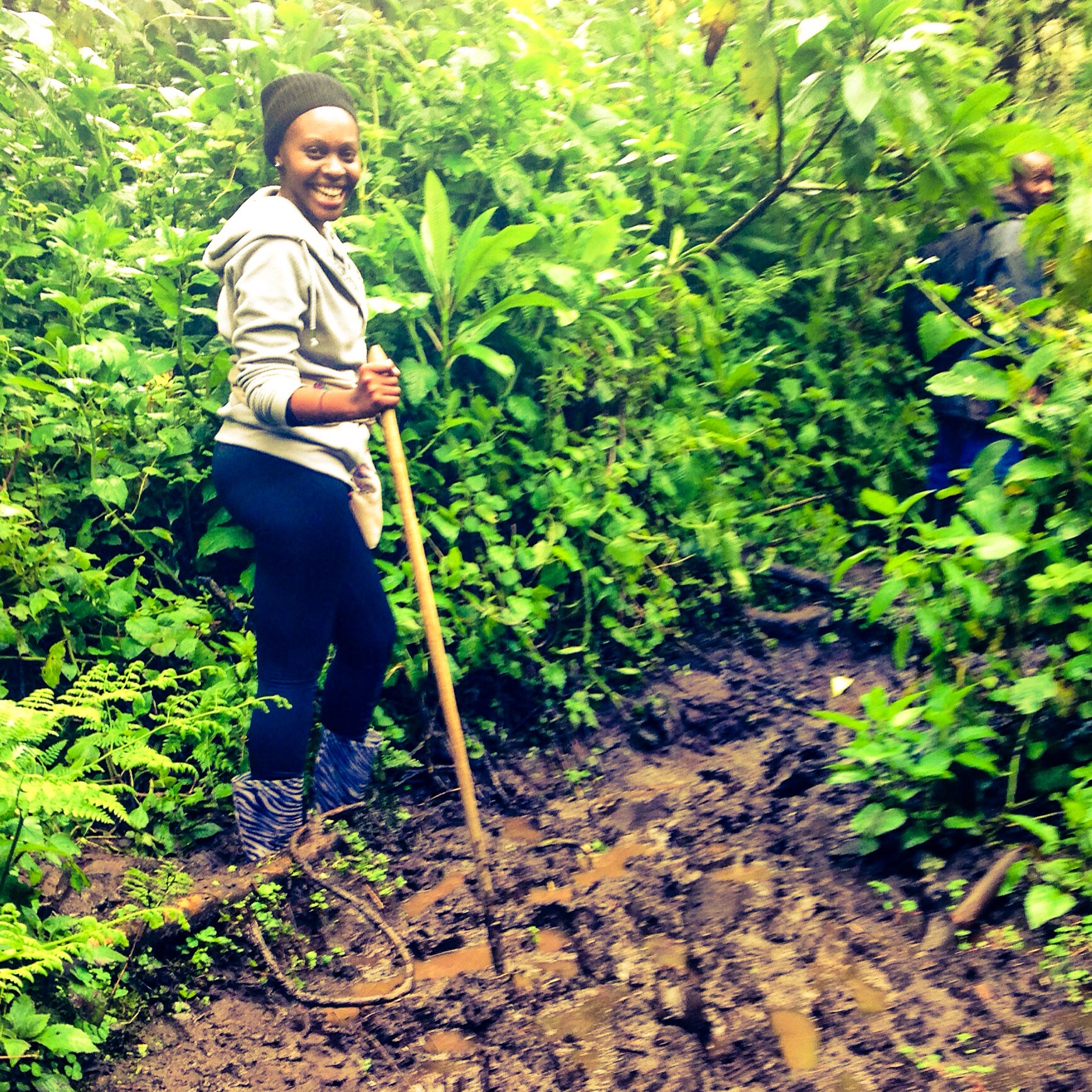
She was all smiles at the start…
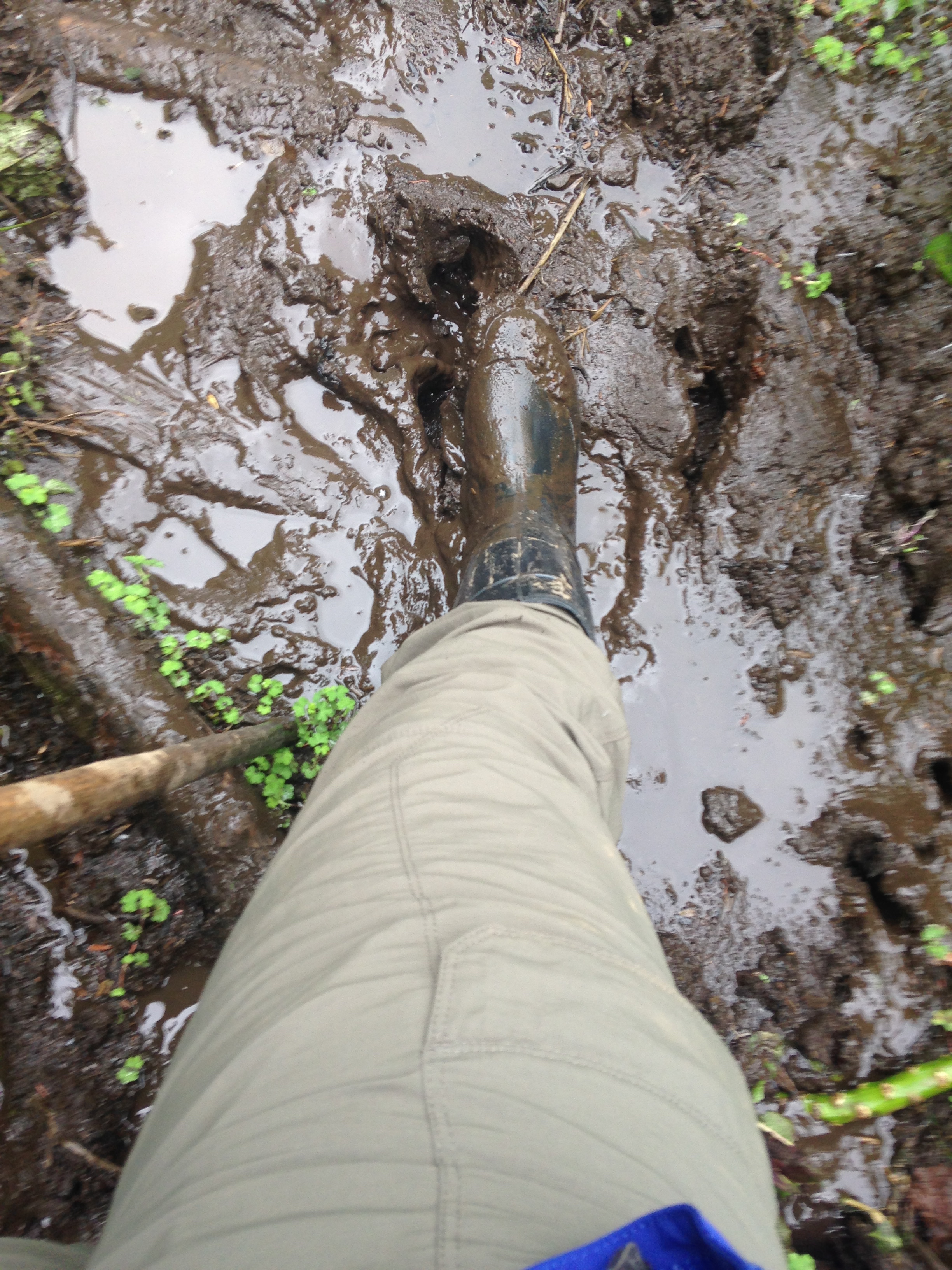
But the mud complicated the hike especially as we proceeded uphill.
Sheila and I were wearing gum boots (rain/fishing boots). Most of the team had a mixture of hiking boots and tennis shoes. It was going to be a long hike for those in hiking boots and tennis shoes. As we proceeded along the trail, it was difficult to stay upright because besides being extremely muddy, the trail didn’t switch back along the mountain side, it went straight uphill. We were also warned that the plants along the trail were dangerous and if you came in contact with the plants, you would experience a stinging sensation for five to ten minutes. I debated at the start of the hike getting a porter to carry my bag but I was thinking, “This is exercise, the more weight, the more calories I will burn.” Shortly after the hike started, I had Sheila communicate to one of the porters that I wanted his assistance. The porter’s name was Gentle and he was our greatest asset. He was helpful as we climbed through the mud, chopped down the plants that occasionally attacked and at one point applied an herbal remedy to my plant burns. If it was not for Gentle, Sheila and I would have been lost (and maybe stuck along the trail somewhere). He took exceptional care of us during the hike.

Our porter Gentle (with my bag) and Sheila marching through the mud.
An hour into the hike, there was talk among some of the hikers that they needed to turn back. The mud was too much to bear and one of the German hikers had destroyed his lightweight hiking trousers. One leg of the trousers looked as though he had walked through a shredder. In addition, two of the three Australian women were struggling along the trail. One in particular had decided to do the hike in shorts…even with the warning about the plants along the trail. Sheila and I were determined to continue and reach the lake. Four of the Germans (the mom and dad and the couple from our hotel) and two of the Australian women had decided they had had enough and proceeded to take the short cut back to the village where the cars were parked. When Sheila and I reached the midway point, we were bringing up the rear because the others had decided to return to the village. I joked that Sheila and I were late because we had to fight off gorillas along the trail. There were now 11 hikers in the group and the resting point was at 9,750 feet above sea level.

After a brief rest, we were on the move again. This time, the trail was entirely uphill. It was now around 12:30pm and we were told that the top was still two hours away. I was debating in my head if we could reach the summit and return to the village by night fall because we were slowly inching up the mountain. At this rate, it would be 5:00pm before we reached the top. Sheila had mentioned that her back was hurting so I decided to start fishing for an excuse for us to turn back. We approached a clearing high on the mountain and decided to take a break. I asked Sheila if she wanted to call it an end to the hike and head back. We were both struggling to move along the trail. After a ten minute debate, we decided that we would head back down the mountain. We were both disappointed but I also think we were relieved. At the same time, our armed guard received a call that the three Americans and two German boys were also retreating down the mountain. It made us feel a little better that five more people were joining us in our return to the village. As we proceeded down the hill, Sheila and I tried to encourage each other by saying that we had accomplished a lot. Sadly, we both wanted to reach the Crater Lake at the top of Mt. Bisoke. Just as we reached the village to find our car, the park ranger arrived and told us that only 4 people from our hike would make it to the top (it was now 2:30pm and the four people had yet to reached the lake). He said that in the rainy season, 85 percent of teams don’t make it to the top. His comments made us feel better about our decision to retreat back to the car. He also said that he was concerned whether they would make it back to the car before sundown.
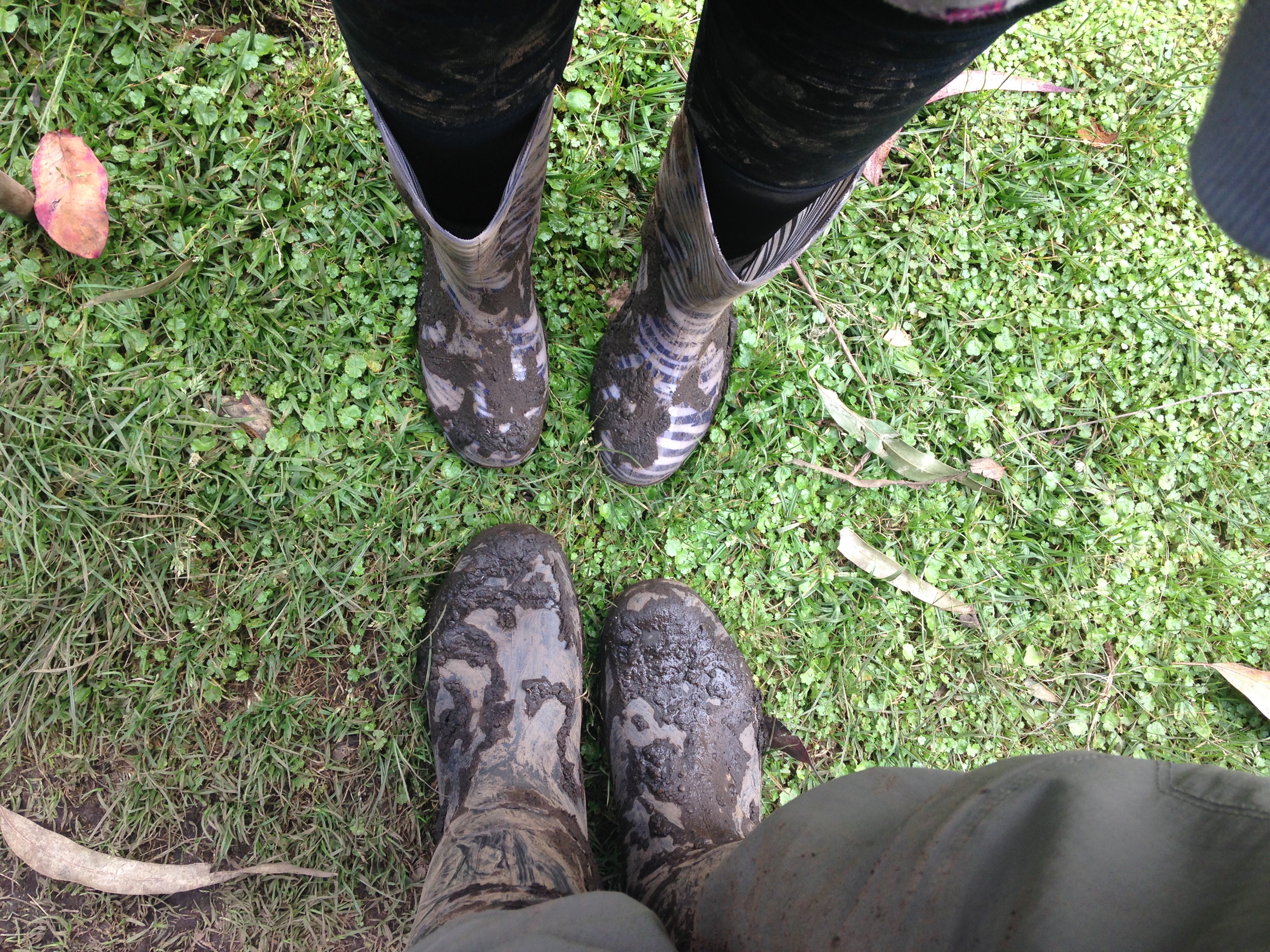
Mt. Bisoke was a difficult hike and in the rainy season it seemed also impossible to do in one day. Maybe one day I will attempt Mt. Bisoke again but I will do a better job of planning. Maybe hiking the mountain during Rwanda’s dry months (June – August) so I can increase my chances of making it to the crater! All in all it was a fun outing…with numerous lessons learned!
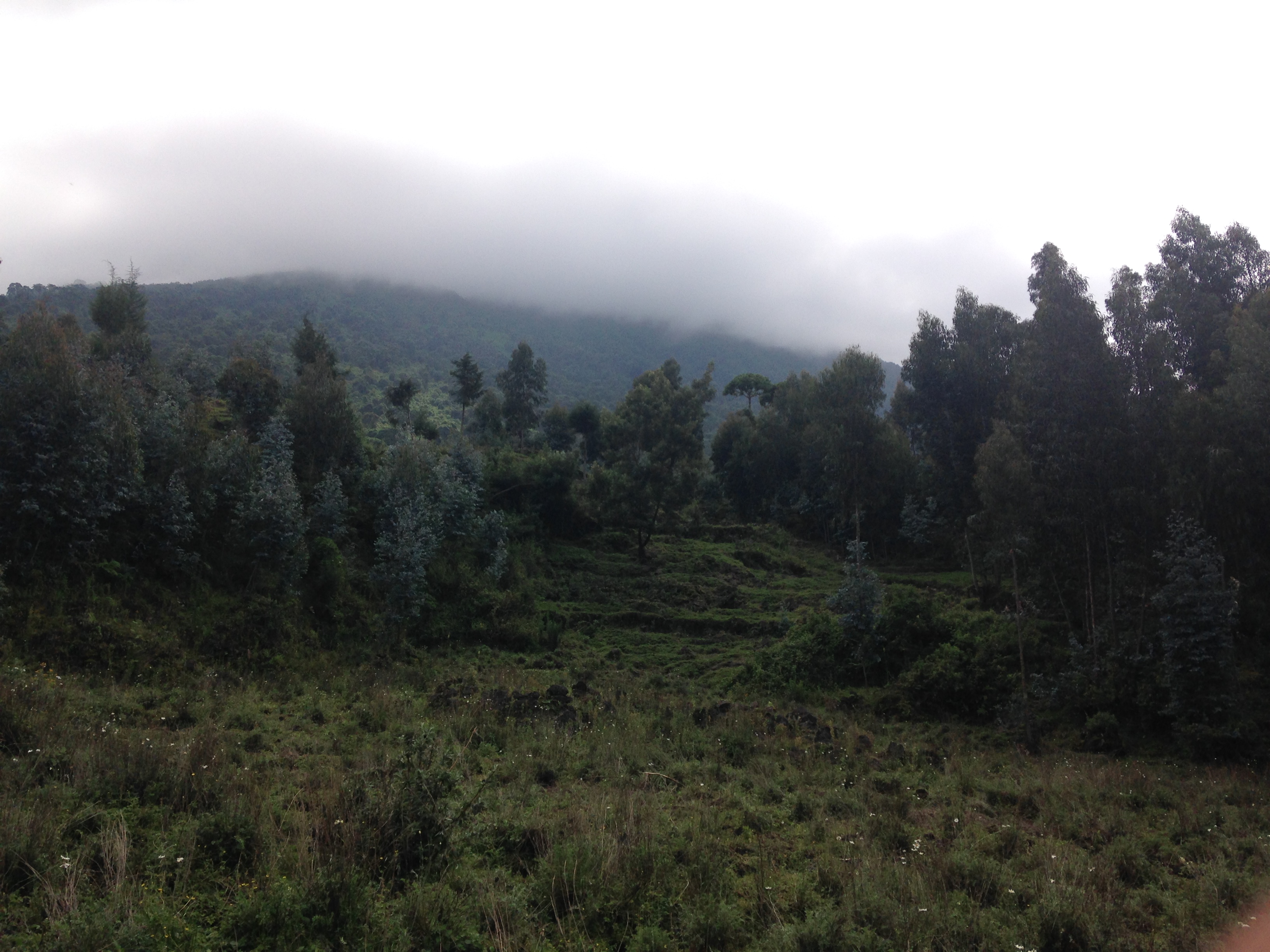
The top of Mt. Bisoke was covered in clouds by the time we reached the village.
To a Nigerian, this is a very common phrase. He or she will also be familiar with “what do you have for the boys?” These are common phrases for asking for money…and sadly, the color of your passport is usually indication of whether you will be asked for a bribe. The Abuja airport is full of land mines that must be cleared before you successfully board your plane. There are security agents inspecting your luggage but a bribe will help you clear the nuance quicker. The agents checking your passports before entering the waiting area will ask if you will “bless them” because as you know, it’s Easter weekend. And finally the security inspector, after checking your carrying on items asks, “Is there anything for me?” Corruption in Nigeria is a rampant problem and experiencing a shakedown is part of the course.
Once they see I have a blue passport, I usually get a pass. They glance at the passport than glance at me and say move along. But there are the occasions when I am asked “to bless them.” I normally play dumb. “Bless you, what do you mean? Should I pray for you?” And I have also learn the longer you stall, the less willing they are to pursue the bribe.
But the airport is not the only place where bribes are extracted. A few months ago, I was returning from a work trip in the Northeast when we were asked to pull to the shoulder after stopping at a police check. It turns out that our vehicle identification number (VIN) on our paperwork was one digit off. Clearly a clerical error when we registered the vehicle but to the police, this was an offense. We were told that we would have to pay 10,000 Naira (about $60 at the time) or have the car impounded. They never once promised to correct the error but only wanted the money so we could pass. After about an hour and several phone calls to high ranking officials, we were allowed to pass without paying the bribe. Sadly, this is a common occurrence for Nigerians and one of the reasons that many Nigerians voted for the president-elect. While he had a track record of violating human rights during his time as a military leader, he is known for his anti-corruption stance and bringing law and order to the country.
“Our country has now joined the community of nations that have used the ballot box to peacefully change an incumbent president in a free and fair election…” General Muhammadu Buhari, President-Elect, Nigeria
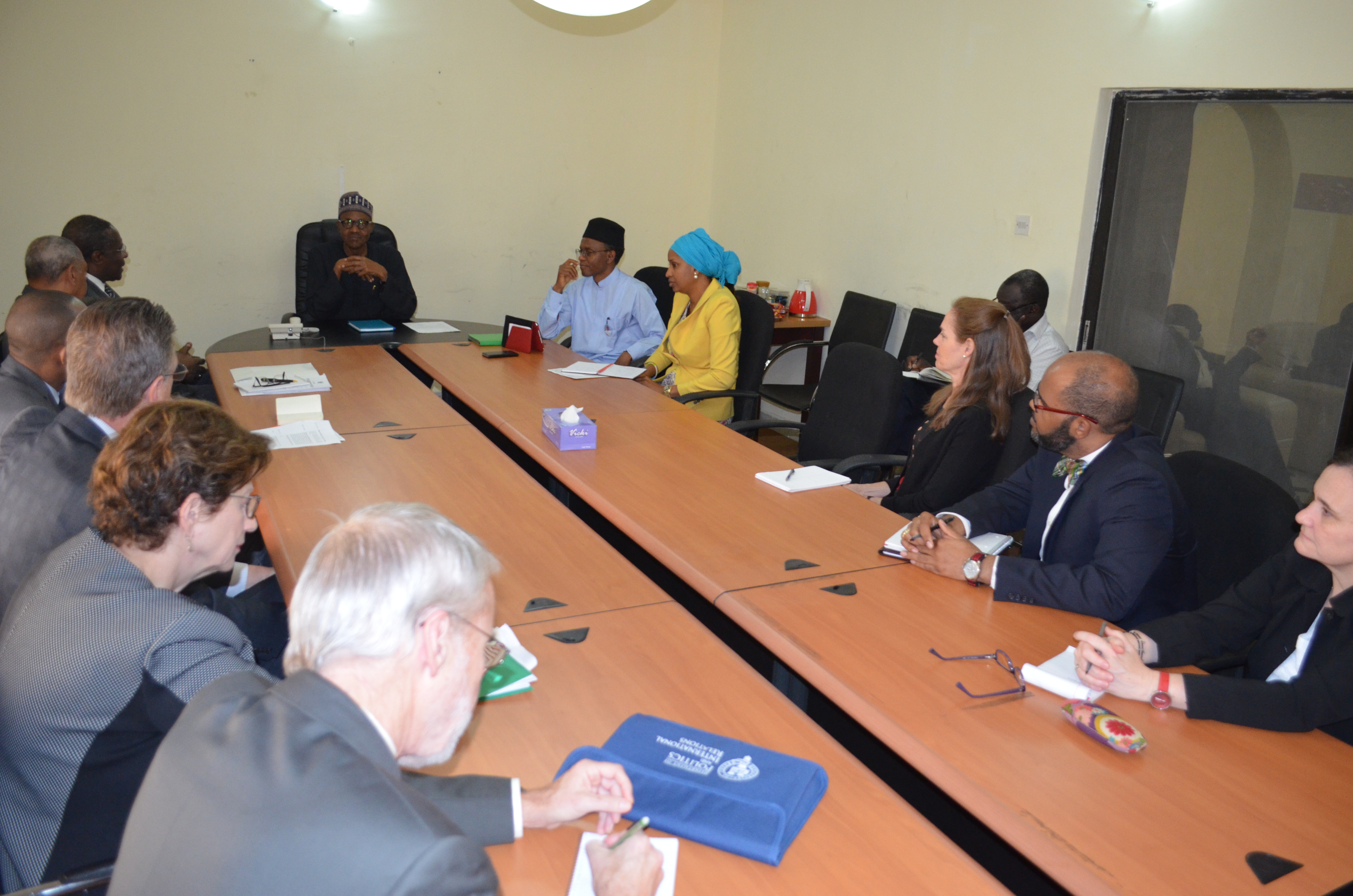
The above picture is from a meeting I attended with candidate General Buhari in January 2105.
This past weekend, Nigeria did the unthinkable, it deposed a sitting incumbent and surprisingly, everyone went to work on Wednesday. It was eerie driving home on Tuesday night as shops were closed, fuel stations, which had previously had fuel lines for as far as the eye could see were deserted and the streets were empty. People were fearfully what would happen once the president-elect was announced. But the announcement came and went and on Wednesday morning, Nigeria went back to normal. As I have previously said, the winner in this election is not only General Buhari but Nigerians who told the world that the individual vote matters and they can celebrate their triumphal feat. Thanks in large part to the Independent National Electoral Commission’s (INEC) decisions to require a permanent voter card that includes biometrics and an electronic smart card reader to recognize the card which significantly minimized ballot stuffing and voter registration manipulation.
General Buhari faces some significant challenges in the months and years ahead. While Boko Haram has struggled to regroup after the joint task force of Nigeria, Chad, Cameroon and Niger’s relentless attacks, the price of oil continues to drag down the economy and the country has struggled to make ends meet. General Buhari has also stated that he will take on corruption in Nigeria which is a HUGE task in a country that is constantly ranked as the most corrupt country on the continent. I have come to learn that corruption is like a disease, you have to deal with the root cause and not the symptoms. To tackle corruption he must first look at the people around him and then proceed to deal with the root causes.
Credit must also be given to President Goodluck Jonathan for gracious conceding to General Buhari and reinforcing the message that his election was not “worth the blood of Nigerians.” He has shown himself to be a statesman and willing to put his country first. It is difficult to admit defeat but it speaks of someone’s character when he is willing to put his country’s future before his personal ambitions.
Today is a day of celebration…Nigeria is maturing in its democracy and has shown other countries on the continent how to hold competitive presidential elections. As they say in Nigeria – Well-done-o!
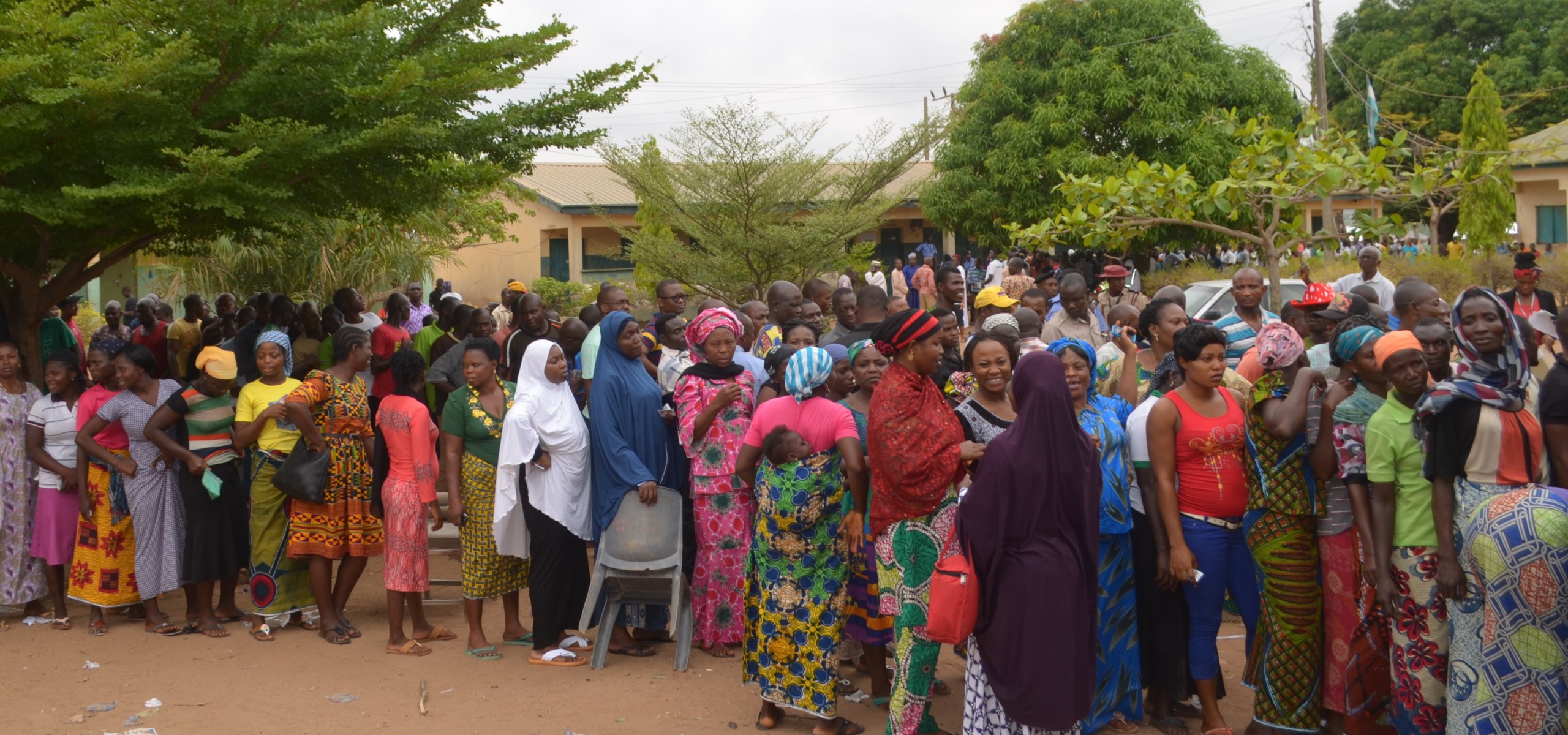
“What Should I Be Afraid Of?…Choosing My Leader Is In My Hand.” Bizun Aduwah, Kaduna State
On Saturday, Nigerians went to the polls to select the next leader of the most populous country on the African continent. It was a chaotic day as the new smart card readers used to verify voters failed in some polling units and delayed arrival of election materials forced the accreditation process to start late. Because of these issues, the election in some locations were pushed back until Sunday. The process tested the patience and strengthen of Nigerian voters but did not dampen their resolve.
Despite all the challenges, the people of Nigeria came out to vote. In polling units where there were no officials, the people regulated themselves and formed queues. They waited until officials from the Independent National Electoral Commission (INEC) arrived to set up the polling unit and provide instructions. The men and women of Nigeria would not be deterred by the mishaps of INEC. In some states, the queue at polling units was as far as the eye could see. They waited in 90 plus degree temperatures to cast their votes. And when the sun went down, they brought out their smart phones to shine their torches (flashlights) on the voting process. It was an exercise in resilience…

Regardless of the outcome, the people of Nigeria are the winners of the March 28 exercise. They showed the world that despite what is reported in the media, the people will not be deterred. Sadly, there was Election Day violence but it was isolated and quickly taken care of by Nigerian police and military. The country stood tall on Election Day and showed the strength of its people. When I arrived in Nigeria, I was told the country often finds its self on the edge of a cliff but each and every time the people find a way to bring Nigeria back from falling over. Now we wait to see how the people will respond to the results. But for this brief moment in time, let’s congratulate them for another step forward towards a full and inclusive democracy…


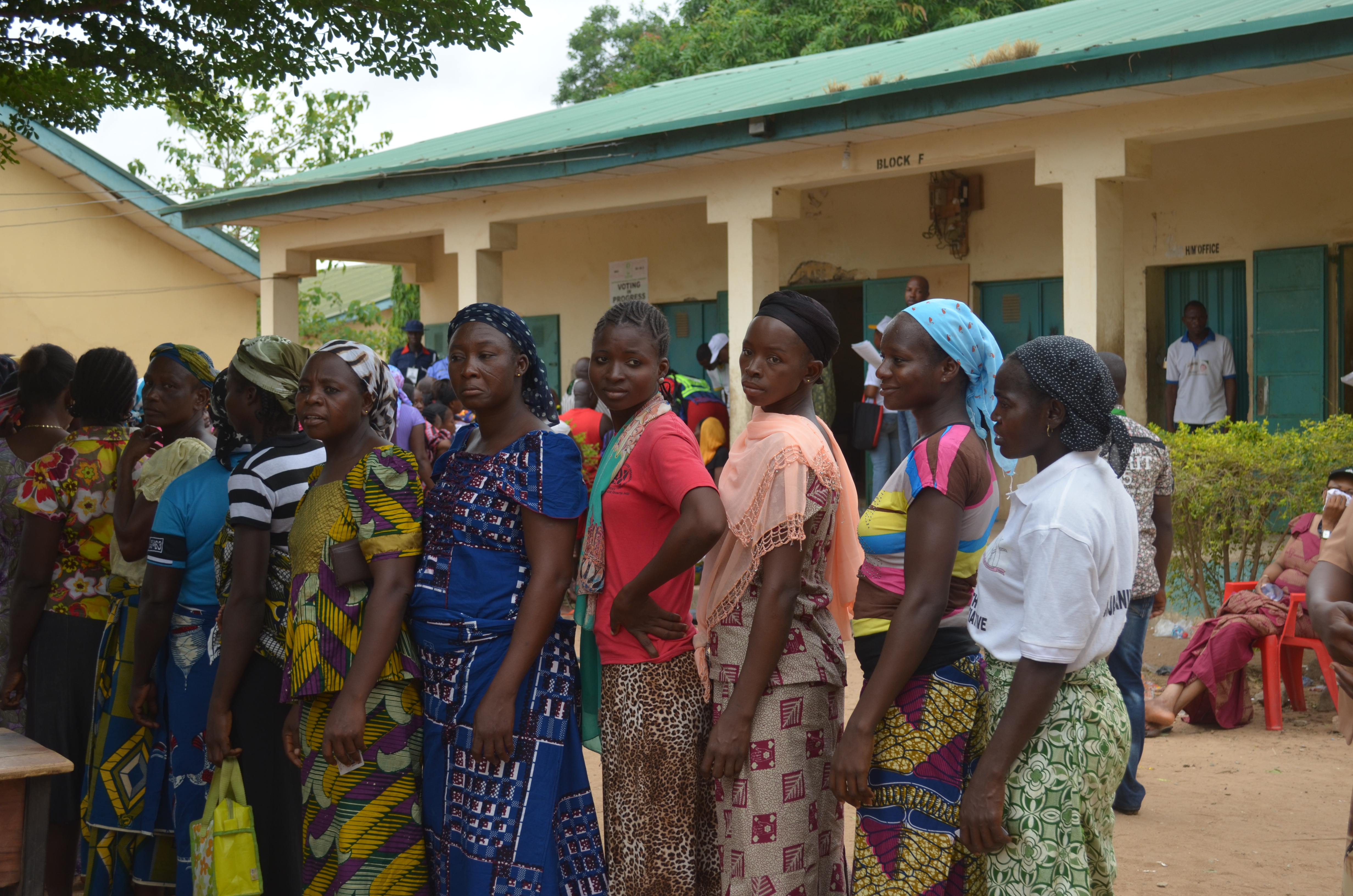
In this photo, Nigerian women present their voter’s card in the 2015 Presidential Election. They waited in the heat (and some in the rain) to cast their vote for the next leader of Nigeria. They are passionate about moving Nigeria forward and taking the next step towards a democratic Nigeria! Despite the delays, disorganization and heated tempers, these women waited until they were accredited by the Independent National Electoral Commission (INEC) to cast their vote. Women are making the difference in Nigeria.
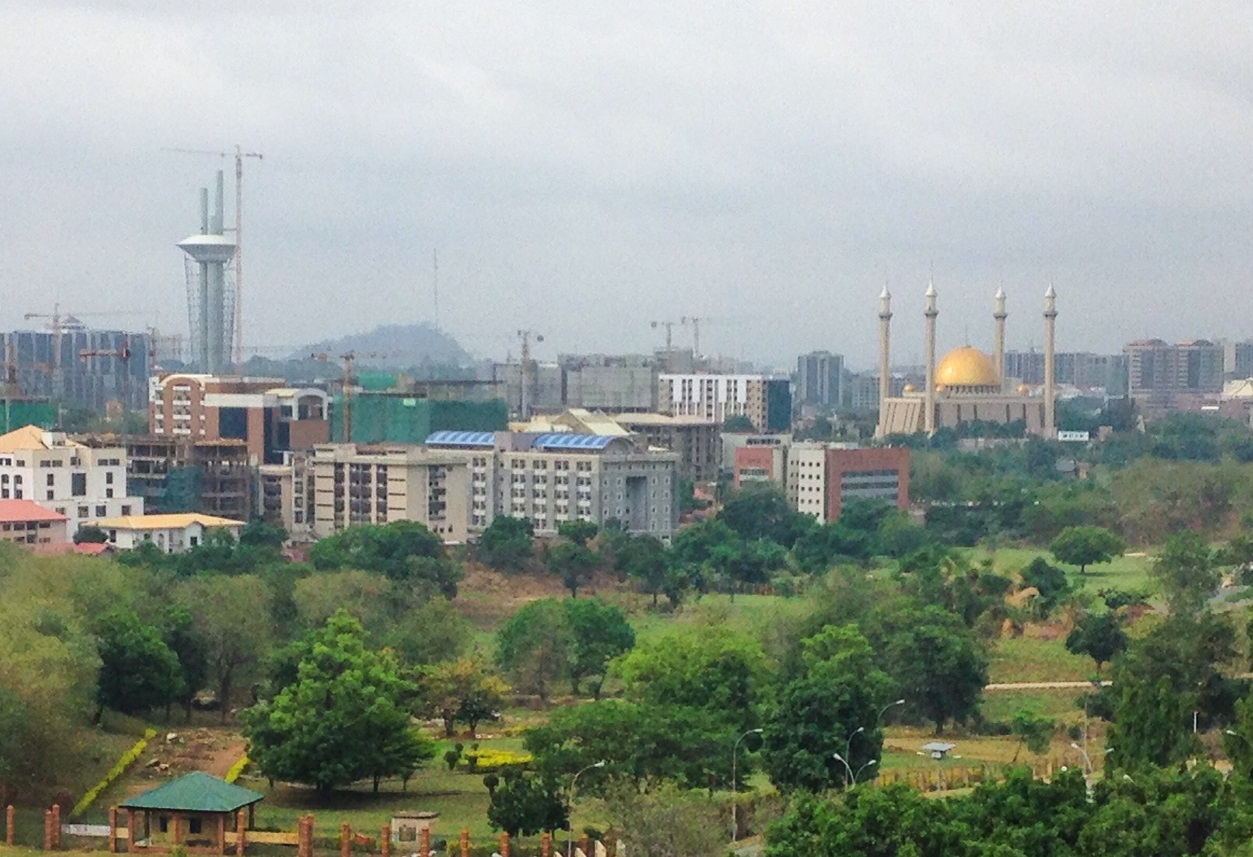
Today is Election Day in Nigeria! Over 55 million Nigerians are eligible to cast their vote for the next President of Nigeria. Will the people choose the ballot box or violence? The world is watching and waiting to see what will happen in Africa’s most populous country and one of the largest democracies in the world!

My most recent blog post to IRI’s DemocracySpeaks.org.
Since then, Nigeria has made significant strides in its efforts to hold credible elections. Despite the post-election violence that marred the 2011 elections, it was deemed by many organizations as a step in the right direction towards free and fair elections. IRI said the elections were “a major step forward in advancing Nigeria’s democracy.
In an effort to ensure that elections are fair and honest, and to guard against ballot stuffing and other fraudulent practices, political parties participating in the 2015 elections are allowed to appoint one person as their polling agent for each polling unit. There are nearly 120,000 polling units in Nigeria serving 68 million registered voters. These agents have a vital role to play in the election process. The parties’ agents guard against mistakes and willful manipulation of the voting process and the notes that agents take on Election Day play a fundamental role during the election tribunals that often follow elections. Nigeria still faces many of the same issues that plagued the 2007 and 2011 elections; however, the Independent National Electoral Commission (INEC) has been working to develop techniques such as a permanent voters card (PVC) and an electronic card reader that they hope will end election violations and guarantee a smooth voting process. In addition, INEC, NGOs and other civil society organizations have been working to ensure that voters and political parties are well versed in the new election procedures.
Seeking to ensure Nigeria continues to consolidate its vibrate democracy, IRI has been training and briefing polling agents in order to make that process easier, fairer, and more transparent. In 1998, IRI, in partnership with INEC, developed a Polling Agent Handbook that is distributed to thousands of polling agents trained each year. In 2014, IRI trained nearly 2,000 polling agents for two gubernatorial elections in Ekiti and Osun States. The handbook has been updated several times over the years as INEC and the National Assembly have made changes to the electoral process. The handbook provides the polling agent with an overview of the voting process and a checklist to use on Election Day. In addition to using these manuals, since January 2015, IRI has been working with INEC and political parties to brief polling agents on the new voting procedures in order to guarantee that parties are ready for the coming elections.
The six week postponement of the elections, now expected to take place on March 28, has enabled IRI to expand its polling agent briefings and, to date, IRI has trained approximately 10,000 agents throughout Nigeria and has plans to train thousands more over the next two weeks. In addition, IRI has trained additional representatives for all of the 26 political parties in Nigeria, who will in turn train their fellow party members. The two leading parties, the All Progressives Congress (APC) and Peoples Democratic Party (PDP), are conducting cascading briefings for polling agents at the ward and local government levels.
Polling agents are no longer an afterthought for political parties. Parties now recognize how important it is to have credible and well informed men and women serving on the frontlines on Election Day. These men and women have the opportunity to propel Nigeria towards a free and honest election process.

See more at:
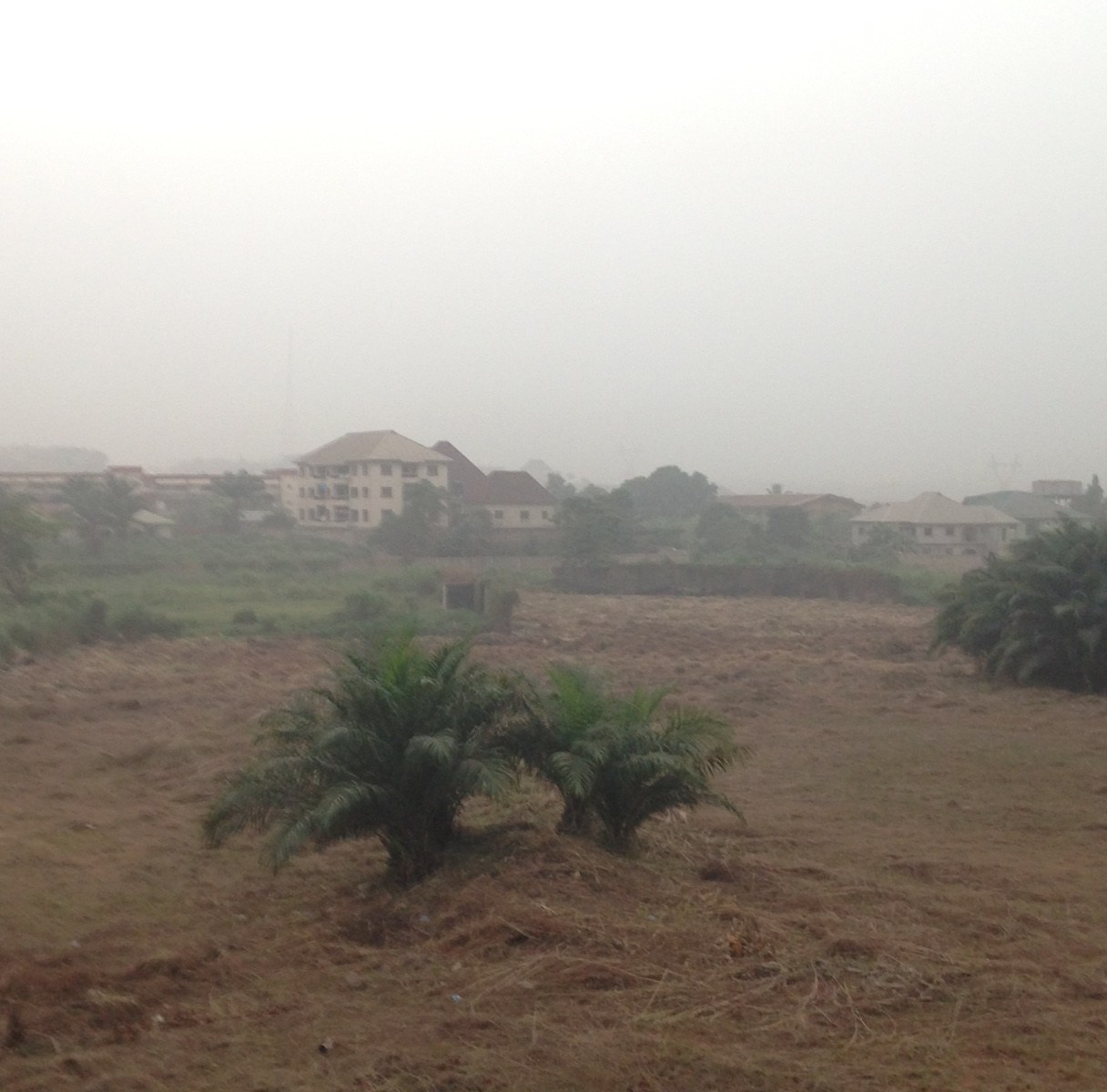
I’ve come to learn that you don’t miss something until it’s gone…and that lesson is a recurring theme in my life. It has not rained in Nigeria since November (actually around Thanksgiving weekend). There were a few rain drops in December but it quickly dissipated in the heat of Abuja. Going four months without experiencing a rain shower has an effect on everything. Many of the trees have turned brown and some are even without leaves. The ground is so dry that during the day, the city is encapsulated in a dusty fog that coats everything from cars to the furniture in your apartment. This dusty fog is considered a season in Nigeria and other parts of West Africa. They call it “Harmattan.”
Nigeria is always hot, during this time of the year, we hover around the 100 degree mark. Sometimes it is hard getting motivated to enter the dry dusty heat that awaits outside my door. But last Sunday (March 7), we got a brief but refreshing rain shower that lasted only 20 minutes. And on Monday, March 16 we got thunder and another brief rain shower. It was nice that the rains had returned…however, it is only a passing shower. The Harmattan season has a few more weeks before the clear air returns to Nigeria.

But as refreshing as rain is to me, it is not viewed the same by millions of people living in Nigeria and other parts of Africa. Because of the lack of infrastructure on the continent, the rains brings flooding, impassable roads and disease. The mosquitos’ population expands during the rains which brings about the threat of malaria and other illnesses that affect both people and livestock. Rain is extremely important as without it, crops would not grow and the water source would decrease.
When I was living in South Sudan, the heavy rains between April and November often times brought society to a halt. Flooded roads at the border of South Sudan and Uganda trapped delivery trucks and passenger buses for weeks. Because most of the food and merchandise sold in South Sudan was transported in from Uganda, shelves would often empty over time as supplies were stuck at the border. It was a lesson for me in life of the developing world. One week a pineapple would be $2 and the following week $7 because of the rains. Life in the developing world is always teetering on disaster…
 A FREDAY in AFRICA!