As a Black American living in Nigeria, I don’t stand out like my white fellow country men/women. The ability to go unnoticed in Nigeria has both positive and negative consequences. I can easily meander around my neighborhood without being noticed. However, if I go for a jog, people seem to take notice because you don’t see a lot of Nigerians jogging – foreigners yes, Nigerians no. I can also go shopping, catch a movie and move around town and go completely unnoticed. However, when I need to enter locations behind secure gates and security guards, I have to rely on my American accent. I have gotten use to using Nigeria greetings or some very limited Pidgin English phrases to interact with taxi drivers and food servers but when I approach a gate that I need to get on the other side, I drop all Nigerian pretenses and use as many English words as possible. During the election, I strategically used my accent and a bow tie to enter a closed government building and made it all the way to the office of the Director. It was amazing how accommodating they were to me.
Last week, the focus was the Turkish Embassy in Abuja. For weeks, my Nigerian colleague and I have sent email after email to get him an appointment for a visa. He will be traveling to Istanbul to attend a workshop on behalf of the IRI. All of our emails fell on deaf ears. Two weeks ago, he went to the Embassy in hopes of talking with someone but was denied entry into the compound. He was told by the security officer that he needed an official email response from the Consulate. On Thursday, after meeting with the Deputy Senate President, my colleague suggested we go to the Embassy. My initial response was, “they didn’t let you in when you went two weeks ago, why would they let us in now.” What also helped our situation was I had a contact name of an assistant to the Ambassador that I had received from a colleague and the title – Resident Country Director of an International organization. Titles in Nigeria are extremely important because everyone wants to be seen as “being important.” The “Big Man” syndrome is alive and well in Naija. So I explained to the security officer why we were there – again, I wanted to use as many English words as possible in my very American accent. When I finished my speech, the officer looked at me and said, “I don’t understand.” I smile and said, my colleague will explain why we are here.
The security officer allowed us to enter the gate and proceed to the waiting area inside the Embassy. After about 15 minutes, the assistant to the Ambassador came out and told us that she was informing the Consulate Director that we were in the waiting area. 15 minutes later a staff from the Consulate came out to meet us and discuss our situation. We explained to him that we had sent email after email requesting an appointment but had not received a response. He said that he could search for our emails and provide us a response but my colleague was relentless in convincing him that he should meet with us today and settle the visa issue. Finally, the Consulate Director came out to get to the bottom of our situation. He apologize for the delay and told my colleague to come back on Friday at 9:00am. As we were finishing up the conversation the Consulate staffer, who was Nigerian looked at me and asked, “where are you from? Your accent is different?” I told him I was from the U.S. He said, “I was confused by you. You look Nigerian but didn’t sound like it.” His statement sums up my time in Abuja…I look like I belong but really I am a stranger in a foreign land.

Sometimes Nigeria seems like a land of anarchy! While there is a centralize government that keeps the country from splintering into various fiefdoms, the blatantly disregard for the rule of law is evident in the way people drive through the streets and refuse to follow the queue. Just yesterday, I was with a friend at the supermarket when the security guard asked her to return to the other side of the metal detector and re-enter. Just as she was about to enter, a woman stepped up and threw her purse down on the table and started to enter the detector the same time as my friend. My friend said, “excuse me, but he told me to re-enter.” The woman responded in a very angrily tone – “You were just standing there…” I could not help but laugh because this is a common occurrence in Nigeria. If a person sees you queuing then they go around because clearly, you have no clue what you are doing – because you are waiting.
Adaobi Tricia Nwaubani wrote the following article for the BBC. She did an amazing job providing historical background to the “unruliness” of Nigeria. I wanted to include her article so you can get a glimpse of what I experience each and every day in the land of green and white. Ms. Nwaubani is also the author of “I Do Not Come to You by Chance,” a novel set amidst the perilous world of Nigerian email scams. She is the winner of the 2010 Commonwealth Writers Prize for Best First Book (Africa).

A passenger urinating out of the window of a bus in Southwest Nigeria.
http://www.bbc.com/news/world-africa-34422258
Can President Buhari stop Nigerians being unruly?
By Adaobi Tricia NwaubaniAbuja
When President Muhammadu Buhari took over power in May 2015, many Nigerians expected him to wave a wand and bring about change.
They felt that their votes had hired the right man who would immediately fix all that was wrong with our country. But, while delivering a speech to commemorate Nigeria’s 55 years of independence from the UK on 1 October, President Buhari made it clear that he would not do the job on his own. He invited every Nigerian to share the burden of change with him: “We all have a part to play to bring about change. “We must change our lawless habits… We must change our unruly behaviour… To bring about change, we must change ourselves.”
Few of us who live in Nigeria can deny knowledge of exactly what our president was talking about.
We are quite familiar with ubiquitous unruly behaviour:
- The Nigerians who will never stand in any queue, who must make their way to the front as soon as they arrive
- The drivers who will never stop at a traffic light, who consider it anathema to allow an empty space in front of their vehicles
- The invisible individuals who excrete piles of solid waste on the pavements, night after night
- The staff who take three weeks’ leave to attend their father’s burial, then another three weeks later in the year to attend their father’s burial, again. “That first one was my father who paid my school fees,” they say. “This one is my biological father”
- The mothers who threaten the head teacher with fire and brimstone because their children were punished for coming late to school
- The bosses who, in the presence of their entire staff, praise you for your excellent work skills, then wink and ask if you also have excellent “bedroom skills”, while everyone present bursts out laughing
- The top government officials who show off their importance by the number of people jam-packed into their waiting rooms. They give you an appointment for 7am, knowing full well that they do not intend to see you until 10pm
- The air hostesses who frown throughout the flight, to avoid giving you the false impression that they are at your beck and call
- The “big men” and “big women” who scream “Do you know who I am?” when you ask for some identity before they can be allowed through the gate
- Those who ring the airline to request that the flight be delayed for their sakes, while their fellow passengers gaze out of the aeroplane windows for an hour, wondering why the flight is delayed, this time
I could go on and on. The catalogue of unruly behaviour in Nigeria is endless.
And, like President Buhari has pointed out, for the country to move forward, these bad habits have to change.
But change will require more than passionate appeals from revered leaders. For many Nigerians, unruly behaviour has become ingrained. It is now a case of “I know it, but I just can’t help it”. Back in 1983, when he took over power in a military coup, President Buhari enforced his “War Against Indiscipline” (WAI) with the help of armed personnel, who punished unruly behaviour with instant penalties, such as frog jumps in the street. WAI worked. Nigerians began to behave themselves.
But times have changed. Today’s Nigeria is a democracy. Doling out instant corporal punishment in public with soldiers both administering and executing justice goes against the country’s constitution. A good place to start would be to understand the origin of this unruly behaviour.
Would you do this in London?
The same Nigerians who find it impossible to queue up at the Murtala Muhammed Airport in Lagos immediately stand in line when they arrive at Heathrow. And you are unlikely to hear a Nigerian “big man” barking “Do you know who I am?” to a cleaner on the streets of London. He knows that he could easily end up spending the night in jail.
My father once told me how anyone who defecated in public was punished back when he was growing up. The pile of excreta would be set alight, and a generous quantity of red pepper added to the flames. Doing this was believed to cause the culprit’s anus to begin to burn and itch wherever he was. And this belief acted as deterrent against people defecating in public places.
In today’s Nigeria, where weak modern institutions have replaced traditional checks and balances, hardly any deterrents against lawlessness exist. People have become used to getting away with almost anything. Many Nigerians consider themselves a law unto themselves. But, anything is possible. President Buhari wants Nigerians to change and change we can. After all, the Europeans who berthed on Africa’s shores in the colonial era were able to replace entire peoples’ habits with completely new and different ways.
Nigerians of today can learn new habits.
The past few decades have seen Nigeria inviting all manner of experts from far and wide to assist with recommendations and solutions for our country’s diverse issues. We have had the economic experts, the financial, security, political, agricultural, trade, health, but now may be the time for the Nigerian government to engage psychologists, experts at uncovering and disabling the inner forces that drive undesirable behaviour. These behaviour modification experts could develop special programmes for leaders at different levels. They could collaborate with government corporations and private organisations. They could tinker with the curriculum in our country’s schools, infusing regular lessons with programmes that would produce Nigerian citizens who would consider the effect of their every action on the world around them.
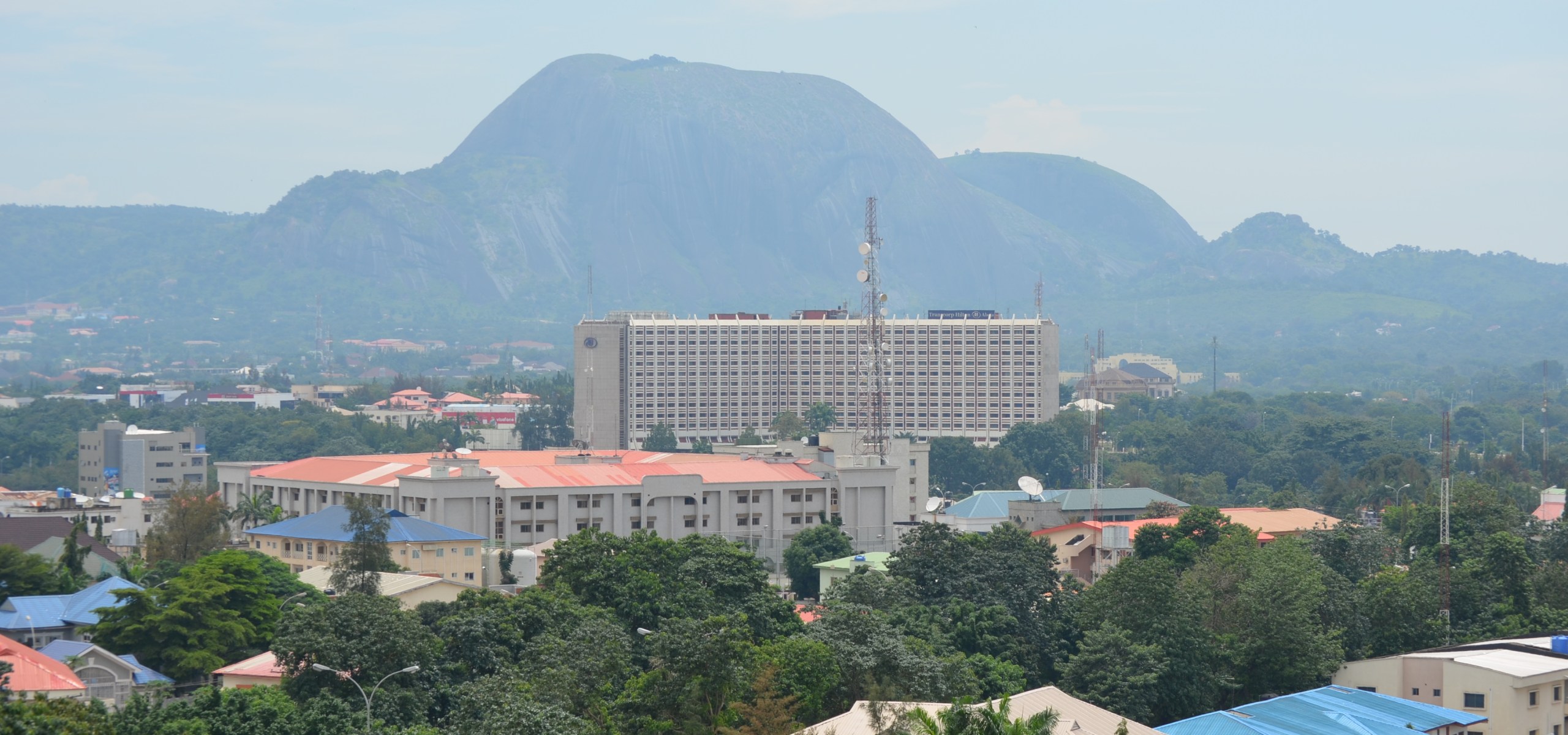
Once again, the false security that we were enjoying in Abuja has been broken. I was just thinking last month that Abuja citizens had become too complacent with the Boko Haram threat. Security guards were negligent in their duties of checking cars and bags and police and military checkpoints had all but disappeared. But on a quiet Friday evening, twin blasts in separate parts of Abuja rocked the city. It is reported that 18 people were killed and scores injured as two suicide bombers detonated two blast in heavily trafficked areas. This is the first terrorist attack in Abuja since the Banex bombing in July 2014. The military has cracked down on Boko Haram and there are numerous reports that the insurgent group is on the run but the continued terrorist activity in Northeast Nigeria and these recent attacks show that Boko Haram is still able to cause fear and terror among Nigerians. It is also being reported that 34 people were killed in Northeast Abuja between Thursday and Saturday at the hands of Boko Haram.
While Boko Haram has said that it is against western education (a given by the name translation), it is unclear exactly what the group hopes to obtain by attacking innocent Nigerians. The recent bombings in Abuja have targeted car parks and markets, locations frequented by typical Nigerians – those racing home after a long day at work and the women selling food along the road. President Muhammadu Buhari declared during the presidential election that he would wipe Boko Haram off the map but he is finding it difficult because of low morale in the military and lack of equipment to track Boko Haram members.
I went out today to pick up a few groceries and found the city to be extremely quiet. Usually on a Saturday, Shoprite, the South African grocery store is jammed pack with shoppers and music is blaring from the children activity zone. And it’s often difficult to find parking. However, on this Saturday, the store was nearly empty and there were no children running around. I was in and out in 20 minutes – a record time.
Once again, Boko Haram has shattered the false sense of security that we were living under in Abuja. The city is back on the edge as we pray that the military is able to get control of Boko Haram and save the innocent Nigerians that are dying at the hands of this insurgent group.
http://www.bbc.co.uk/news/world-africa-34431259
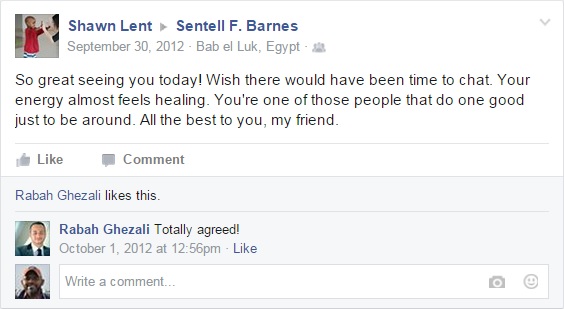
This morning, Facebook reminded me of this post by Shawn Lent. Three years ago, I was in Cairo, Egypt with the United Nations Alliance of Civilization (UNAOC) fellowship program. The UNAOC fellowship aim is to enhance mutual knowledge and understanding between peoples and societies from Muslim-majority countries in the Arab World, Europe and North America. The program was brought to my attention by another friend, Rabah Ghezali.

Shawn and I in Cairo in 2012.
Shawn was living in Cairo where she was completing a Fulbright scholarship. When we met in 2008, she was teaching dance in Chicago. I met Shawn and Rabah in the fall of 2008 when we were selected to participate in a British Council program called Transatlantic Network 2020 (TN2020). The network brought together young North Americans and Europeans to address challenges of our generation. The program was brought to my intention by my roommate at the time. He said that he had come up with a way for the two of us to “see Europe.” I applied and waited for a confirmation. The first response from the British Council was letting me know that I had not been selected for the fellowship. While initially hurt for not making the cut, I drafted a very nice response and thanked them for their consideration. However, 24 hours later, I received an email inviting me to participate.
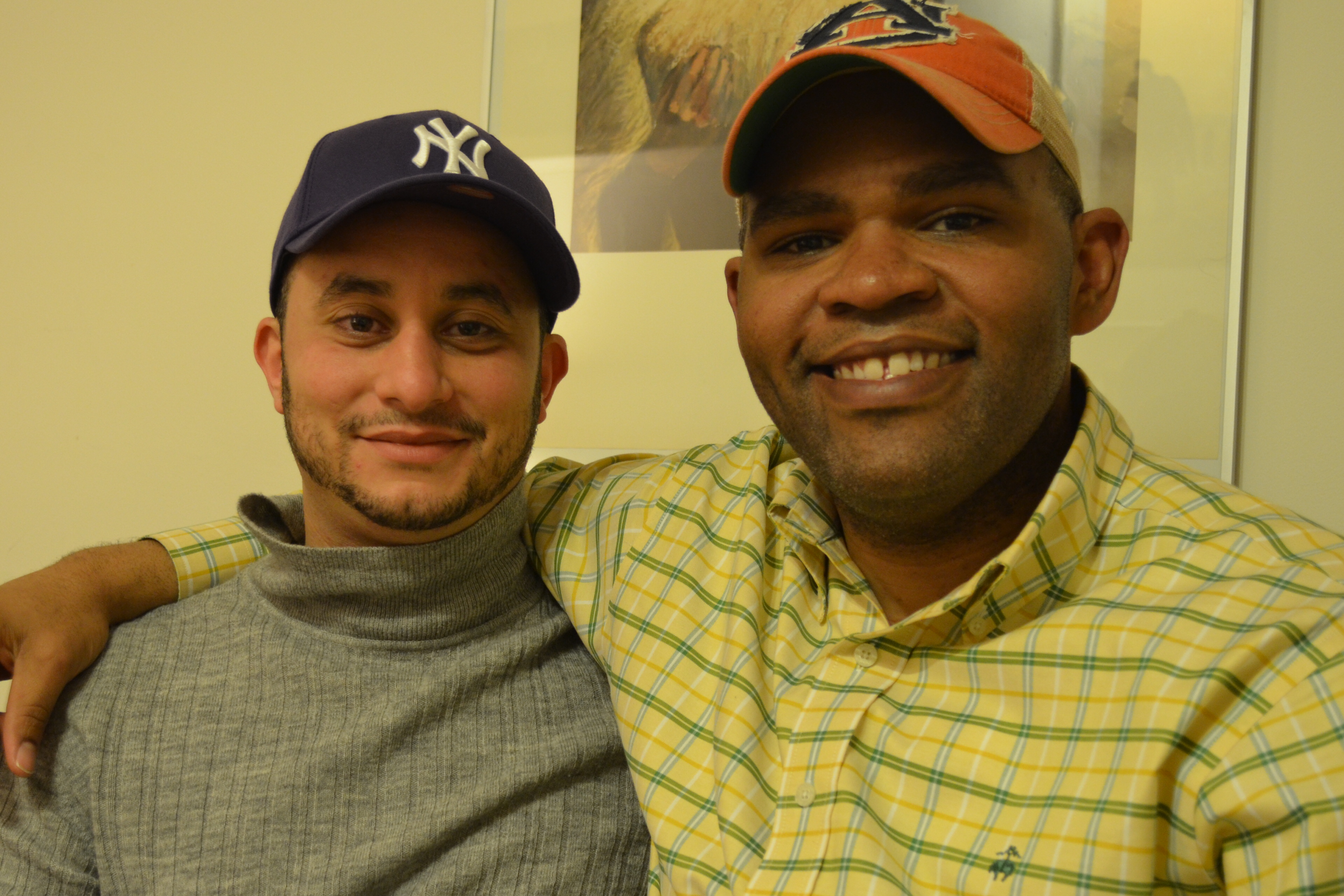
Rabah and I in Paris in 2013.
I will never forget the first time I had a conversation with Shawn. We were on a bus traveling from Belfast to the Wicklow Mountains and we happen to be seating partners. In the three hours’ drive, Shawn and I talked religion (as I was reading a book at the time called Disciplines of a Godly Man), race, politics, dancing, and smoking among so many other things. While we had differing opinions on some of the topics, I really enjoyed chatting with her and listening to her insightful responses. There are some people you met who you just know are destined to do awesome things. Neither one of us realized at that moment we were preparing for an interesting journey that would land both of us on the African continent and a random reunion in Cairo. Thanks Shawn for the beautiful compliment two years ago (and Rabah for agreeing with her comment). Glad that Facebook and other opportunities have allowed us to stay connected over the years.
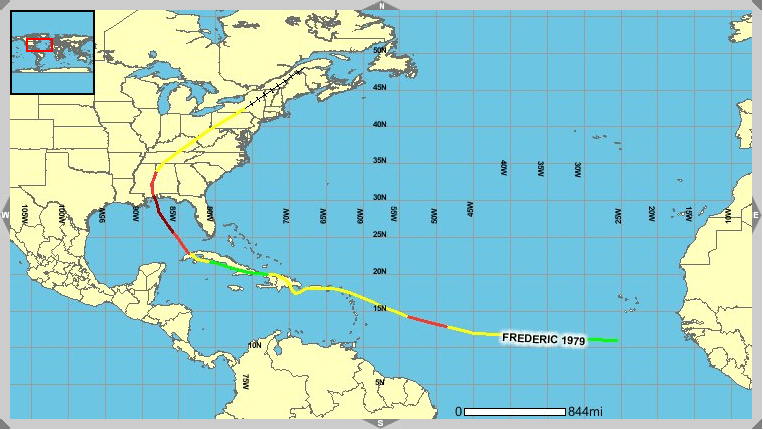
Hurricane Frederick formed on August 28 and slammed into the Alabama/Mississippi coast line on September 13, 1979. The map is from the National Oceanic and Atmospheric Administration (NOAA). It shows the track of the storm from when it formed off the African coast and dissipated over New York State.
If you are from the South, then you have heard someone make this comment before. When I was a child growing up in Alabama, my mom always used it. The phrase refers a day when the sun is shining and it is raining at the same time. It is important to point out that even on rainy days, the sun is still shining. Its just the clouds are blocking the sun rays from penetrating the ground. The other day, I was on my way home from work and the sun was visible in the distance but we were experiencing a downpour. I said to my driver, “the devil must be beating his wife.” He began to laugh uncontrollable. My first thought was, “dude, you say some crazy things too so how is that this is so funny.” I explained to the driver that the phrase explains a sun shower, where there may be raindrops while the sun is shining bright in the distance. In the Southern U.S., a sun shower is said to show that the devil is beating his wife because he is angry that God has created a beautiful day. I have no clue where this phrase came from but in researching the phrase, I learned that in Liberia, it is said that the “devil is fighting with his wife over a chicken bone.” Can you imagine…
What really has me excited to talk about the weather is what I recently learned watching CNN. Have you ever heard of the Inter-tropical Convergence Zone (ITCZ)? If you are like me, you have never heard of this term. However, the ITCZ circles the Earth near the equator, where the trade winds of the Northern and Southern Hemispheres come together. For those of us living in the southern U.S., it is a contributing factor to the formation of hurricanes that develop off the coast of Africa and in the Atlantic Ocean and slowly make their way to the Central and North America. During the months of April to November, the countries sandwiched in the ITCZ experience a series of thunderstorms. My Nigerian counterparts refer to this as the rainy season but for Americans living along the Atlantic and Gulf of Mexico, this period also refers to hurricane season. I have always been fascinated by weather and especially hurricanes. As a child, when hurricanes would form in the Atlantic Ocean, I would break out my hurricane-tracking map and plot its course using longitude and latitude. I was the nerd watching the weather channel for the tropical update each hour. I always knew that the storms that formed in the Atlantic swept off the coast of western Africa but I never knew that the rainy season and hurricane season had such a correlation.
The best example of this phenomenon is Hurricane Frederick, which hit the Alabama coast in 1979, three weeks after my birth. Hurricane Frederick caused significant damage along the Mississippi, Alabama and Wester Florida coastline. The Frederick was the costliest storm to hit the U.S. (until Hugo reclaimed the horrific honor in 1989). My parents tell the story that after giving me a bath and preparing me for bed, my dad went to lift me and rest my head on his shoulder. Instead, I slide out of his arm and landed on the floor. I began to cry and eventually became inconsolable. My parents decided that they needed to make a trip to the hospital. They dropped my brother off at my grandmother’s house and drove through the storm to the hospital. The doctor did a proper analysis and informed my parents that I was hungry and just wanted to be fed…
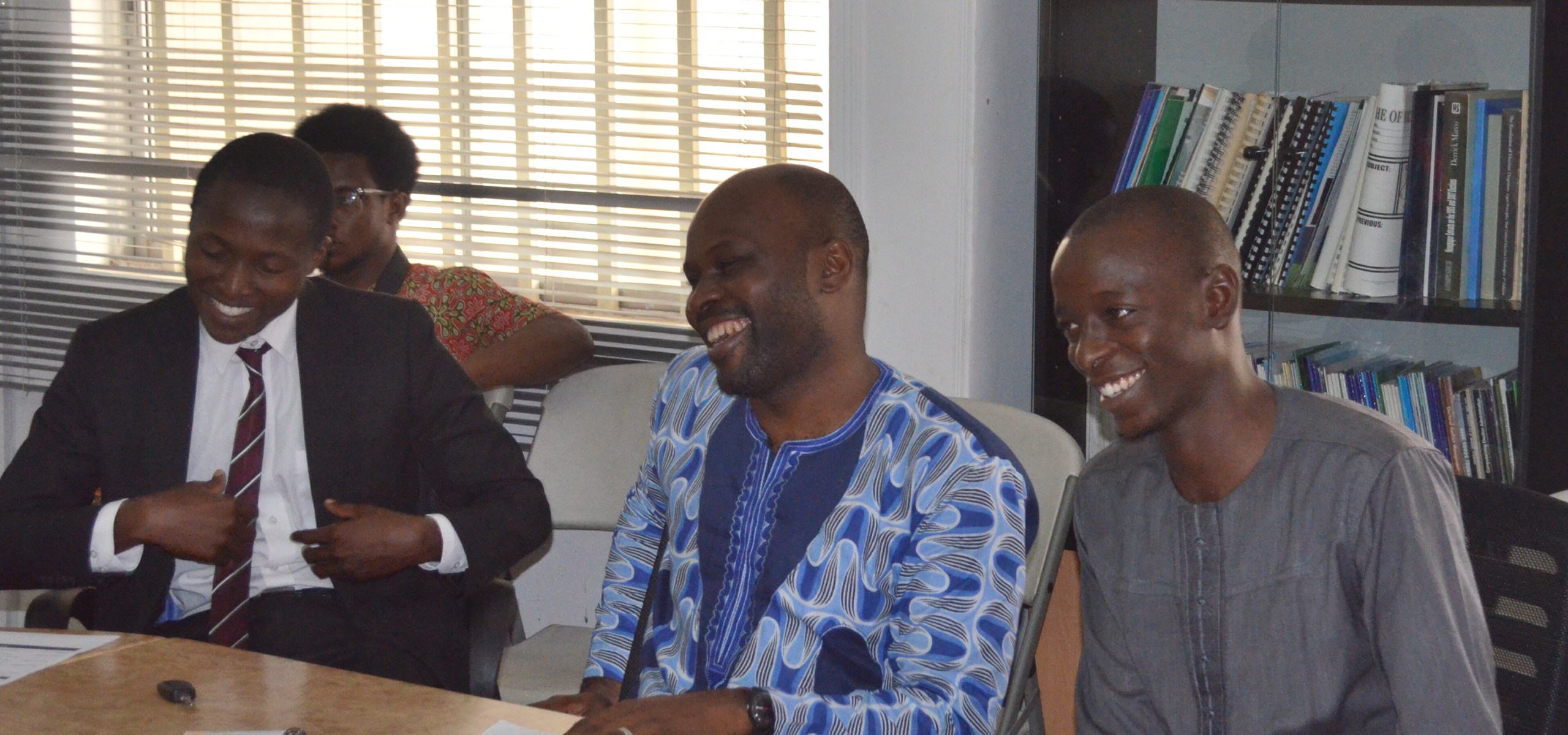
Today, I had an opportunity to talk with Nigerian youth about political inclusion and 9/11. We had a very interesting and frank discussion about U.S. foreign policy, the world after 9/11 and “some” of the misconceptions that Americans have about the world. I really enjoy talking with these intelligent young Nigerians. I reminded them that human beings are Nigeria’s greatest resource and that as young Nigerians, they need to ensure that their voice is at the decision making table. It was a nice way to mark 14 years after 9/11.
![CSC_0335[1]](https://fredayinafrica.com/wp-content/uploads/2015/09/csc_03351.jpg)
![DSC_0328[1]](https://fredayinafrica.com/wp-content/uploads/2015/09/dsc_03281.jpg)
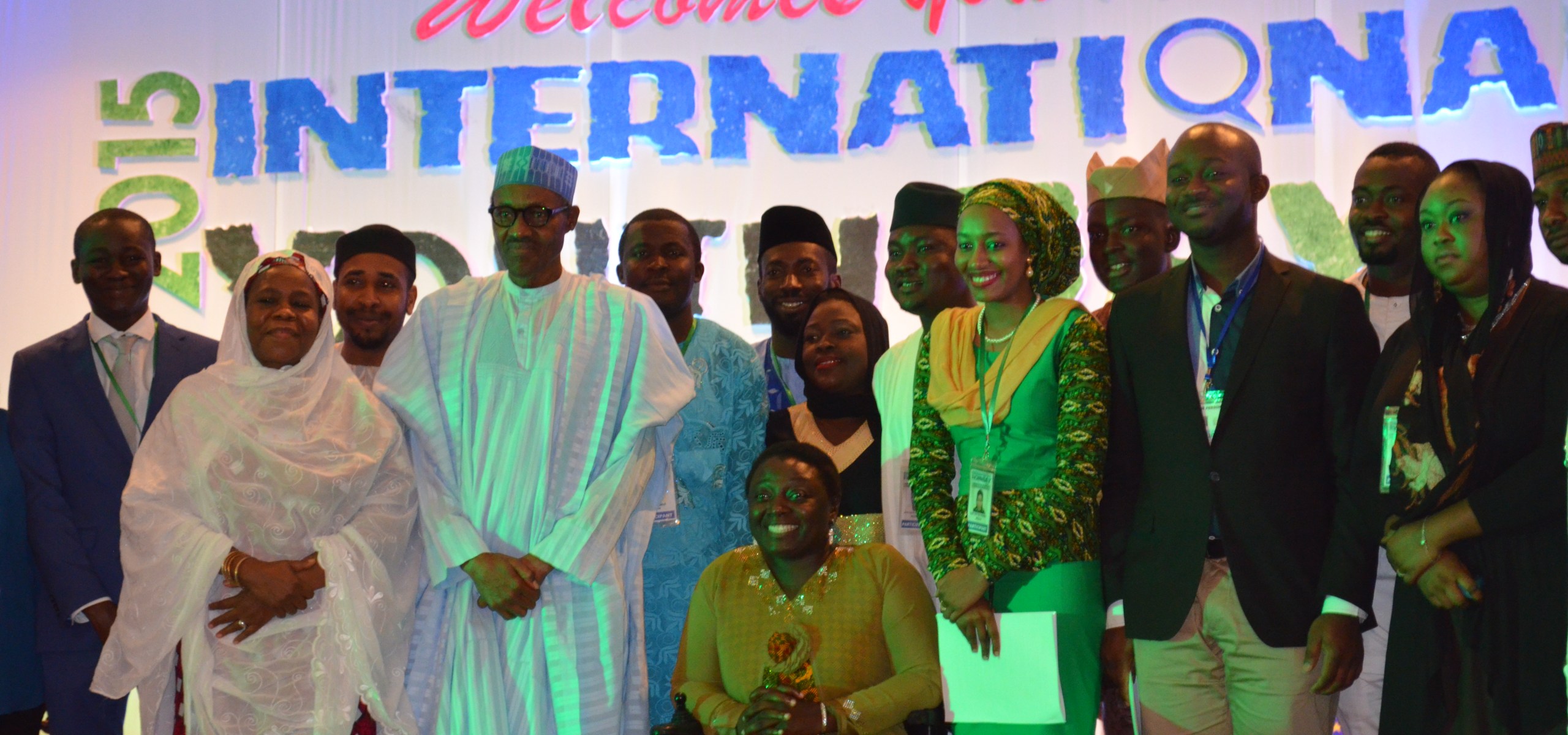
A short article my colleague and I wrote on the first 100 days of Nigerian President Muhammadu Buhari’s presidency in Nigeria. The photo (above) was taken at the International Youth Day event hosted by President Buhari and the Federal Ministry of Youth Development on August 12, 2015. President Buhari is joined by Nigerian youth and representatives from the Ministry of Youth Development.
One Hundred Days of the Buhari Presidency
By: Alao Sunday Afolabi, Assistant Program Officer, IRI-Nigeria and Sentell F. Barnes Resident Country Director, IRI-Nigeria
Last week, the discussion in Nigeria focused on the first 100 days of President Buhari’s time in office. Analysts disagree on the role that the president has played in the National Assembly’s leadership elections, the recent presidential appointments, the government’s efforts to combat corruption and tame the Boko Haram insurgency. And although President Buhari spoke of his indifference on the usual practice of celebrating 100 days in office during his Chatham House address in February 2015, it is important nonetheless to assess his performance over the past few months.
President Buhari has demonstrated respect for democratic institutions with his refusal to interfere in the leadership selection process of the National Assembly when it was inaugurated. Buhari also resisted calls to intervene when those not favored by the party emerged as the leaders of the bicameral legislature. It was agreed that such disposition was necessary in ensuring the independence of the legislature and protecting the doctrine of separation of powers. However, the scenario is different with the judiciary, as the president has been accused of using the Department of State Security (DSS), whose leadership he changed in favor of his townsman, to affect the proceedings of the governorship election tribunals in Rivers and Akwa Ibom states. This allegation was bolstered by the Chairman of Senate Committee on Ethics, Privileges and Public Petitions, who berated the DSS for usurping the powers of the police by interfering with the proceedings of the election tribunals during its investigation.
Besides prompting widespread criticism over lopsided presidential appointments which many Nigerians say favor the north (where the president hails from), the appointments have not had adequate representation from marginalized groups, especially women. During his campaign, President Buhari promised to ensure gender balance in his government; however, of the nearly 30 appointments made thus far, only the acting chair of the Independent National Electoral Commission (INEC) is female. Her appointment has sparked controversy based on her alleged familial relation to the president and the fact that her tenure as national commissioner elapsed in July. The number of national commissioners who form the management of the electoral body has dwindled from 13 down to two after the majority of their terms elapsed in recent months. This has perhaps prompted the Peoples Democratic Party – serving now as the opposition for the first time since Nigeria’s transition to civilian rule in 1999 – to condemn the apparent unwillingness of the president to commence the constitutional process of nominating credible persons to fill the sensitive position in INEC, which is of particular importance considering the upcoming local elections in Kogi and Bayelsa states.
The efforts of President Buhari to combat corruption, a major component of his campaign, has led to revelations of huge sums of funds allegedly stolen by officials of the previous government. The increased tempo of arrests and interrogation by the Economic and Financial Crimes Commission and the creation of the Presidential Advisory Corruption Committee are indicative of the president’s resolve to prosecute corrupt offenders. However, critics have argued that President Buhari is using the anti-corruption campaign to witch hunt members of the opposition. He has also been accused of shielding members of his party from corruption prosecution. The September 3, 2015 release of the details of the assets of the president and vice-president submitted to the Code of Conduct Bureau as required by law demonstrates Buhari’s commitment to having a transparent government.
It is also noteworthy that the president has visited neighboring countries to build a military coalition against the Boko Haram insurgency, whose suicide attacks and bombings increased after he assumed office. Buhari also appointed new military service chiefs, issuing a directive for them to end the insurgency in three months, which has resulted in increased military action against Boko Haram in the last few weeks.
While his first 100 days do not provide an adequate analysis of President Buhari’s time in office, it does provide insight into the president’s priorities. There are signs that President Buhari is addressing corruption and security head on but he has not given much attention to the importance of ensuring that INEC has the legitimacy to perform its duties ahead of two gubernatorial elections. In addition, President Buhari has not upheld his campaign promise to appoint individuals from marginalized groups and geo-regional groupings. Nigeria is one of the largest democracies in the world, yet full representation of all segments of society is still lagging when compared to its smaller African neighbors.

Last week, I made my eighth trip to Rwanda. Rwanda, and specifically the capital city of Kigali has a special place in my heart. It was the first place on the continent that I visited in 2009 and it currently serves as a rest and relaxation destination from the chaos of Nigeria. While my professional life is in Abuja, my personal life seems to exist in Kigali.


With Lambert in 2009 and with Lambert on my most recent trip in August 2015.
During this recent trip, I was talking with friends about that first trip in 2009. We laughed and joked about sleeping in the great outdoors in Queen Elizabeth Park and rafting the Nile in Uganda. But the question that always comes up is what were my initial expectations of Rwanda and what did I think when I arrived.
I would admit that when my friend Myal moved to Rwanda in 2007, I knew very little about the tiny East African nation. While I was aware of the genocide, I could not tell you anything about the country. Like most American, I imagined Myal would be living out in the “bush” with no electricity or running water. Between 2007 and 2009, I started to read multiple books about Rwanda and the genocide and by the time I arrived in Kigali, I had a basic understanding of Rwanda.
In May of 2009, Myal asked if I would host a Rwandan friend who would be visiting the U.S. for the first time. I will never forget my roommate’s response – “we don’t know this guy, what if he kills us in our sleep.” While he was joking with his response, we were allowing a complete stranger into our apartment and didn’t know what to expect. When Shami arrived, it was a cultural experience for both of us. He played the role of the country bumpkin (as he often said) and I played the role of the ignorant American who wanted to introduce Shami to every American appliance in our apartment. However, I forgot to explain how to work our tricky shower head. One day, Shami and I were touring Washington, D.C. and he mentioned to me that he needed food. He said, “Can we get a cake?” I was a bit dumbfounded by his question. Did he really want cake for breakfast? How did they eat in Rwanda and how was he able to stay so thin if he is eat cake in the morning? My response to Shami was – “like a birthday cake?” He smiled and said no, like a small cake. We went back and forth about this cake but luckily, we walked by a café and he pointed to a muffin in the window. He was referring to a muffin and not a birthday cake! (Can you imagine!). He called it a cake – I called it a muffin. Cultural misunderstanding at its finest…


(top) Shami and I at Arlington Cemetery in May 2009 and (bottom) at his wedding in October 2014.
While I am not very consistent in my journal writing, there are various aspects of my life that I have written about in various books and journals. My visit to Rwanda was one of those moments. I thought I would use this blog to relive my first journey to the African continent.
November 16, 2009
“Rwanda is a country of black people – I am no longer in the minority. This takes sometime getting use to – especially at the football (soccer) game we attended on Saturday. I have had several people approach me speaking Kinyarwanda (the local language). Sadly, I did not understand what they were saying to me.”

My first football game…ever!
“As I sit on Myal’s front steps overlooking Kigali, I can see where Rwanda gets its nickname – Land of a Thousand Hills. Kigali, the capital city is made up of several hills and valleys and just about every home has a spectacular view of the city or surrounding community. The country is very green but I am told that during the dry season, everything is brown and the town is extremely dusty. The vibrant green hills are dotted with communities and crisscrossed with red dirt roads….”
![IMGP1160[1]](https://fredayinafrica.com/wp-content/uploads/2015/08/imgp11601.jpg)
A night view of Kigali from one of the surrounding Hills. I borrowed this photo from a friend who spent time in Kigali.
“Rwanda is not the country most Americans associate with “Hotel Rwanda.” When telling friends I was traveling to Rwanda, their initial response was “be careful, Rwanda is dangerous.” Clearly their impressions were formed by the genocide in 1994 and not visiting the country…
We attended a church on Sunday – Rwanda for Jesus. It reminded me of a Frontline Service – minus the bright lights and unnecessary fog. They sung Hillsong worship music – which are very popular in Rwanda – and a female delivered the message. It turns out that she was the co-pastor with her husband…”
November 18, 2009
“Ten minutes in Africa is one hour in America! We stopped for lunch today and was told by the cook that lunch would be served in 10 minutes. 40 minutes later, lunch was served…
I am sure there are many blacks from America who arrive in Africa thinking that they have arrived in their homeland – the place of their ancestors. But its easy to forget that hundred of years have passed and western development has completely changed the society we live in…In a conversation with Rwandan friends Erwin and Sharon, I mentioned that my color came from Africa. Sharon’s response was “But you are almost white.” (This comment has been uttered to me by numerous people in Nigeria since moving to the continent) Clearly not the response I was expecting or the response I would get in the U.S. I assumed that she would have agreed with me but it reinforced what I believed that we are from two different backgrounds…”
![IMG_7264[1]](https://fredayinafrica.com/wp-content/uploads/2015/08/img_72641.jpg)
A group photo after our safari in Uganda. (l to r) Sentell, Erwin (seated), Sharon and Myal.
November 22, 2009
“Tonight, Lambert, Erwin and I had a conversation about African stereotypes among Americans. I did not tell them that I was constantly told by friends and co-workers not to bring home an African wife (the irony). I think they would have liked to hear the story and find the humor in it but I thought it was politically incorrect to say it in public. Its very similar to what I told Myal when he left for Rwanda – “I would not be ready if you brought an African wife back to the U.S.” (irony again)…”

One of the most unique experiences was visiting the mountain gorillas in their natural habitat. It was both awesome and frightening at the same time.
I never expected during that trip that I would find myself returning to Rwanda over and over again…much less residing on the continent. But this trip was my entry into the continent and when the opportunity presented itself to dive in face first, I did. In one journal entry from that trip I wrote…
“So far, this has been an interesting trip. My goal was to visit with Myal, however, I was hoping to answer some questions or at least begin the process about life after the ABA (American Bankers Association). I have been praying about next steps since arriving at the ABA. However, I have become quite complacent – comfortable job, comfortable salary, good church environment – but this is not what God desires for his people. I think Donald Miller said it best in his book, “Blue Like Jazz,” the greatest trick of the devil is to have us wasting time. And I do a lot of wasting time. I pray that when I arrive back in the U.S. that I will remain focused on God and what he wants from me in my life. Which is the perfect time since D’Mitri is off to the Air Force.”
While I didn’t know what the future held…I knew God was preparing me for such a time as this…”Life Begins at the End of your Comfort Zone…” Neale Donald Walsch

The most important reason to crisscross the continent between Nigeria and Rwanda…to spend more time with Sheila!

On August 16, I not only celebrated my recent promotion to Country Director but also my 36th Birthday! This is the third birthday that I have celebrated on the African continent. In 2013, I celebrated my birthday after only three days in South Sudan. My co-worker organized a cake and impromptu birthday party with colleagues from IRI and the National Democratic Institute (NDI). I made sure to get a photo of the birthday cake to remember my first birthday in South Sudan (below).

In 2014, I celebrated my second birthday on the continent with IRI colleagues in Abuja, Nigeria. I was so special that I actually received two fancy birthday cakes and a bottle of champagne (sparkling wine). I have since come to learn that Nigeria is the second largest consumer of champagne behind France. Can you imagine?! (a very common phrase on this continent).

This year, I decided to throw a party to celebrate my birthday and my recent promotion to Resident Country Director. What I quickly discovered is how expensive parties can become in Nigeria. I easily exceeded my $200 budget just buying food and beverages. And pleasing Nigerians is no easy task (smile)…But, how many times do you get to celebrate two major life moments…We had a great time socializing at the pool on my compound. Initially the rain kept us indoors, but after an hour or so, there was a break in the clouds and we were able to finish the celebration enjoying a nice Abuja evening below a few visible stars. And in typical Nigerian fashion, the Champagne was flowing as we celebrated. It was a nice end to my 35th year and a great start to my 36th year. I am no longer considered a youth by international standards…and will now have to check the box that I am 36 and above.
![DSC_0138[1]](https://fredayinafrica.com/wp-content/uploads/2015/08/dsc_01381.jpg)
![DSC_0102[1]](https://fredayinafrica.com/wp-content/uploads/2015/08/dsc_01021.jpg)
![DSC_0136[1]](https://fredayinafrica.com/wp-content/uploads/2015/08/dsc_01361.jpg)
![CSC_0230[1]](https://fredayinafrica.com/wp-content/uploads/2015/08/csc_02301.jpg?w=300&h=200)

Two years ago I arrived in South Sudan – sight unseen. I was taking a step on faith that I would be able to handle a new environment and a new job. It was my first time living outside the United States and on top of that, I was starting a new position. I had never even met any of my “future” colleagues in South Sudan. Navigating the Juba airport was a highly stressful and chaotic but I was able to make it outside only to find more chaos. And when I finally emerged from the hot, stuffy airport, there was no IRI car to meet me. However, there were taxis drivers willing to charge me $100 to go less than ten miles. After about fifteen minutes, a late model Toyota Land cruiser rushed into the small dirt parking out and out jumped an American with an IRI sign. I was now safe in the hands of someone who knew how to navigate my new surroundings.
The two years since that moment have brought hills and valleys. But all in all, I have never once regretted my decision. Yes, I miss friends and family back at home in the United States and wished the current situation in South Sudan would never have happened but I have been able to make new friends and deepen existing friendships. I have tried to come up with a way to mark my two year anniversary living outside the United States but I think it’s best to do it in pictures…Enjoy my look back at my brief time in South Sudan.

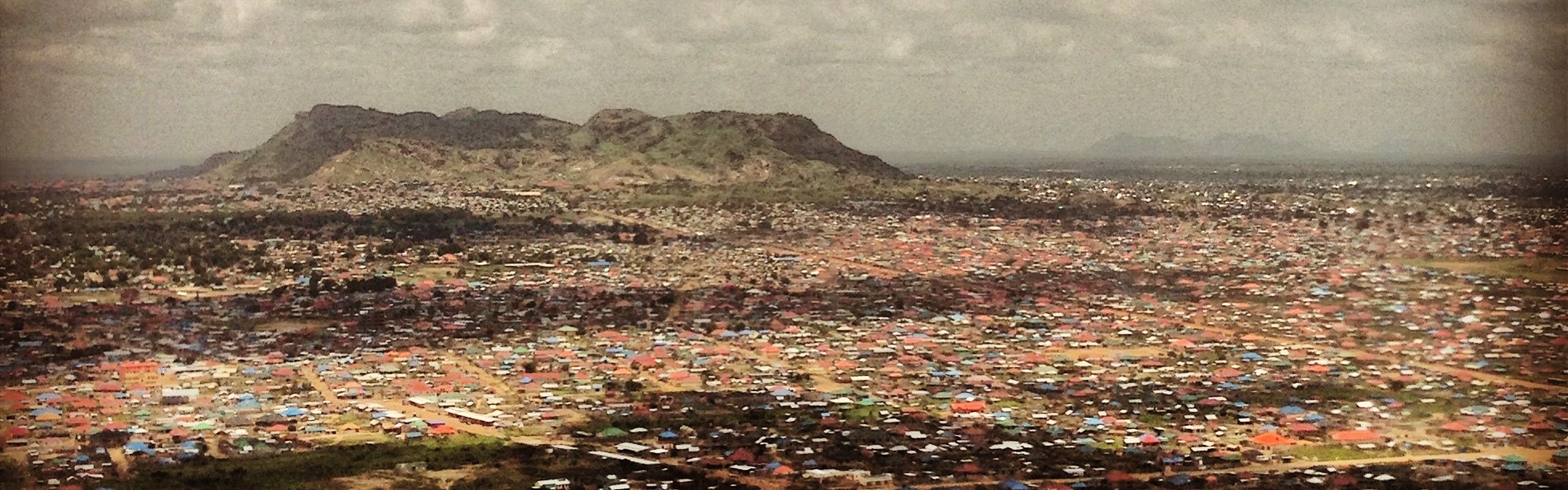
This was my first view of Juba as my FlyDubai flight was descending into the Juba airport. I wasn’t sure what to expect of my new home.
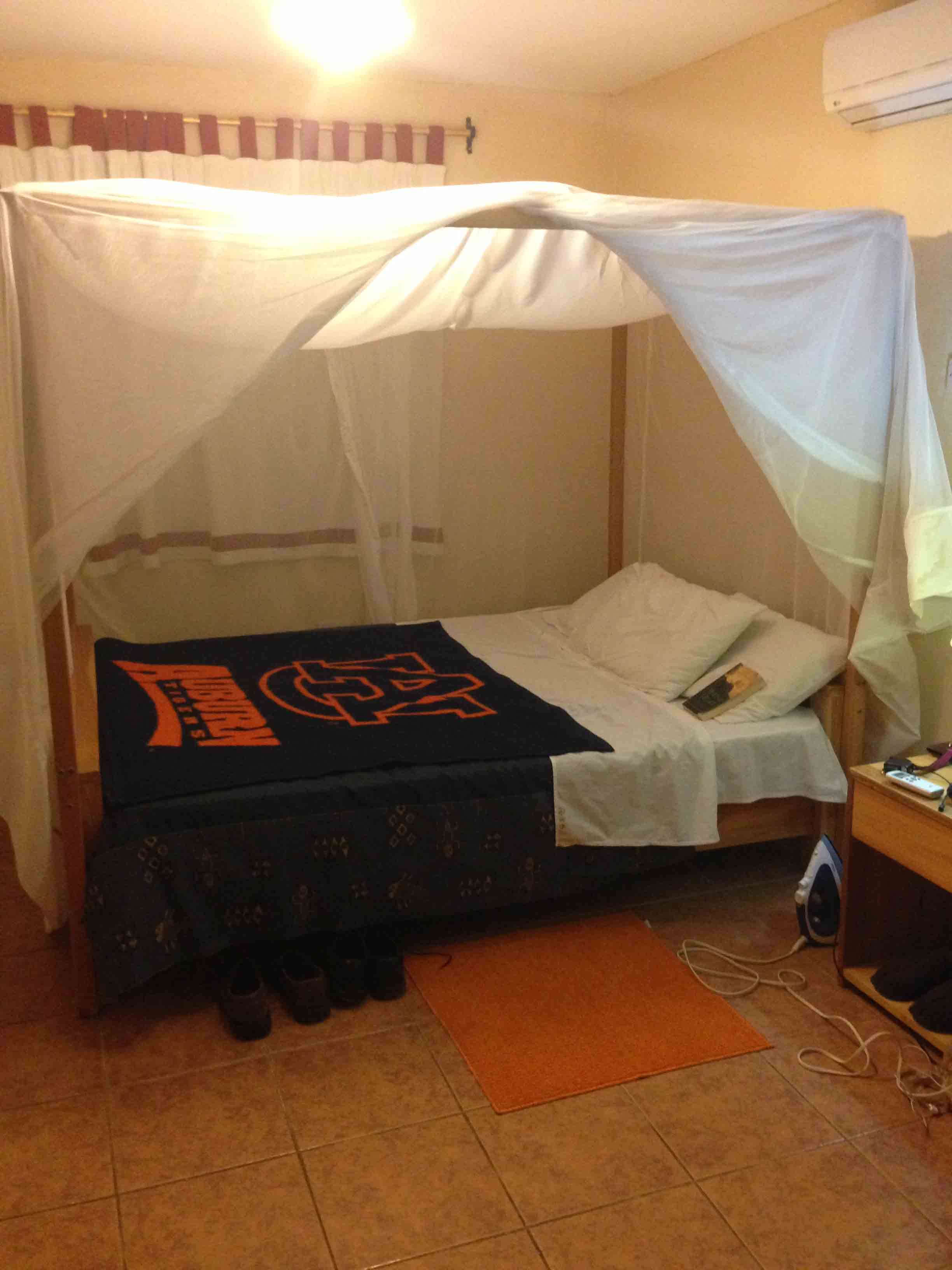
I had to get use to sleeping under a mosquito net in Juba. Malaria was a constant threat in Juba. Thankfully, I never contracted Malaria during my time in South Sudan. And as you can see, I made sure to bring a piece of home with me – WAR EAGLE!
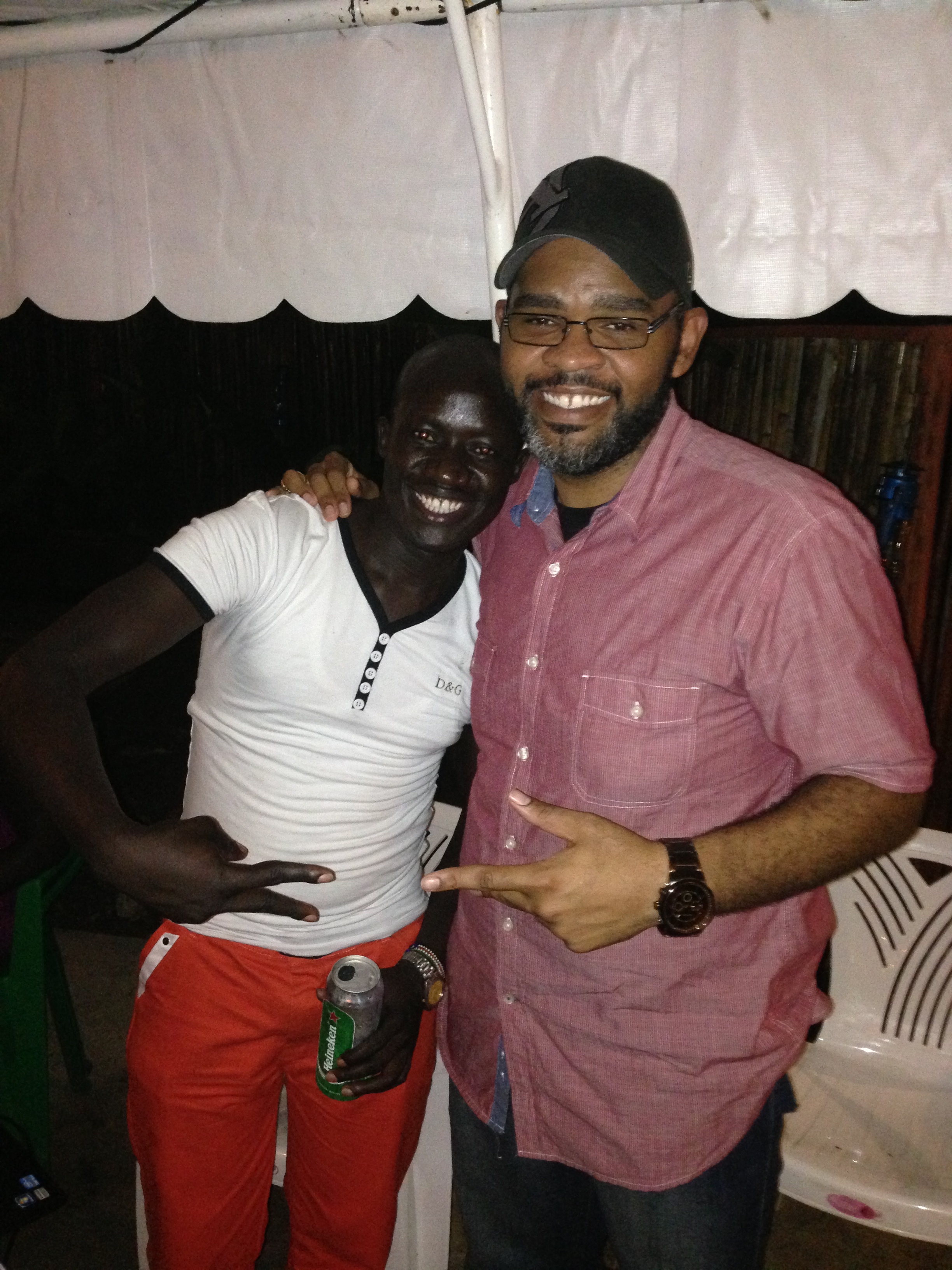
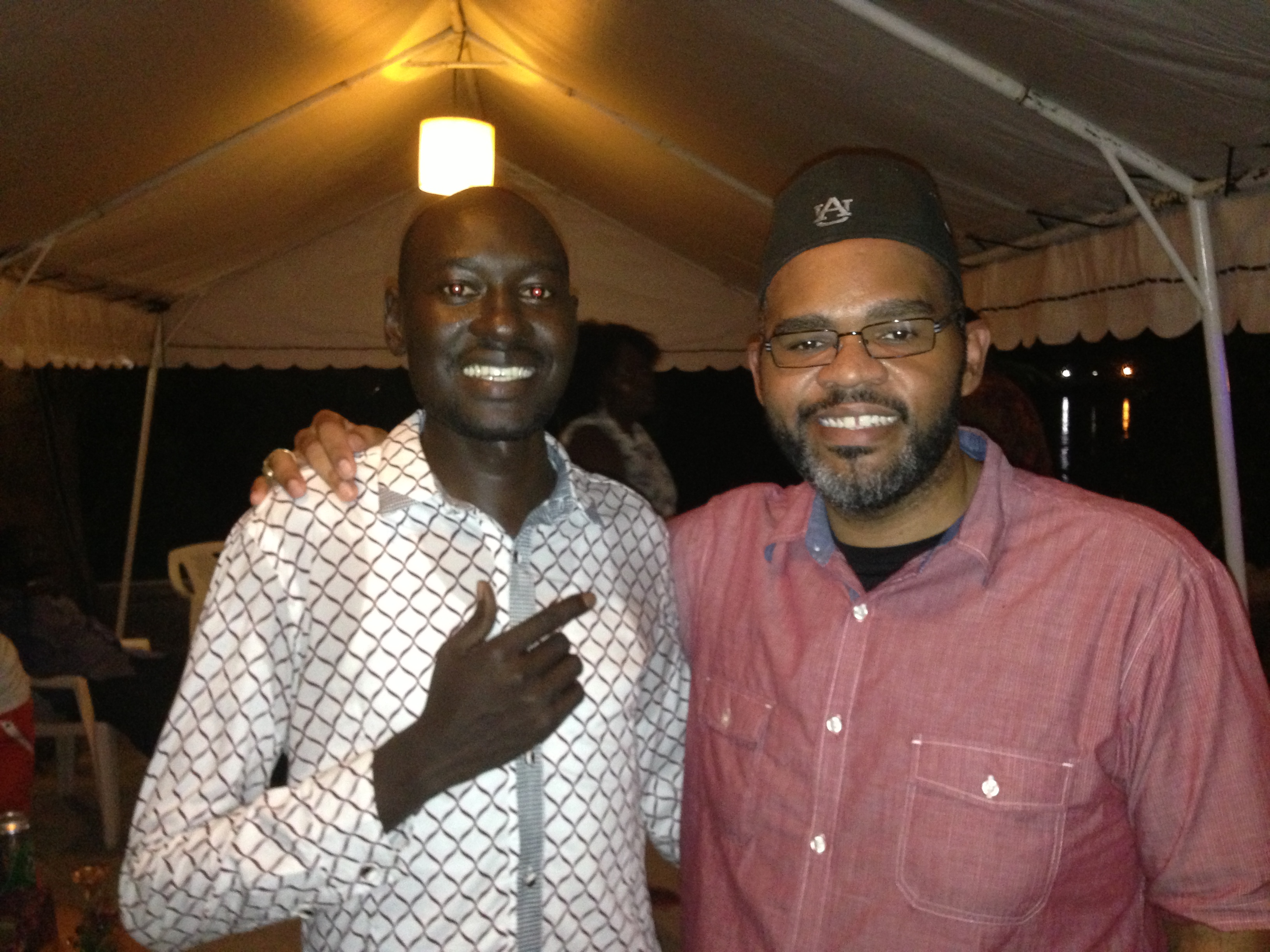
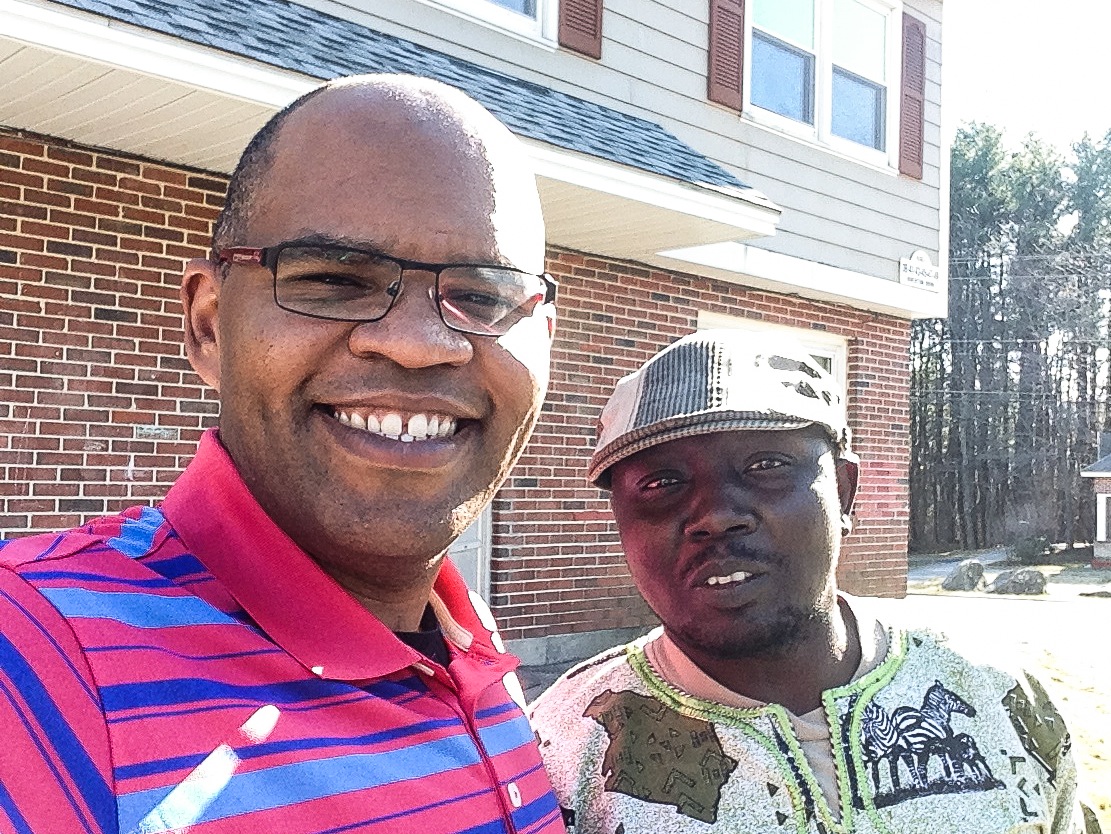
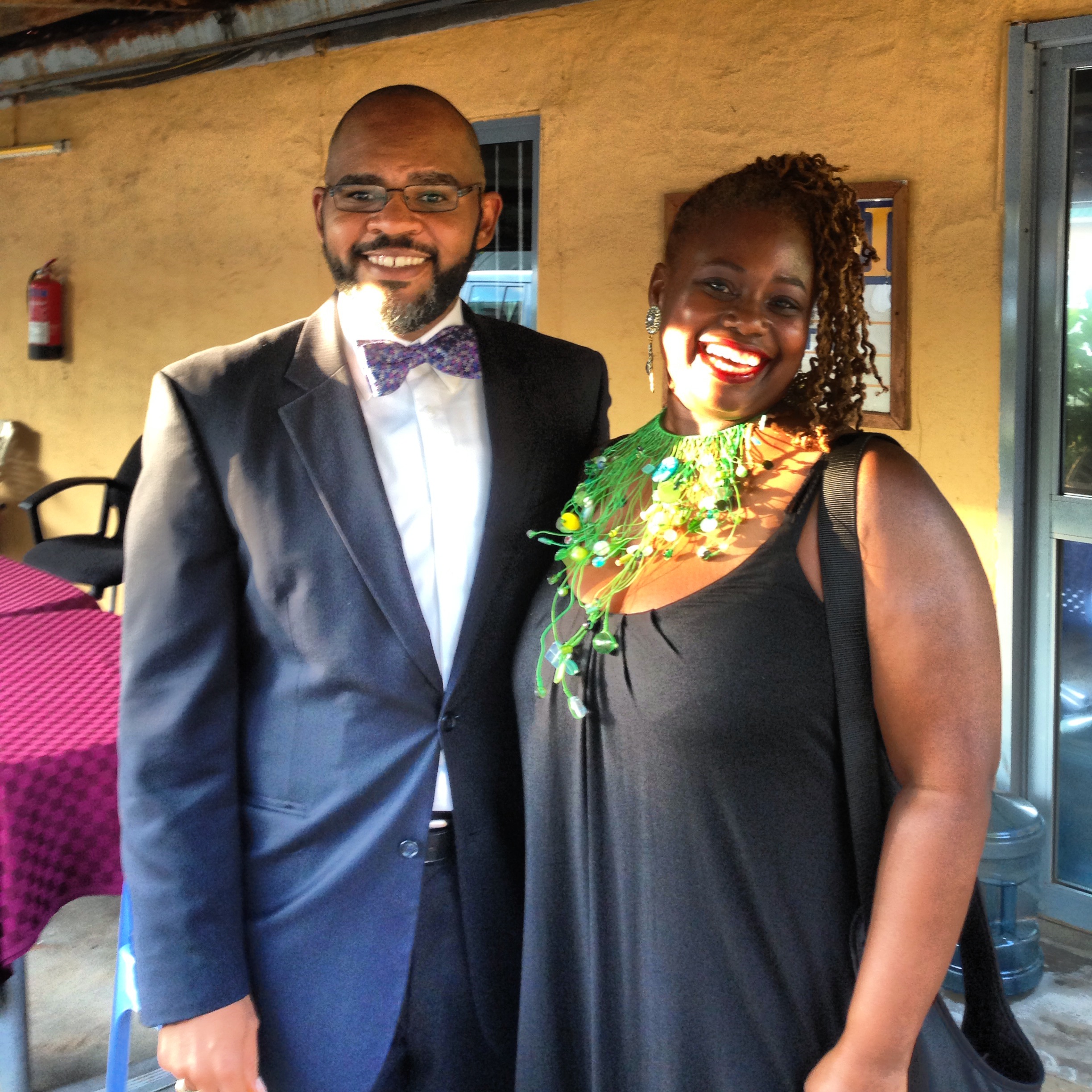
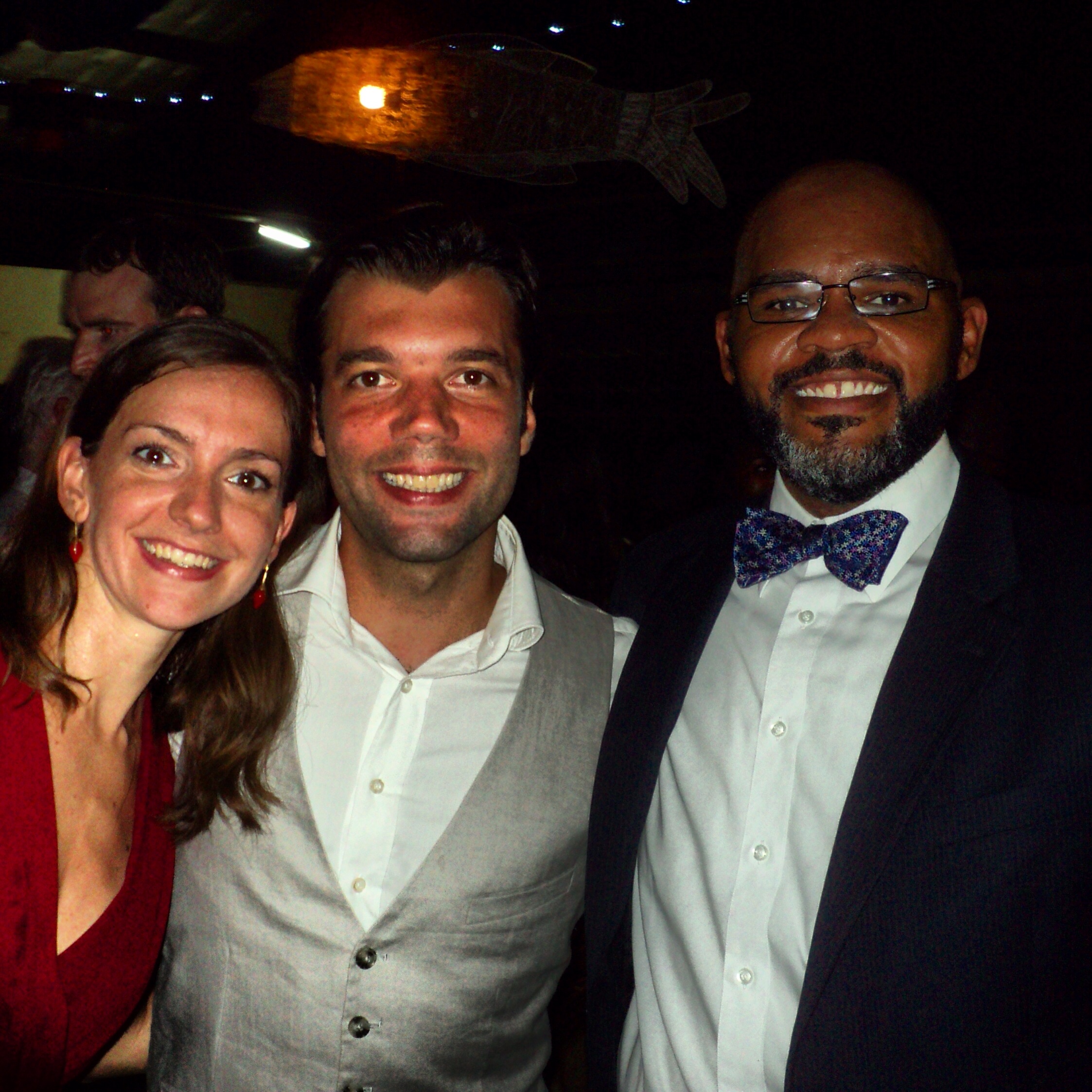

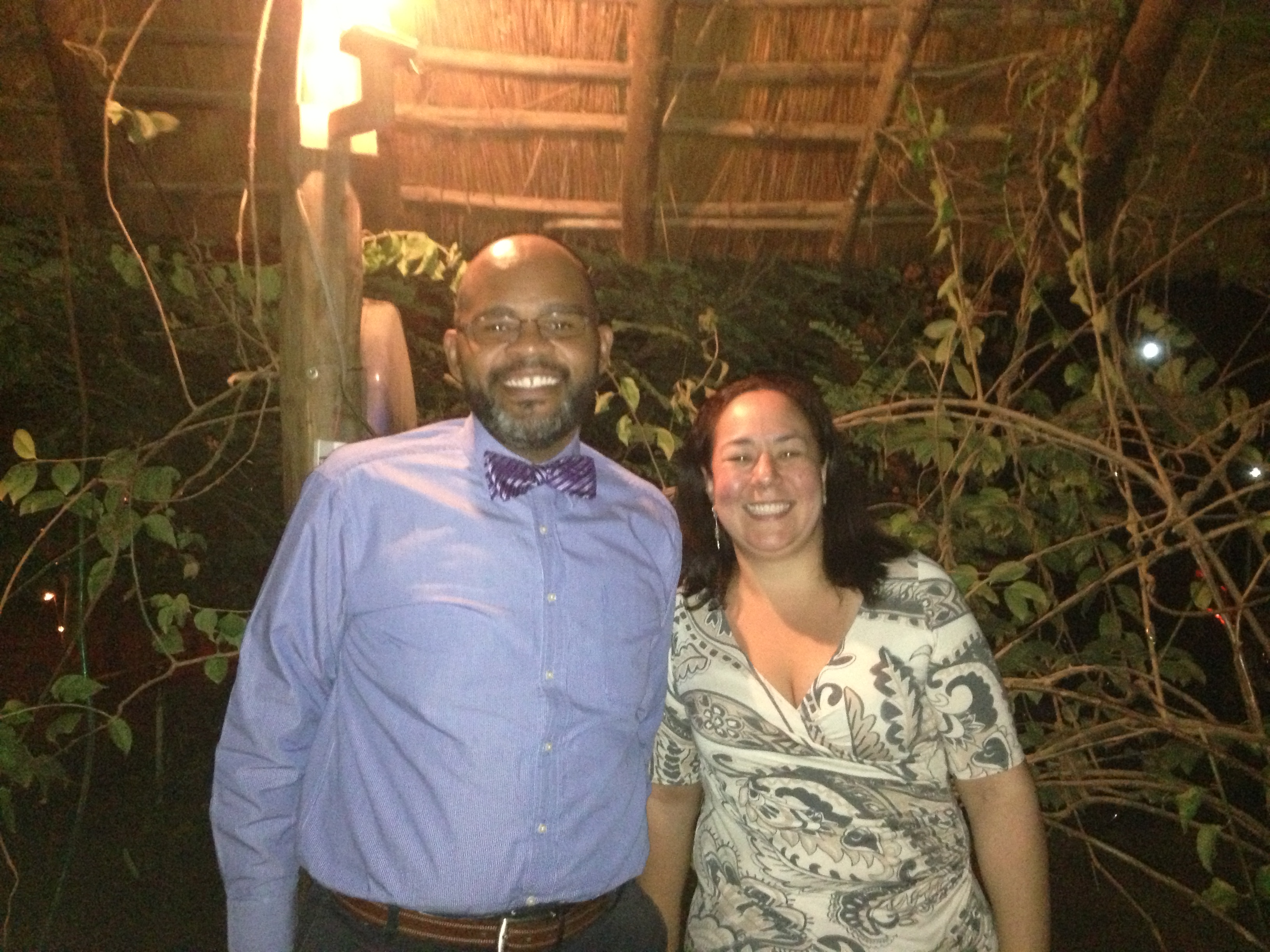
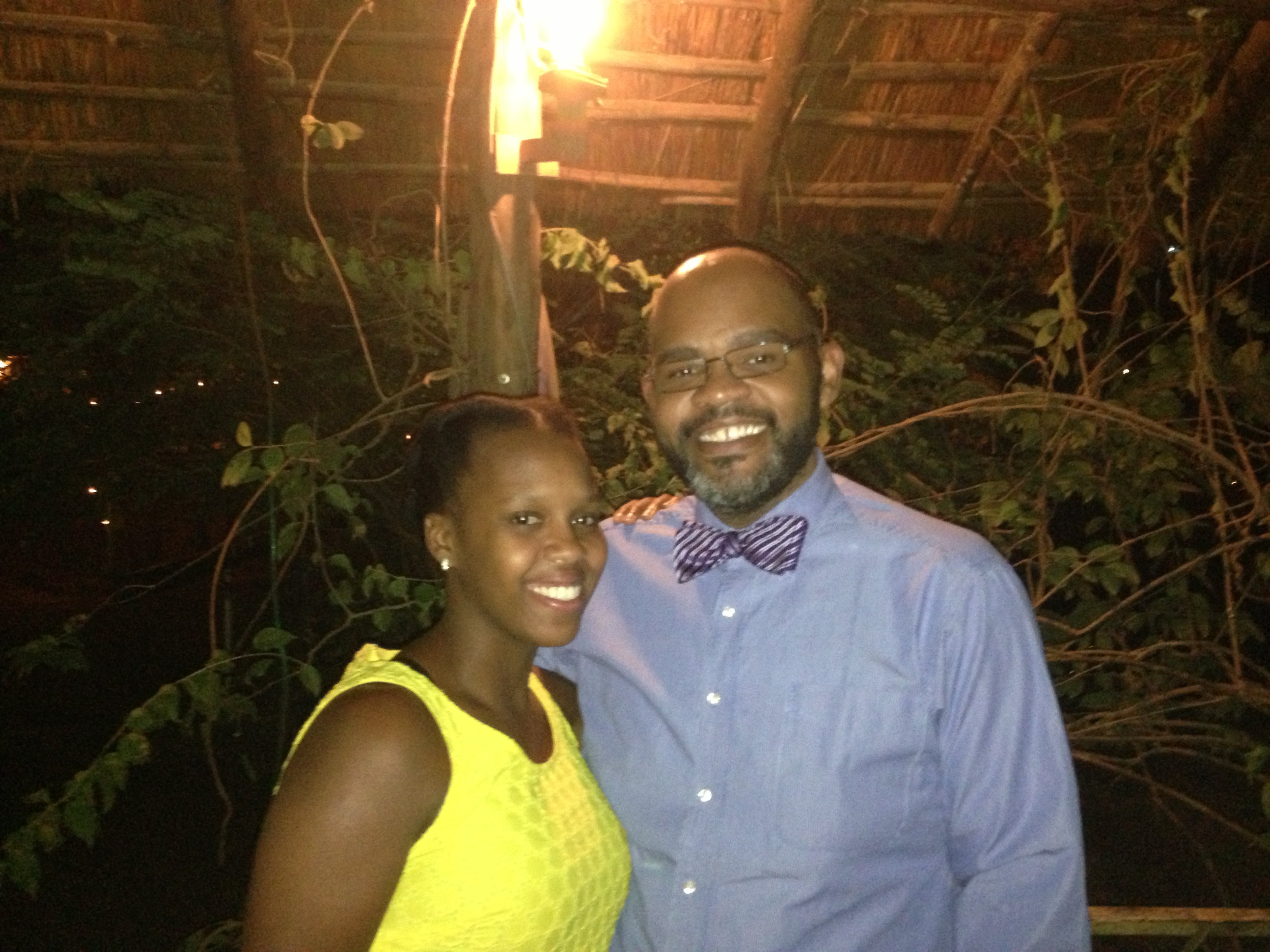
The downside of working abroad is that people are constantly coming and going. And then, there is the chance that a conflict breaks out people are forced to flee. That was our case in South Sudan. Sadly, not everyone was able to leave and several IRI staff had run ins with opposing sides of the conflict and forced to find safety in United Nation camps. The last three photos were taking on the last quiet night in Juba – December 14. The following night, gunfire and explosions were heard in various neighborhoods of Juba. Thanks to social media, I am able to keep in contact with most friends from South Sudan.
 A FREDAY in AFRICA!