Its hard to believe that two years ago I was making the rounds in the United States saying good by to friends and loved ones as I was about to embark on a new adventure in my life. It was a difficult time because I was essentially giving up my community of friends and proximity to my family for unknown challenges and opportunities on the African continent. And while the transition was not always an easy one (evacuation because of conflict, damaged external hard drive, malaria, etc.) it has been an inspiring and eye opening experience.
A Facebook friend recently posted an article discussing the 5 Depressing Side Effects No One Tells You About Moving Abroad. The author listed the five depressing side effects as (1) Your loved ones will be devastated, (2) You’ll feel guilty all the time, (3) You’ll feel really, really lonely, (4) You won’t fit in anymore and (5) You’ll lose dear friends. While not everyone will experience all five of these side effects, I think she hit the nail on the head. I’ll never forget when I was preparing to leave the U.S., my mom would always avoid the conversation because she said, “it just brings me to tears.” Its difficult making the move half way around the world because life doesn’t freeze in place until you return from your “amazing adventure.” But not only will I grow from this situation but those around me will also grow from learning about my experiences.
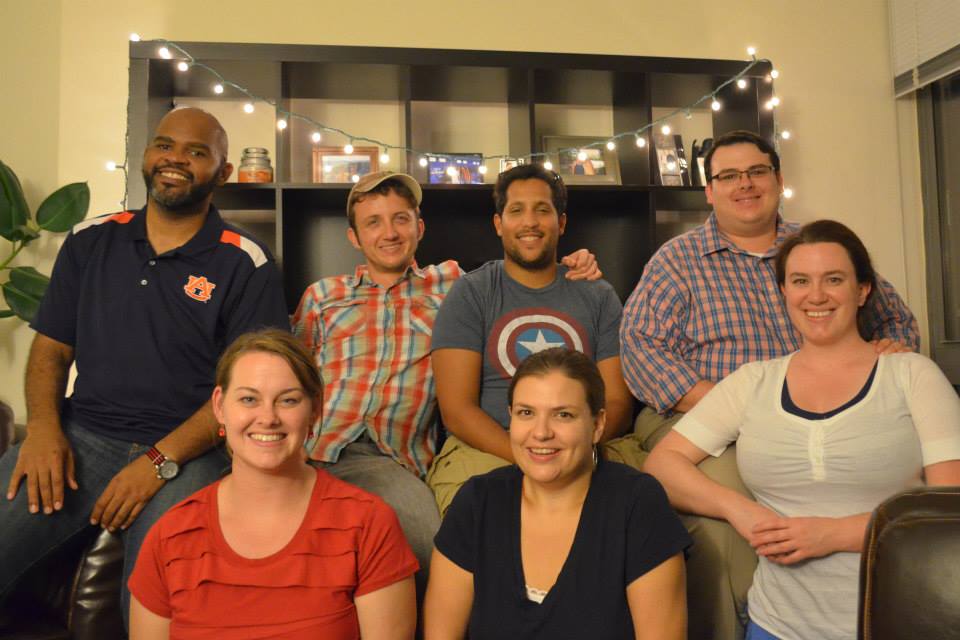
A photo from my last weekend in Washington, D.C. My friends threw me a “Celebrate Sentell, Celebrate America (and Auburn)” party. The one thing that hasn’t changed, wearing Auburn on my chest! War Eagle!
The “American Lens” that I have often used to look at life was ripped from my face and stomped on by my experiences on this continent. And while I have tried to use those “lens” again and again, I have come to the realization that living abroad has completely changed the way I view every aspect of my life. Just the other day, I was talking to a Nigerian youth active in youth civil society organizations (CSO) and we were discussing “best practices” for political parties. He politely corrected me by saying “good” practices, not best practices. His reasoning was not all party practices from the United Kingdom or the United States will fit the norms here in Nigeria. That is why we should refrain from using the term “best” and use “good” when referring to the type of activities political parties should use or implement. This may seem small to you but it’s a big deal with how your words will come across in a cultural settings. The last thing I want to be seen as is a elites American thinking my way is the only way. Interacting with someone from a different culture or background will challenge the way you look at life. And it’s a good thing because it will enhance and strengthen your beliefs. When I lived in Washington, D.C., my friends came from all over the United States and the world.
I don’t know how long this adventure will last but my goal is to take advantage of the friendships and the uncomfortable cultural situations I find myself in while on this continent. I think Nelson Mandela said it best – “There is nothing like returning to a place that remains unchanged to find the ways in which you yourself have altered.”

Pictured with the Speaker of the Nigerian National Assembly, Yakubu Dogara (center) and Women in Politics Forum President, Eberre Ifendu (left) at the U.S. Embassy in Abuja, Nigeria.
I have been pretty hard on Nigeria since arriving in May 2014. There are crazy drivers, periodic power outages (as many as four over the course of an hour), aggressive conversations and corruption at every turn. But as I settle into Nigeria, I have come to appreciate the people and the difficult life many Nigerians live. I have also learned to expect when someone is either asking for money or asking for a bribe. Usually when a person is asking for money, it is preceded by a sad story or a stressful situation. They will never directly ask you for money but assume the story will move you to give. When asking for a bribe, usually the conversation starts in an upbeat manner – “Bros, How Now?” or “Oga (boss), today is a holiday!”
All these things will come in handy as it looks as though I will be in Nigeria much longer than I had planned as I was promoted to Resident Country Director (RCD). It was a surprise as my short-term goals were not to spend another year in Nigeria but my superiors promoted me to be the RCD. So instead of just managing the political party program, I’m now directing the staff and representing my organization at diplomatic receptions and government meetings.
The real test will be my ability to manage the staff. My leadership skills will be put to the test as I take on this new role. I have prided myself on enhancing my leadership style and creating an environment that encourages and lifts up those I lead. I have read a lot of leadership books by John Maxwell, John MacArthur and other. I have even taken examples from the life of Moses and Paul. But leading people from a different culture will not only test our patience with each other but also a test our resolve. I was recently watching television and a woman on CNN was talking about the challenges managers face in multi-cultural settings. She told the story of an Asian woman working for an American boss. The manager had a few issues that he wanted her to address but when he called her into the office, he began by highlighting all the things she was doing well before discussing the issues she needed to correct. After the meeting, he thought he had explained the areas she needed to address and she felt like the manager was about to promote her. Both individuals perceived the meeting different and both left the meeting with different versions of what happen.
Case in point – the other day, we were losing a consultant who has been extremely effective in helping the office address some deficiencies. I told him that on his last day, I was going to bring in a cake for him. I was thinking “its your last day, so the office will celebrate you with a cake.” He was thinking, “Sentell is making me a cake for me to take home to my family.” The next day, we had to solve the differing expectations. We ate the cake in the office but I extended an invitation for his family to join me for dinner at my house. This story may seem small but it explains the cultural conundrum I face in my new position.
I am excited for the new duties, as it will give me a chance to put those leadership style on display. And, I have a good staff that is hard working and willing to put in extra time to accomplish their duties. I have no doubt that they will make me shine in my new role.
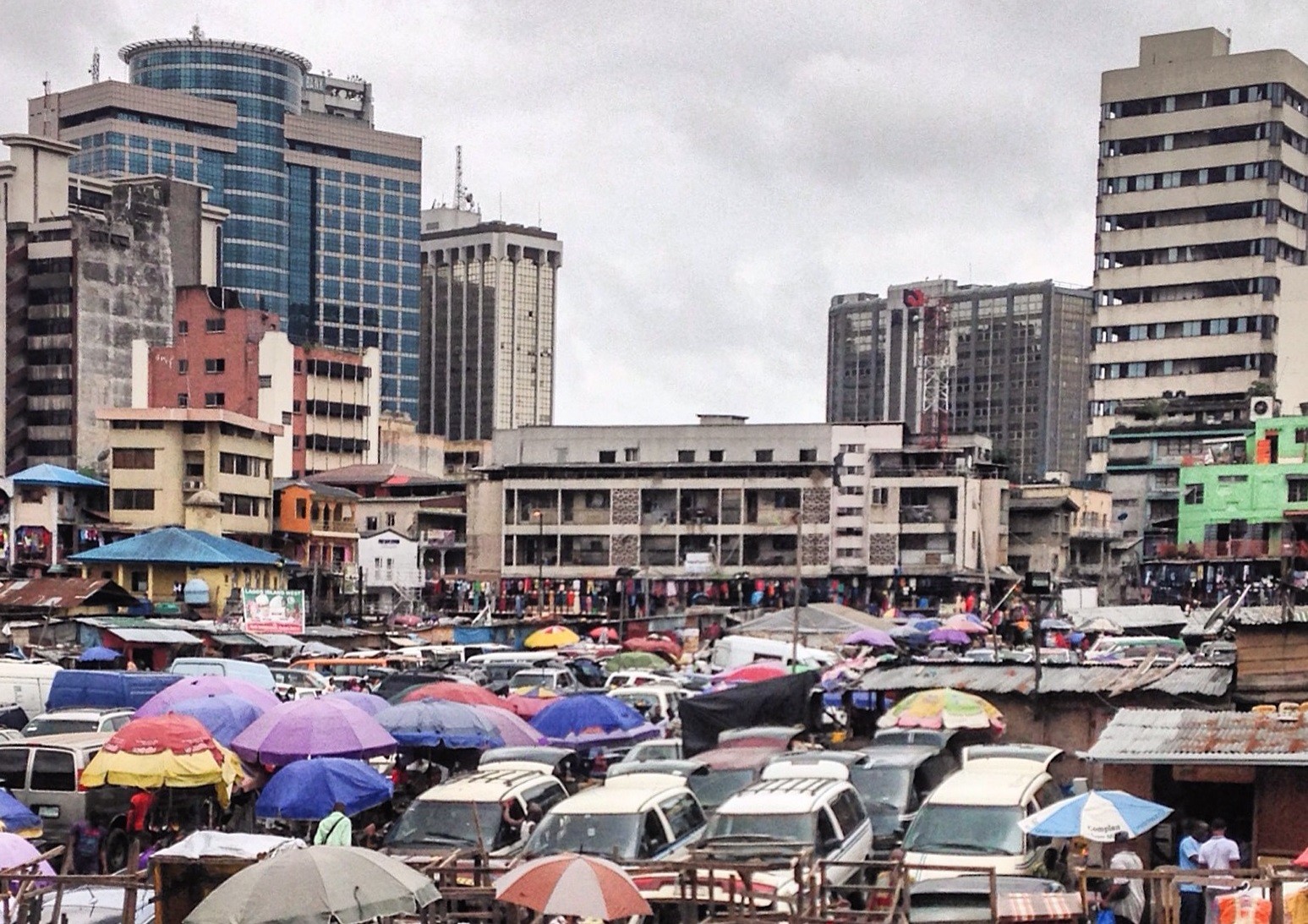
Today, I entered the beast, better known as the Balogun Market in Lagos, Nigeria. Lagos is one of the most populous cities in the world serving home to over 19 million people (about two times the population size of New York City). The Balogun Market is a large and noisy outdoor and indoor space that is made up of stalls along complex and confusing aisles. The market is known for its cheap goods and endless yards of exotic African fabrics. I was told that if I wanted to get inexpensive, colorful fabrics, then this is the place I needed to go.
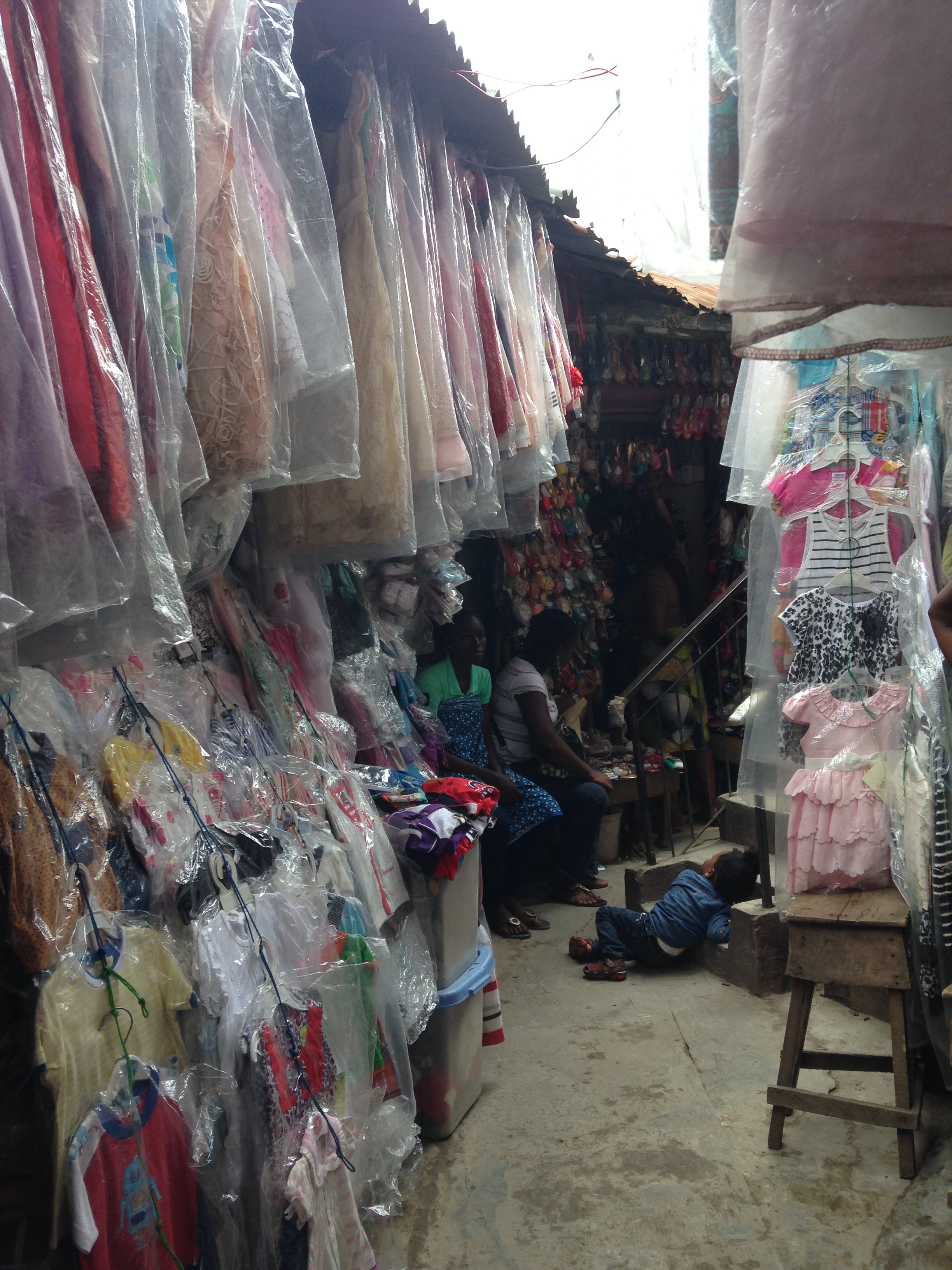
The tight, chaotic aisles of Balogun Market.
Now, I have been to numerous markets across Africa – South Sudan, Rwanda, Kenya, Mexico and Ecuador, including Wuse Market in Abuja. Usually, I am in and out because I am looking for a particular item. Within 30 minutes, I entered the market, find my item, negotiate a price and on my way back to the car. As we entered Balogun, I was looking for fabric and my colleague was looking for baby items. In the first hour, I was completely overwhelmed with the unlimited yards of fabric types and patterns. It was endless aisles and stalls of flashy and colorful patterns. I was struggling to make up my mind. And I believe the lack of air and circulation in these stalls is a tactic to wear you down so you will accept any price. It one point of time, I told my colleague, I just want to purchase this fabric just to get out of here!

My fabric purchase in the Balogun Market.
The worst part of our four hour shopping experience was trying to find a baby carrier (a car seat). While it would be extremely smart to cluster similar goods together, that is not the case in the Balogun Market. It’s a chaotic experience looking for items that are scattered throughout the busy market. It doesn’t help that Lagos’ location on the Atlantic Ocean breeds a humid and rainy climate situation. Some of the stalls were like steam rooms because of the heat and humidity.

Seeking refuge from the noisy market.
At one point, I sought shelter with two women selling children clothes to escape the rain and heat as the two market women had an air conditioned stall. It was a small relief from the cacophony of sounds taking place outside their stall. After almost three hours of shopping and negotiating, I told my colleague that I was having a sensory overload and it was time to call it a day. He agreed as he had purchased the baby carrier but was in an intense negotiation regarding a bassinette. As we headed back to the car, he hired a woman to carry his baby carrier and bassinette on her head. I explained to him that in the United States, the man is expected to carry the items to the car – not the woman.
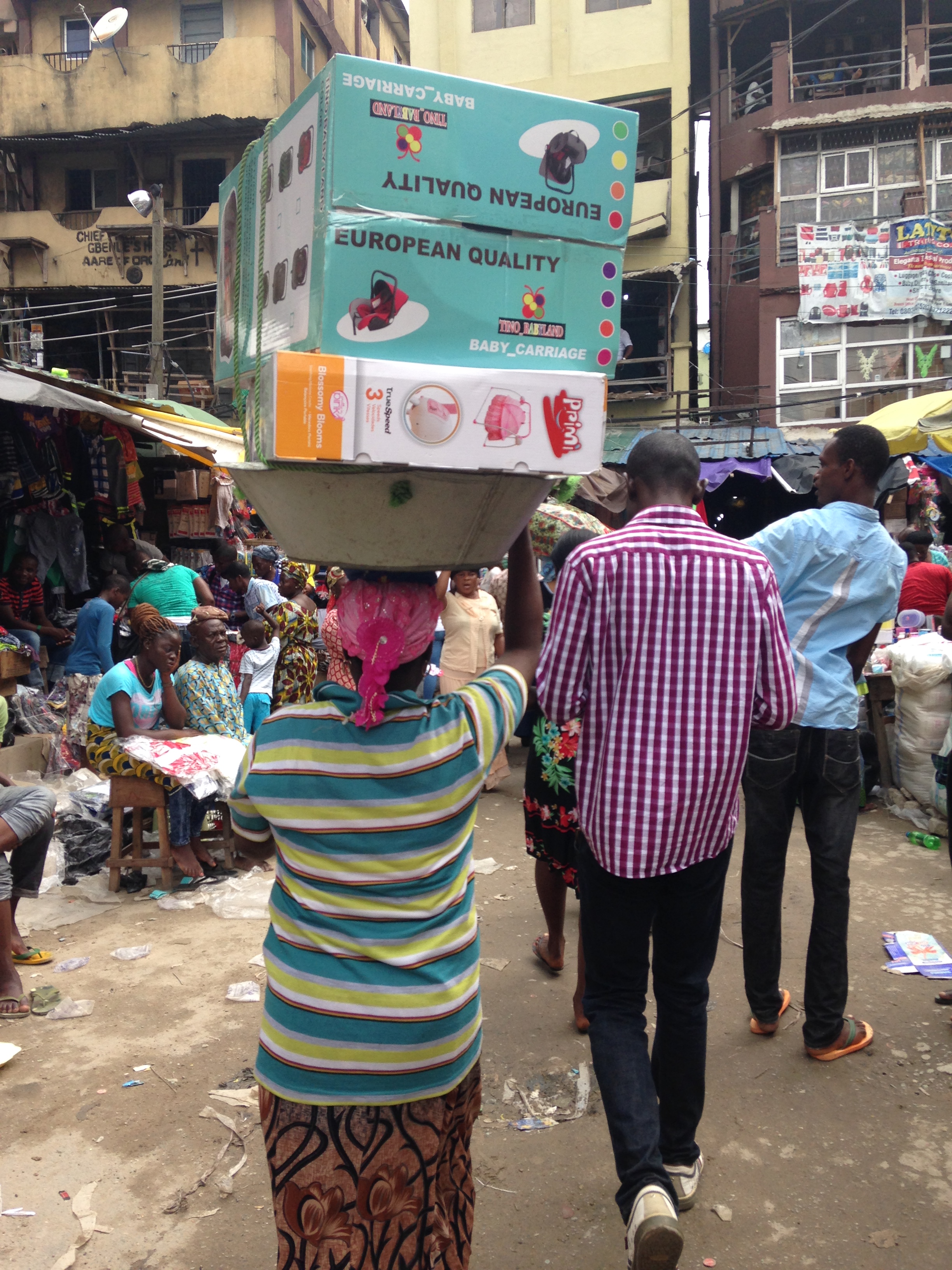
My colleague and his “helper” delivering his items to the car.
While my American bubble was being tested during our visit to Balogun, it was an enjoyed trip into the maze of the chaotic African market. I picked up some flashy African fabric that my tailor will turn into a cool Nigerian outfit. I will be looking good in no time…Just check out what he did with my Auburn fabric from the United States…War Eagle!!!
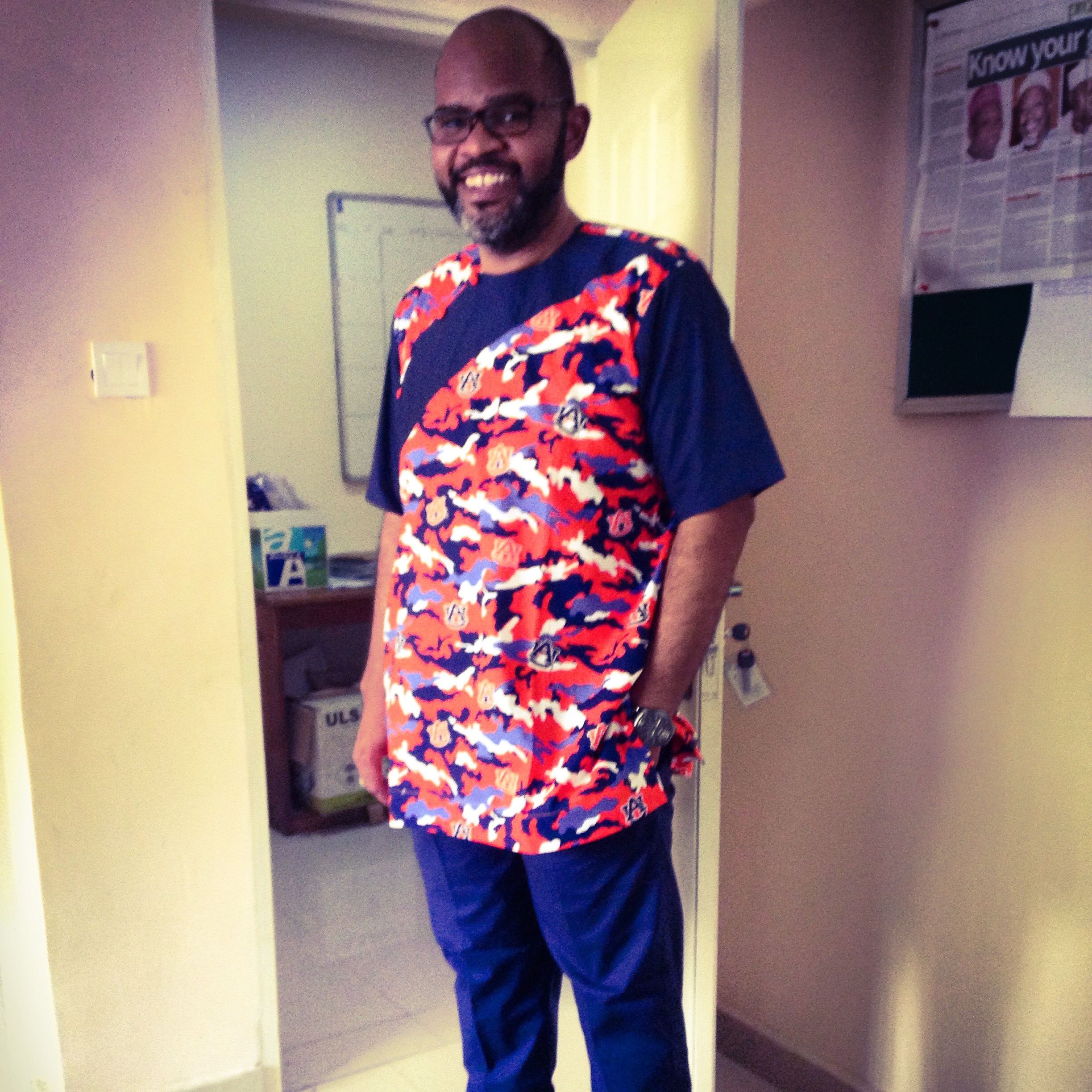
Ready for football season! #WarEagle

I will never forget the sinking feeling I felt when I turned on my television on Thursday morning, June 18 and heard the CNN reporter announce “Breaking News” from Charleston, South Carolina…it would be a gut wrenching day as nine innocent souls lost their lives in a horrific attack at a historic church. Since that time, we have gotten to know each of the victims in a personal way. Clementa Pinckney was a pastor and a State Senator who left a grieving widow and two young daughters. Susie Jackson was 87 years old and a longtime member of the church. She sang in the choir and served on the usher board. Her nephew, Tywanza Sanders tried to save his aunt’s life but in the end, he too lost his life. The other victims included Cythnia Hurd, Ethel Lance, Depayne Middleton-Doctor, Daniel Simmons, Sharonda Colman Singleton and Myron Thompson. The internet is littered with heart-wrenching stories from loved ones about their departed family members. For a week, the U.S. stood still to say good-bye to these nine souls. And in the aftermath of that tragedy, people have protested to remove the confederate flag, a symbol used by the alleged killer to show his hatred of black people. Just last week, the South Carolina House of Representatives and Senate voted to remove the flag from the State Capitol grounds. The response to these senseless killings has been overwhelming.
But since that time (June 18), over 250 Nigerians have lost their lives to the senseless violence of Boko Haram. If you are an American or European, you probably missed the 30 second news clip that informed you that Boko Haram targeted a mosque as Muslims were preparing to break their fast during Ramadan or that last Sunday, the militant group attacked parishioners as they were filing into church in northeast Nigeria. Boko Haram has been terrorizing Nigeria since 2008 but in February and March, the Nigerian military made gains against the terrorist group. However, in the past few weeks, the group has been coordinating attacks outside of the northeast and the recent attack in Zaria was only three hours from the capital city of Abuja. The recent spike in the wave of violence has put Nigerians and expats on edge.
I have wondered why the world is often so quiet when tragic events happen in Nigeria. In a selfish way, its good for me as my parents may not be aware of what is happening in Nigeria and are not so worried about me. But thousands of people have been killed in Nigeria by Boko Haram since 2008 and the massacres continue. When Boko Haram started attacking villages in Nigeria, it was making the international news, but now, since the attacks are routine, media houses are quiet. When I think back to living in the U.S., I too was removed from the atrocities that were taking place outside my country. Until I started traveling around the world, I was mostly focused on the circle around me – family, friends, and work. But now my circle has increased and I am conscious of what is not only happening around me but also around the world. When Al Shabaab attacked a shopping center in Nairobi in 2013, many people were more surprised that Nairobi had a shopping mall.
The attacks by Boko Haram are competing for space among many tragic situations; deadly police violence in the U.S., the migrant crisis in the Mediterranean Sea, the fall of Syria, Yemen, etc., ISIL, Greece debt situation and the list goes on and on. President Muhammadu Buhari, the newly elected president of Nigeria said during his campaign that he would eradicate Boko Haram from northeast Nigeria. However, he has found himself buried among a list of problems from the previous administration, including a lack of morale in the military.
In January, Paris was rocked by attacks on the satirical magazine, Charlie Hebdo. At the same time that people were tweeting the hashtag, #jesuisCharlie, 2,000 Nigerians were reported dead at the hands of Boko Haram. Very few people tweeted about the massacre in northeastern Nigeria and government leaders did not organize a march to show support and unity in response to the killings. Getting to the bottom of this problem is difficult for many reason. Often times, it takes days before news to be reported out of northeast Nigeria. In addition, Nigerian leaders are often quiet responding to the attacks of Boko Haram. Former President Goodluck Jonathan was chided for speaking out against the Paris attacks but it took a few days before he commented on the actions of Boko Haram in his own country. And that was not his first time slowly responding to attacks by Boko Haram.
The international response to the attacks in Nigeria has made me think whether a Nigeria life is equal to that of an American or a Brit. Two weeks ago, 30 British citizens were killed in a terrorists attack in Tunisia. For two weeks, the news cycle focused on the repatriation of the bodies from Tunisia. The world mourned as nearly 40 innocent souls were loss at the hands of terrorist. But there has been no outcry about the lives loss in Nigeria. There has been no moment of silence for the innocent victims in Zaria or Potiskum or Maiduguri. I don’t know the solution to the perception that currently exist but we do need news outlets that are not only inwardly focused but also outwardly focused.

No man can put a chain about the ankle of his fellow man without at last finding the other end fastened about his own neck. – Frederick Douglass
Once again, I am celebrating America’s independence by working to enhance democracy in Nigeria. This past week, I traveled to Calabar, Cross River State, Nigeria for work. Calabar is said to be the number one tourist destination in Nigeria (for Nigerians). The city host carnival celebration each December that is very popular among Nigerians and other West Africans. But buried deep in the city of Calabar, along the river is a small museum dedicated to the history of slave trade. During the 18th century, Calabar became a busy Portuguese port for exporting humans from the African continent to other parts of the world. The museum was a sobering reminder of the tragic and inhuman practice that dominated the world for centuries. Human beings were captured and sold into slavery, forced to sail across vast oceans, where many of them died and eventually forced to work on plantations in the “New World.” Slavery is a dark stain on the history of United States and the world. The American forefathers struggled to adequately deal with the issue of slavery when forming the new government. 76 years later, their inability to settle the slave issue led the country into a brutal four year Civil War.
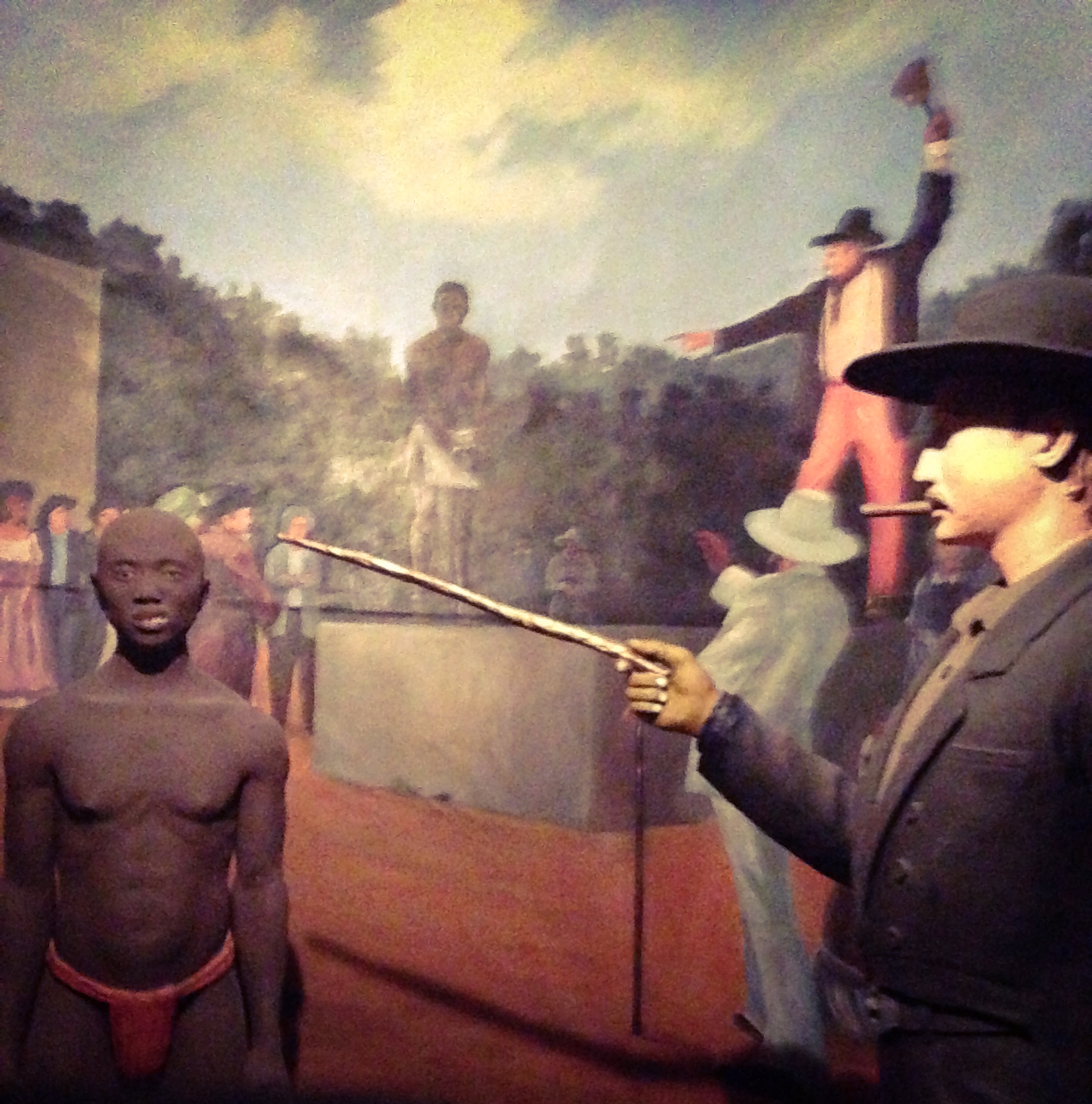
An exhibit from the Slave Museum depicting the selling of a slave at a market in the “New World.”
We (Americans) are a very proud and patriotic people. We celebrate the 4th of July with barbecues, fireworks and patriotic concerts. It’s a yearly reminded that the early “British”-Americans desired to be free of what they deemed a repressive and tyrannical ruler, King George III. But we also are a complicate people, having spent the last 229 years wrestling with the true meaning of freedom. I once had a roommate in college that wanted to hang the confederate battle flag in our dorm room. We had a long and constructive conversation about the flag and in the end he decided not to hang it. His reasoning was a combination of his faith and respect for me as an individual. I respect him for his decision because of the honest and frank conversations we had about race, the South and the confederate battle flag. To my roommate, the flag was a sign of heritage, his ancestors left home to fight the newest tyrannical ruler, Abraham Lincoln and his repressive government. To me, it was a reminded of a time when my ancestors were forced into bondage and unable to take advantage of Thomas Jefferson’s words of “life, liberty and the pursuit of happiness.” The flag’s reemergence in the 1960 represented a time when my parents were forced to attend separate schools, enter through businesses and homes through the backdoor and drink from separate water fountains. The flag represented a heritage of divisiveness, separation and disunity, none of the things that I associate with the United States.

At the Slave History Museum in Calabar.
In my earlier blog “Confederates in the Closet”, I discovered that a direct ancestor fought in the Civil War. Boaz Whitefield Bush and his family lived in Marengo County, Alabama. Maybe to Boaz, what he was doing in 1861 was noble and just. His parents were slave holders and the present U.S. government was a threat to their way of life. Picking up arms and forcing a separation between the southern states and the northern states was the only way to preserve their state’s right to direct its own affairs. Boaz served in the 11th Alabama Infantry Regiment fighting in battles in Virginia. The 11th Alabama consisted of 1,192 men during the war. 270 of those men were killed in action or mortally wounded and 200 men died of disease. An additional 170 men were discharged from the regiment, including my third great grandfather. He returned to Alabama in 1863 after being wounded at the Battle of Chancellorsville. As Boaz was fighting to protect “states’ rights”, he was also fighting to preserve a system where men and women were treated like property and had no rights as human beings. Boaz had also fathered a child with one of his slaves, which I am sure he never brought up to the other men in the confederate camps. It is easy to romanticize the efforts of southern men that left home and fought for what they believed in but to do this also negates the true reason they were fighting. They were fighting to preserve the status quo, whether they had slaves or not.

The 1850 census for Marengo County, Alabama. Lewis B. Bush is listed with his 25 slaves between the ages of 2 and 75. Lewis Bush was my fourth great grandfather. And one of those slaves he owned was my third great grandmother.
Racial relations are once again a hot topic in the United States. The death of nine innocent black Americans in a church in Charleston, South Carolina has put the confederate flag back into the public discussion. The goal should not be to remove the flag from our consciousness because it is an important relic from our history. However, it should never be on par with the American flag. In December 2013, as foreigners and expatriates were being evacuated from South Sudan, it was the American government that within 48 hours was evacuating its citizens, not the Confederate States of America. A random point to make but one that has solidified my trust and resolve in the American experience and what we have achieve as the United States of America. The U.S. has a complicated history.
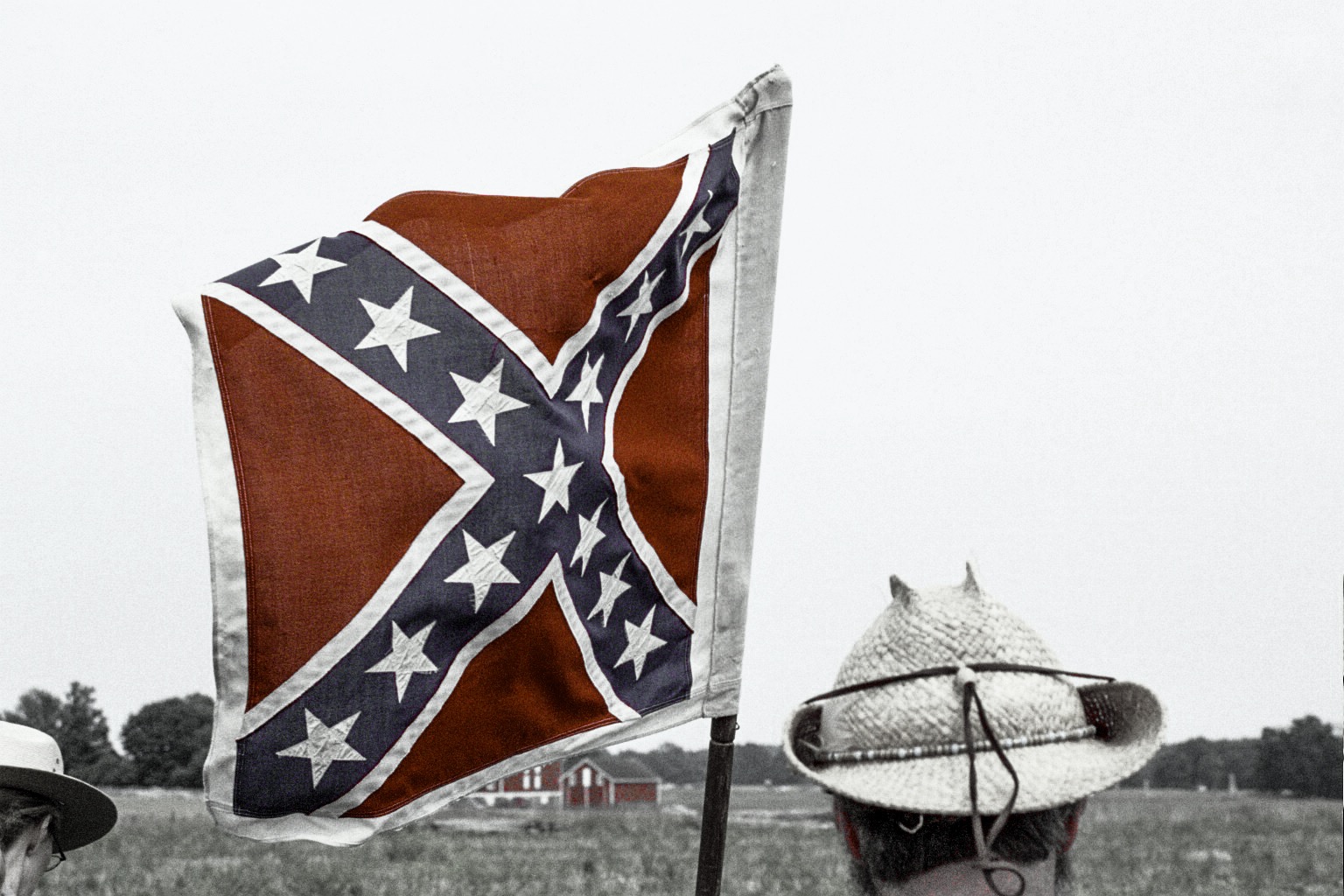
From a trip to Gettysburg in 2005. I participated in a lecture walk with a National Park Ranger who led us along Pickett’s Charge. The flag led the charge as we walked across the open landscape of the Pennsylvania countryside.
The confederate battle flag doesn’t have to fly on government property for us to remember the sacrifices that took place on sacred battle grounds across the American landscape. The history that we portray to future generations should tell the story of how we arrived at our current destination, not how we dream of a yesteryear that has come and gone.
Happy Independence Day, United States of America! Let’s strive to move forward in the 21st Century and not get bog down in battles of the past.

Above: My maternal grandparents (Drue and Sarah) and their four sons (Arvesta, Dalton, Dan and Drue, Jr.) in Arkansas circa 1943. My grandparents had three additional daughters before the end of the decade (the youngest, my mother).
During my time working remotely in the Washington, D.C. headquarters of my organization, I entered a taxi on my way to a meeting at the State Department. What was most surprising about this particular taxi ride was my taxi driver was a black Washingtonian, a rare find in Washington, D.C. Taxi drivers in D.C. are mostly Ethiopian with other nationalities making up the majority of D.C.’s taxi regiment. As I have learned being in Nigeria, you always properly greet your taxi driver and ask, “How work?”
So after getting pass the pleasantries, my driver asked, “Where you from?” I told him that I was originally from Alabama but had lived in Washington, D.C. for a decade but now resided in Nigeria for work. He said, “Oh, so you from Nigeria?” Thinking maybe he misunderstood me, I repeated myself. He asked again, “You from Nigeria?” I laughed and said, no, I was born and raised in Alabama. He replied, “Ok, so your parents are from Nigeria?” I said, “no, they are also from Alabama, and their parents and their parents, all from Alabama.” I could sense that he was now confused but I could not understand why he wasn’t following what I was saying to him. Finally he blurted out, “You don’t sound like you are from Alabama. You sound like you are from some foreign place.” I laughed out loud because I knew why he was confused. Since moving to South Sudan (and then to Nigeria), I have taken on a very strange accent that tries to merge my American pronunciations with a British twist. This helps my colleagues and other people I interact with better understand me.
I got the idea from my American friend living in Rwanda. He told me that while many of the people he interacted with spoke English, they learned it from the British, not Americans. So his American accent and pronunciations would sometimes be lost in translation. So I have tried to move away from certain American pronunciations like “wodder” for water to the British sounding “WAH-ta” or referring to my “trash” as “rubbish.” In addition, a car no longer has a hood and a trunk, its now a bonnet and boot. And while I have not incorporated the British pronunciation of aluminum, it makes me chuckle each time I hear it. The TV show Parks and Recreation did an episode where Andy laughed each time he heard the British pronunciation. The Brits say “al-loo-MIN-ee-um” which at first sounds extremely foreign to the American ear. Family and friends back in the U.S. have called me out about my “new” accent but its necessary for me to get by in Nigeria.
But this is not the first time that a taxi driver has been confused about where I am from. Before heading back to the U.S. for home leave, I was in a taxi in Abuja when the driver asked me where I was from. I told him I was an American living in Nigeria. He responded by saying, “so are you a Nigerian that grew up in the U.S.?” I said, “no, I was born in the U.S.” He responded, “So your parents are from Nigeria?” I said no, “my parents were also born in the U.S.” The taxi driver said, then your grandparents must have emigrated to the U.S. I again, said “no, my parents, grandparents, great grandparents and all the way back to the slave ship that crossed the ocean are from the U.S.” He smiled and said, “Go ask your grandparents, they will tell you that you are from Nigeria.” I laughed and kept quiet. To this driver, there was no way I was anything but a Nigerian!
My parents recently participated in one of those DNA test that tells you were your ancestors came from. I was skeptical of the test but my dad was interested in taking the test. So my parents sent off samples of their saliva to be tested. We discovered that my dad’s ethnicity is 67 percent from the African continent – 24 percent from Ivory Coast & Ghana, 21 percent Cameroon & Congo, 11 percent Nigeria, 9 percent Senegal and 2 percent Benin & Togo. So basically, the 67 percent ethnicity comes from the countries along the western coast of Africa. 29 percent of my dad’s ethnicity is from Europe, mostly Western Europe (Germany). This is the connection to the German ancestor August Herman Francke. I am also sure the Nigerian taxi driver would be happy to know that my dad is 11 percent Nigerian (and 67 percent West African).
My mom on the other had is 49 percent European, 25 percent from Western Europe and 15 percent from Ireland. She is also 48 percent African, 17 percent from Ivory Coast & Ghana, 11 percent from Nigeria, 7 percent from Cameroon & Congo, 4 percent from Senegal, 4 percent from Mali, 3 percent from Benin & Togo, 1 percent Africa Southeastern Bantu and 1 percent South Central Hunter/Gatherers. Once again, 11 percent Nigerian! While it might sound strange that my mom is 49 percent European and 48 percent African, her grandfather was a white man name John Roberson (or Robinson) from Mississippi/Arkansas and my grandmother’s ancestors included a few interracial births.
My mom is in the early stages of planning a family reunion (or shall I say ‘WE’ are planning a family reunion) and she wanted to make a trip to Monroe County, Alabama. My maternal great grandparents migrated to Mount Vernon, Alabama in the 1920s from Monroe County. As my grandmother told the story, her father Andrew came to Mobile County looking for work. The entire family followed him a year later. My great grandmother and her nine children boarded a steam ship at Claiborne and traveled along the Alabama and Tom Bigbee Rivers to the Mobile River and finally to Mount Vernon.

The historical sign that explains the significant of Claiborne. Claiborne was an important stop along the old federal road that ran from Washington, D.C. to New Orleans. In Claiborne, travelers would take the ferry across the river to continue their trip.
The entire journey took them nearly two days. It took us (my parents and I) just shy of two hours to make the journey to Finchburg/Wainwright, Alabama. After reacquainting ourselves with ancestors who paved the way for our family, we started the trip back to Mount Vernon. Along the way, I told my dad that some of his ancestors and relatives were buried along Highway 84 between Monroeville and Grove Hill Alabama and that we should stop in and visit the cemetery.
It was initially difficult to locate the cemetery but thanks to the World Wide Web, I was able to find a posting online that provided instructions on how to locate the cemetery. Here is where the story gets interesting. The relatives that we were trying to locate were not necessarily the relatives who wanted to know we existed. My parental second great grandmother Emma was the descendant of a slave and one of the sons of Lewis Bryan Bush, the owner of a plantation in Marengo Country, Alabama. While I am sure the Bushes never fully integrated Emma into the family, she was listed on the 1870 U.S. census as “Emma Bush, Domestic” in the Bush household.

A copy of the 1870 census listing Lewis Bush, his wife Mary and his three daughters. Emma is listed as a “Domestic” in the Bush household.
A few years later, she married my second great grandfather Allen Barnes and moved to Washington County, Alabama. Boaz Bush, Emma’s father eventually served in the Confederate Army during the Civil War. After the war, he married Amanda Hudson and settled in Clarke County where he worked as a physician. Boaz and Amanda and Emma and Allen both went their separate ways. Thanks to Ancestry.com, I have been able to trace our family back to the Bushes and even back to the European continent. Boaz’s heritage was English and German. My eight great grandfather, August Hermann Francke was a German Lutheran clergyman, philanthropist, and Biblical scholar. Can you imagine!
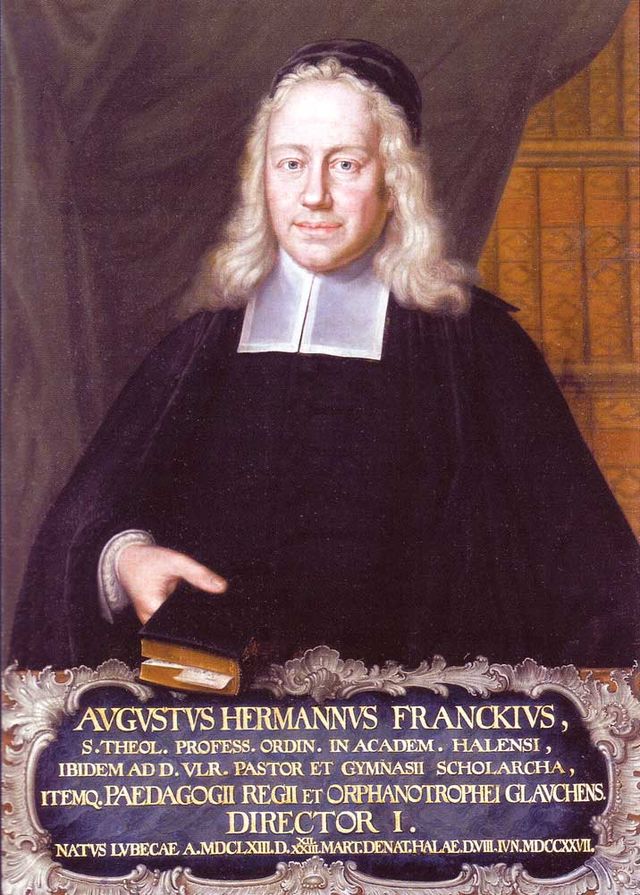
I copied this photo from August Francks Wikipedia page. He was born in Germany in 1663 and died in 1727.
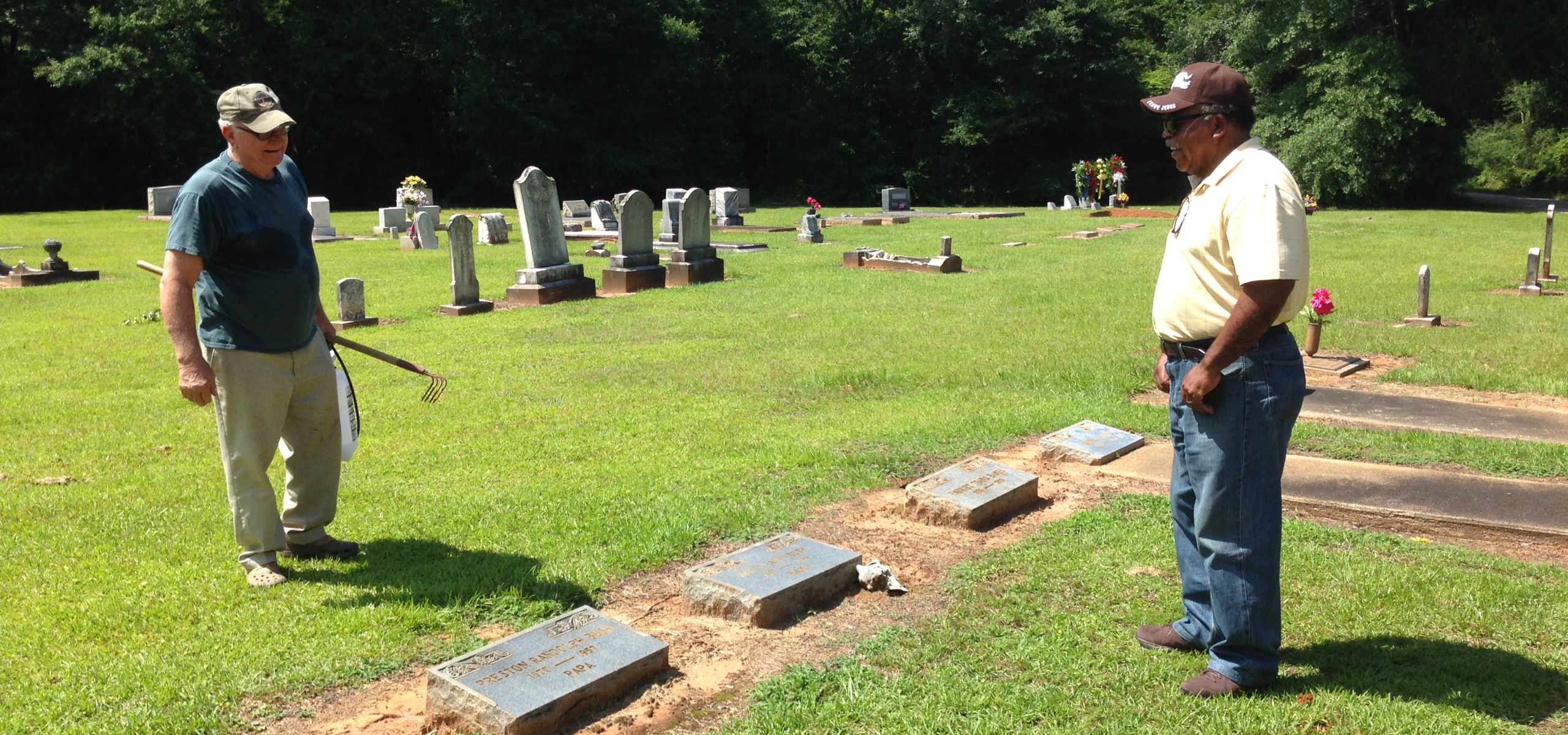
As we arrived at the Gosport Baptist Church or the Gosport Methodist Church, depending on your Christian denomination, as the two churches share the same property, a second truck pulled in behind us. We exited our vehicle and started to roam the cemetery. But it didn’t take us long to stumble upon the Bushes. The graves consisted of Preston Randolph Bush and Kendall L. Bush, sons of Boaz and Amanda Bush and several of their children. Just as I started to take photos, the man in the truck walked up and told us, “these are my relatives, I’m a Bush.” At that moment, we all froze. We didn’t expect to meet a “cousin” while out visiting the cemetery and especially a white relative. My dad started to engage the man who had a very thick accent and looked as he had just concluded some form of manual labor in the 90-degree heat. I was deathly afraid that my dad was going to say, “these are my relatives too!” Instead he said, “We are from Mount Vernon, Alabama. Do you know where that is?” The man joked and said, “Naw, I don’t know where that is.” After we all laughed, some of us for other reasons, my dad said, “We were just passing through and saw this well-manicured lawn and just stopped in to walk through the cemetery. The man, holding a pitchfork and chemicals to kills ants began to tell us about the church and the cemetery. He gave us a history of the cemetery and told us that his father, William Adlai Bush was buried in the plot with his father Preston and his mother Harriet. My dad began to walk around and whispered to my mom, “I don’t think we should say anything about being related.” He also told us that the two churches had a total membership of six – three at the Baptist Church and three at the Methodist church. He went on to say that all of them are related and each attends each other’s church. He said, “We all serve the same God, Baptist, Methodist, Presbyterians. However, Catholics are different. “Even those people over there that worship Allah serve the same God.” His statement, along with his accent made me chuckle.
After twenty minutes, we ended the conversation and decided to head back to Alabama. As we were leaving, he said, “Y’all come back and the next time, bring some money for the churches.” We got in our car and immediately started to laugh. Each one of us thought that the other would reveal to Mr. Bush why we were out in the cemetery. We laughed the entire ride back to my parent’s house.

The Alabama River at the Claiborne Lock and Dam in Monroe County, Alabama. This is the location that my great grandmother boarded the steam ship for her journey to Mount Vernon, Alabama.
I feel bad that I didn’t probe him for questions but I was not sure how to approach the subject without revealing why we were there. And, I think Mr. Bush knew who we were (not us personally but the Barnes Family). I have had other Barnes relatives make outreaches to the Bushes only to be turned away. We were concerned how he would feel if we reveled that my dad was his second cousin twice removed. The two of them shared the same ancestor-Boaz Bush. The fact that he was holding a pitchfork didn’t help the situation either!
The American south is littered with stories of white slave owners having children with their slaves. This situation repeated itself in other branches of my family tree among my dad’s ancestors and my mom’s ancestors. These advances were mostly unwanted but a slave was viewed as property and had no rights. Tabby, Emma’s mother was victim of an unjust system that classified human beings as property. However, the Mr. Bush we met in the cemetery shouldn’t carry the sins of his ancestor and we are not looking for our inheritance. I just wanted to gain a better picture of the people whose genes I carry. I have spent the last 17 years researching my family. Long before census records were on ancestry.com, I was in dark basements of museums and library piecing together our family history. It has shed light on our behavior and on our resilience as a family.
I was planning to share my various experiences in the U.S. but race was a constant conversation during my trip to the U.S. so I wanted to post some of my conversations about race.
Just last week, I was having pizza with a friend who has had a profound spiritual influence on my life. This friend is white and we were catching up after my year in Nigeria. Eventually the conversation turned to race and the recent events that have been dominating the American press – Ferguson, Baltimore and McKinley, Texas. This friend and I have had details conversations about race over the years and how my life has been affected my America’s focus on skin color. Through our conversations and in letters that I have written him, he has used my experience to share with others. He was telling me that he was recent talking with another friend, who is also black about our discussions. My friend (let’s call him Bobby) asked his friend (let’s call him Danny) about what he thought of my experiences and my outlook on race. Danny (his friend) said that he could not speak to my experiences but he grew up in inner city Washington, DC and grew up with a distrust of white people. A distrust that still exist in certain situations. This conversation got me to thinking about our different experiences.
I grew up in the “Deep South”, not far from the fields that my ancestors toiled in the soil rich Black Belt of Alabama (Monroe County). While I grew up in a small black enclave in Mount Vernon, we were surrounded by white southerners who were descendants of the slave masters that owned the plantation. The year I was born, George Wallace was leaving the Governor’s Mansion after serving two consecutive terms and would return in 1983. Race in Alabama was like humidity, you could feel it but at times it could be hard to see. I too grew up with a distrust of white people but in high school and college, that distrust took on deeper feelings because of my interactions with other students at Auburn (I am thankful for a God who forgives and soften hearts).
Bobby’s friend Danny grew up in inner city Washington, D.C. Washingtonians elected their first black mayor in 1974. Walter Washington, who was elected mayor in 1974 had served as chief executive of the city since 1967. My high school wasn’t integrated until the early 1970s and still to this day, many white school children in Alabama attend private schools. While we have had different experience with race and interacting with white Americans, I am sure if I was to have a conversation with Danny, we would have very similar experiences because from what I have learned, American blacks can be born in the “Deep South” or the Midwest or the Northeast but yet have similar upbringings. We all had a Big Momma, Madea or matriarchal figure who often used wit and humor to make a very important point. I had two, on both sides of my family.
The recent cases of police brutality have revealed what American blacks have been saying for years, American institutions have a legacy of race that often affected the justice that is dished out. I often don’t talk publicly about race. I will talk in small groups but I had a difficult time in college processing race and grateful that God is in the business of softening hearts. (AMEN) But I am a firm believer that American institutions still struggle with the legacy of race. Maybe it’s the way police deal with black men and women versus white men and women or maybe it’s when people follow me (and others) around in stores as if I am the greatest threat to the company or the fact I don’t get a callback for a job because of my name. It’s hard to qualify these incidents but I am sure my white friends don’t think about them.
Recently, I was attending a meeting at a government agency, as I was waiting for the contact person to come down and meet me, another government employee looked at me and just assumed I was the person she was looking for. (The woman was white and she was looking for an Antoine Williams) When we got upstairs a women came out and asked me to fill out forms. I informed her that I was not the person she was looking for…there was a mistaken identity. She called to her colleague and told her that I was not Antoine Williams. The woman, a middle aged black woman was mystified that I was brought to the conference room. Most of my friends will say, “Sentell, the woman was just confused.” And I would agree. However, she never once asked me my name or the reason I was at the agency. She just assumed I was the person. I have other examples that are more overt but this incident made me laugh and provided for a good story.
Until America deals with the legacy of racial oppression, we will continue to have incidents like those in Baltimore, Ferguson and McKinley. But I don’t think the solution is that difficult. We just need to see people as fellow human beings who bring unique experiences to the table because of our race and ethnicity. I believe we are all sinners who desire a relationship with a loving and just God.

At the end of this month, it will mark exactly one year since my move to Nigeria. It has not been an easy transition but somehow I have managed to survive the chaos that is Nigeria. To celebrate my one year anniversary, I boarded a Lufthansa flight bound for Frankfurt, Germany and got the hell out of town. I was eligible for my annual leave that provides a roundtrip ticket back to the United States. I also needed to renew my visa for Nigeria. My visa expired on May 14, 2015. While I have to spend a week in headquarters conducting meetings and visiting with staff, I get a two week vacation to Mount Vernon, Alabama. When I was growing up, I could not wait to get out of Mount Vernon. Now as an expat, I can’t wait to get back to Alabama.
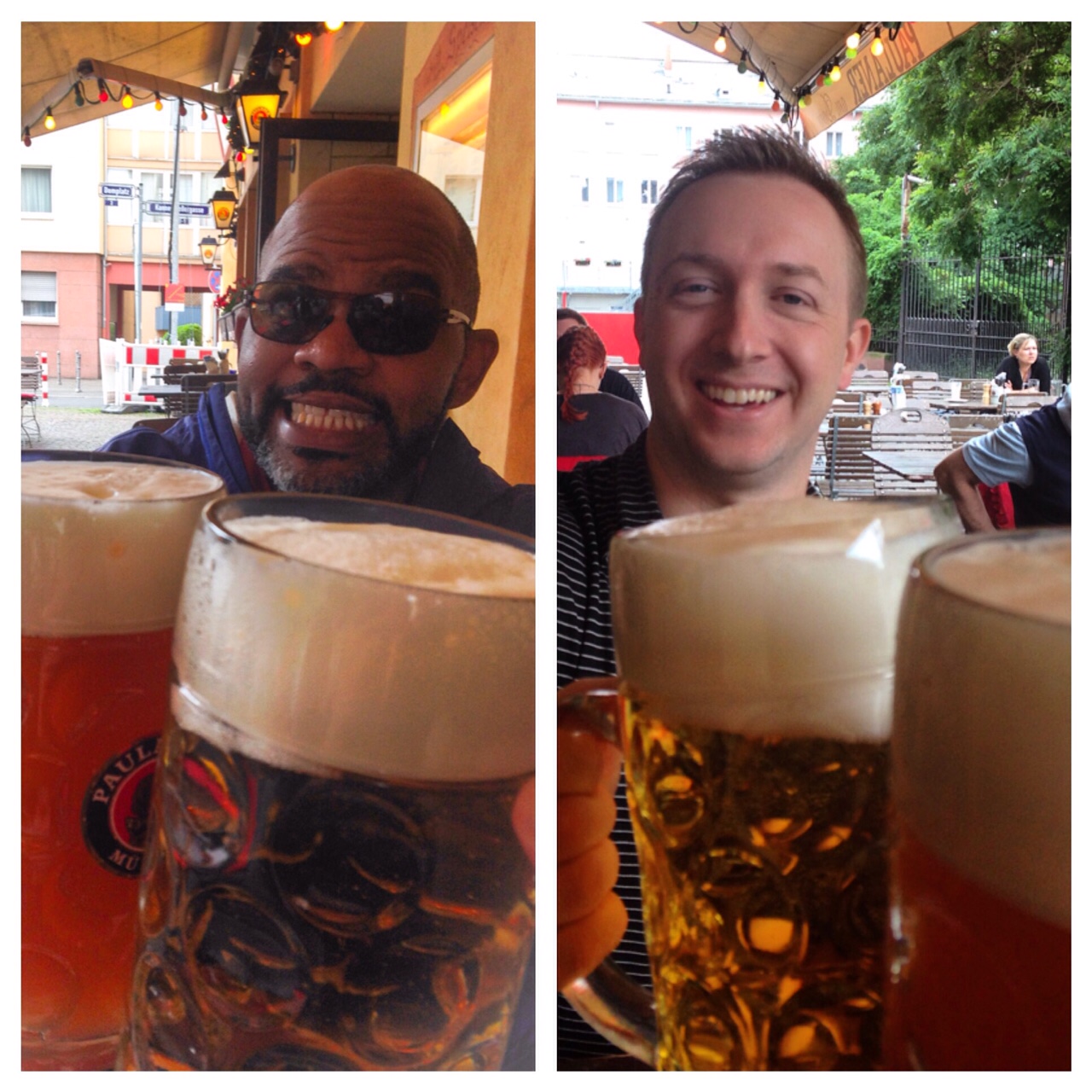
I kicked off my leave with an overnight stay in Frankfurt, Germany. Frankfurt has become like a second home for me to get away from the hustle and bustle of Juba and Abuja. My friends who live there always ensure I have a good time and reintroduces me to the comforts of the Western world. I arrived in Frankfurt on a federal holiday so most of the stores and businesses were closed. However, there was a wine festival happening downtown so we were able to drink wine (and beer), eat brats and crepes and spend a beautiful day outside (things I don’t get to do in Abuja).
Now, I am home…officially I am in Washington, D.C. but as long as I am in the borders of the United States, then I will always be home. And for a decade, I lived and worked in Washington, D.C. so this too is like home. I am looking forward to catching up with friends and family while in the United States and a brief vacation into the Great Smokey Mountains. I think Dorothy said it best as she was trying to get back to Kansas, “there is no place like home…”

The Burj Khalifa – the tallest building in the world. This picture was taken from our hotel room balcony around sunset.
I have always wished that I learned a second language. To be honest, there is no excuse for not having learned a second language. I was required to take a foreign language in high school and in college, so there is no one to blame but myself. While I know key vocabulary words and a few phrases, my Spanish leaves a lot to be desired. However, I have found it somewhat easy seeing the world speaking the Queen’s language, or a version of the English. But after spending a long weekend in the United Arab Emirates (UAE), I have come to learn that Dubai is the new location where English meets the world.

The views of Dubai from the observation deck located on the 124th floor of the Burj Khalifa.
The UAE is a traditional Arabic speaking nation made up of seven Emirates. Because of the oil boom that has turned this once pearl diving community into an adult playground, workers come from all over the world to service hotels, construct mega structures and provide representatives for the tourist industry. The unifying thread that keeps this country thriving is the universal use of English. While nearly everyone speaks English, not all of it is understandable. After I was able to communicate to my taxi driver a rough outline of what I did as a profession, he went on and on about governance in Bangladesh. Sadly, I was only able to understand 50 percent of what he was saying to me…
Because of the Dubai’s desire to invite Westerners and other foreign nationals to work and visit the Emirate of Dubai, the government has developed a very pro-Western society that is littered with super-sized shopping malls, sky high office and apartment buildings and every American restaurant chain you can imagine. During my visit, I indulged in the Cheesecake Factory and McDonalds. Both were able to fill a missing void after living for a year in Nigeria. However, the U.A.E. is a clash of cultures. Emirati men and women dress in traditional attire called a kandoora. Men usually dress in white and women in black. However, as you walk down the corridors of most of the shopping malls, you will see foreign nationals in mini-skirts, jeans and shorts. When you enter the mall, signs instruct you on proper behavior and dress. It’s a fascinating look at how the city has tried to modernize under Sharia law.
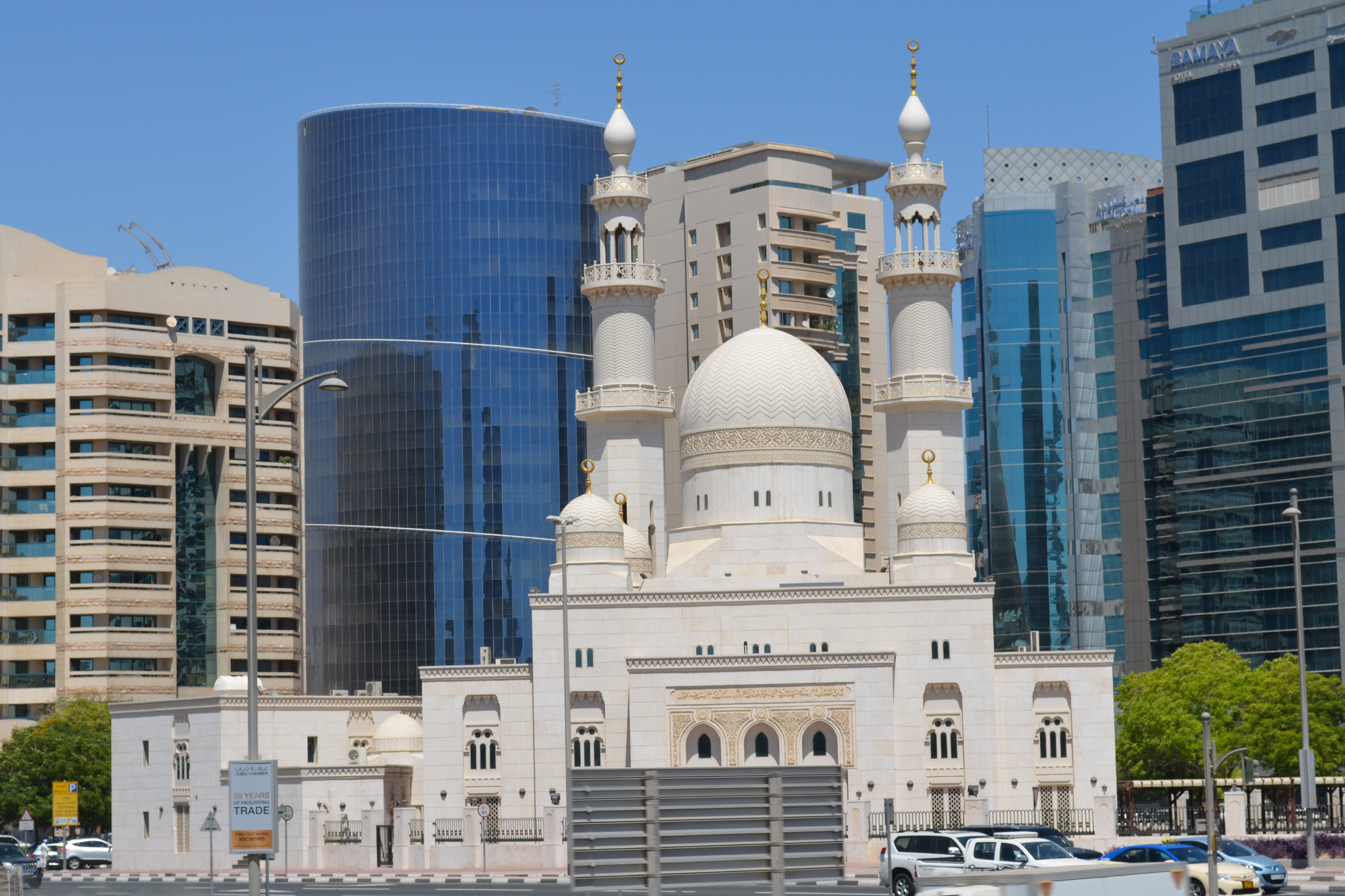
The juxtaposition that is Dubai
When I visited Dubai in 2012, I was disappointed because it reminded me of a typical American city with all the name brands and restaurants. However, after living on the African continent for the past two years, it is nice to know that I am a non-stop flight to all the trappings of American society. The chicken Big Mac goes a long way in boosting the spirits and curing home sickness…And after talking with my friend Heather Albertson, who has lived in Dubai for seven years, it is now on my list of future places to live.
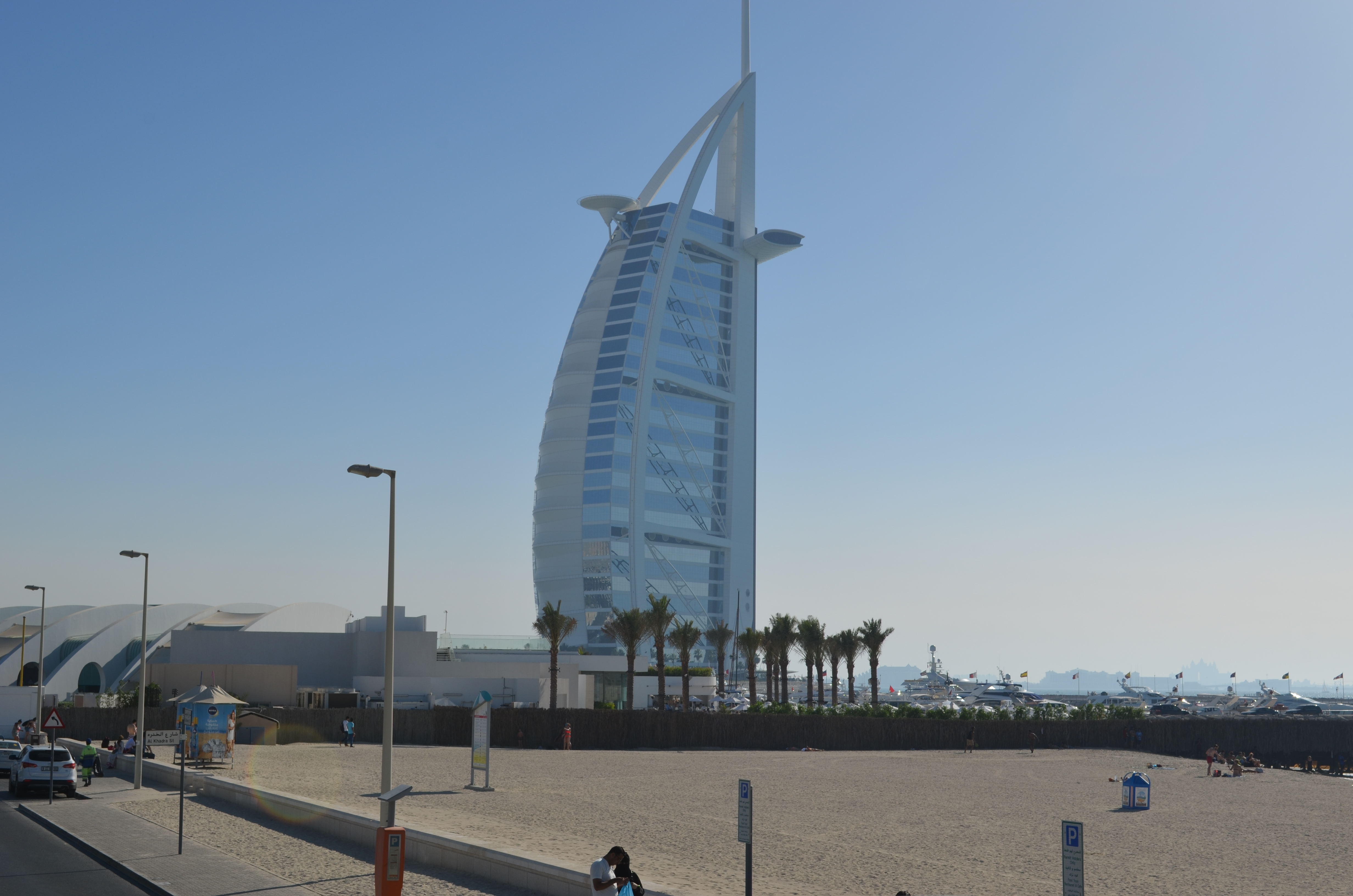
The Burj Al Arab – a seven star hotel along the Persian Gulf
I met Heather in 2007 during a Mclean Bible Church mission trip to India. Thanks to social media, we have been able to reconnect twice since 2007. In 2012, when I was in the U.A.E with the United Nations, she took me around town and helped me navigate the gold shops of Dubai. In 2013, thanks to a random posting on Facebook that she was in Frankfurt for Christmas, we were able to spend Christmas Eve together. And the last couple of days, we have been able to reconnect and catch up on the ever-changing lives that we live. It has been such a thrill spending time with her.
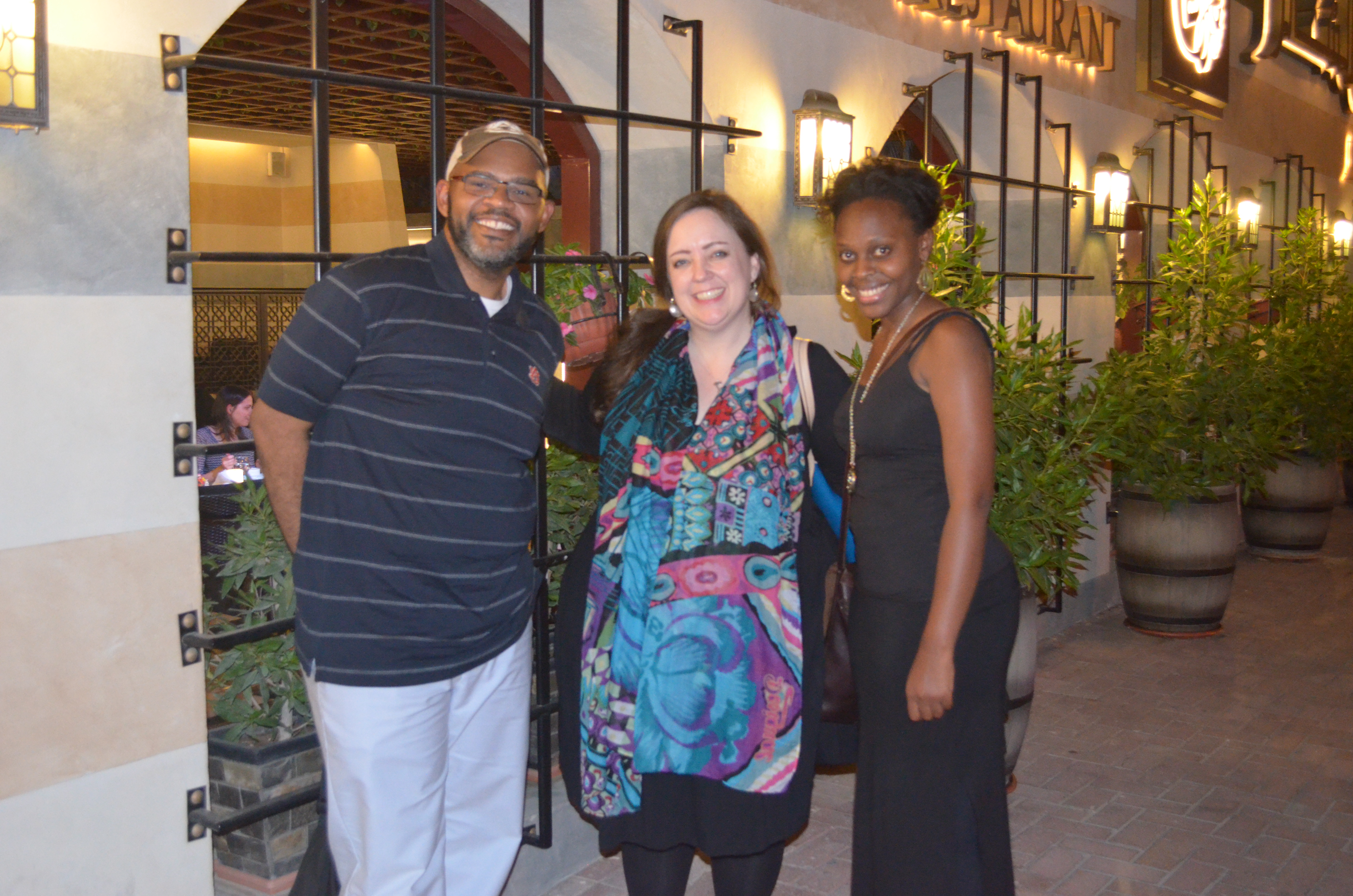
Sentell, Heather and Sheila
 A FREDAY in AFRICA!