By Sentell F. Barnes, resident program officer, Nigeria
Follow me on Twitter @sentellbarnes

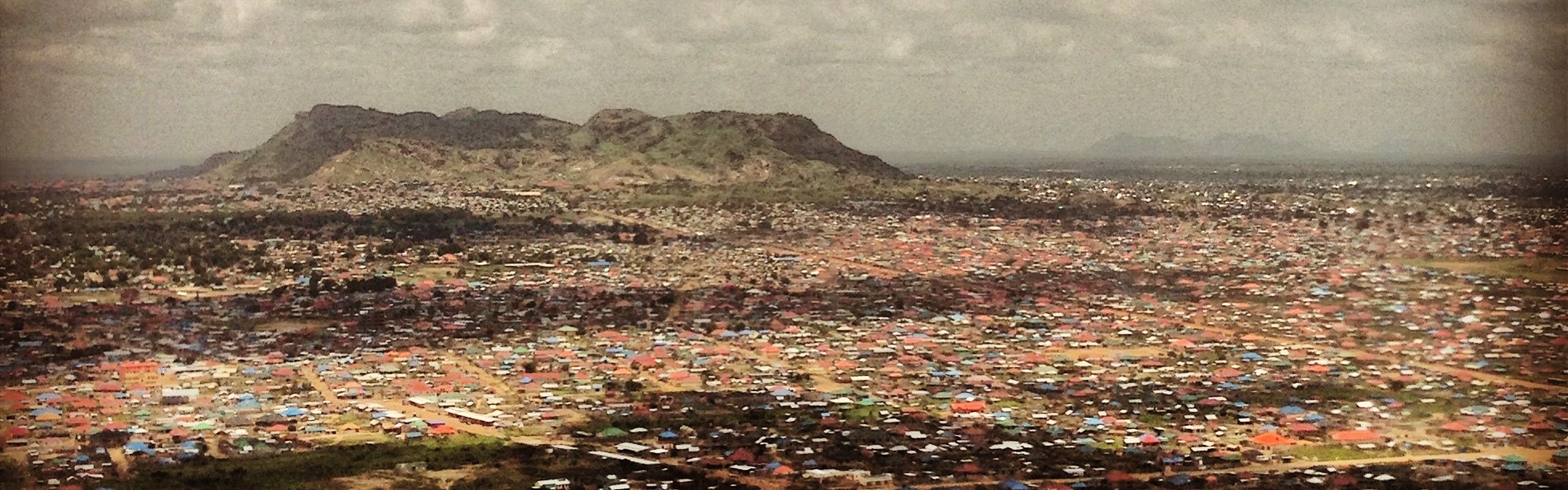
Lagos transportation. These yellow vans are everywhere in Lagos.
I have been trying to shake this malaria bug but it keeps fighting back. It has Also been difficult getting the needed rest because each day I think I’m better and head off to work only to discover that by the afternoon sickness has returned. And on Sunday I traveled to Lagos! Traveling in Nigeria at 100 percent healthy takes a lot out of you much less traveling at 70 percent. Lagos is hot, humid and sitting in traffic just wears you out. And nothing starts on time…the event in Lagos was suppose to start at 8am but didn’t kick off until 1pm.
I finished my malaria medication and now taking vitamins to boost my energy but I probably just need two or three days of rest. And I don’t think that will happen while in Lagos. We are here training 8,000 poll agents ahead of the rescheduled elections on March 28th.
Malaria has not been as bad as it could be as when I was in South Sudan an expat had to be evacuated out to Nairobi because of malaria. However, it sucks always feeling tired and sluggish, especially for a person that is always on the go. But I will push on and rest up on Thursday and Friday when I get back in Abuja.

Lagos has Dominoes Pizza…it was amazing and tasted just like home…
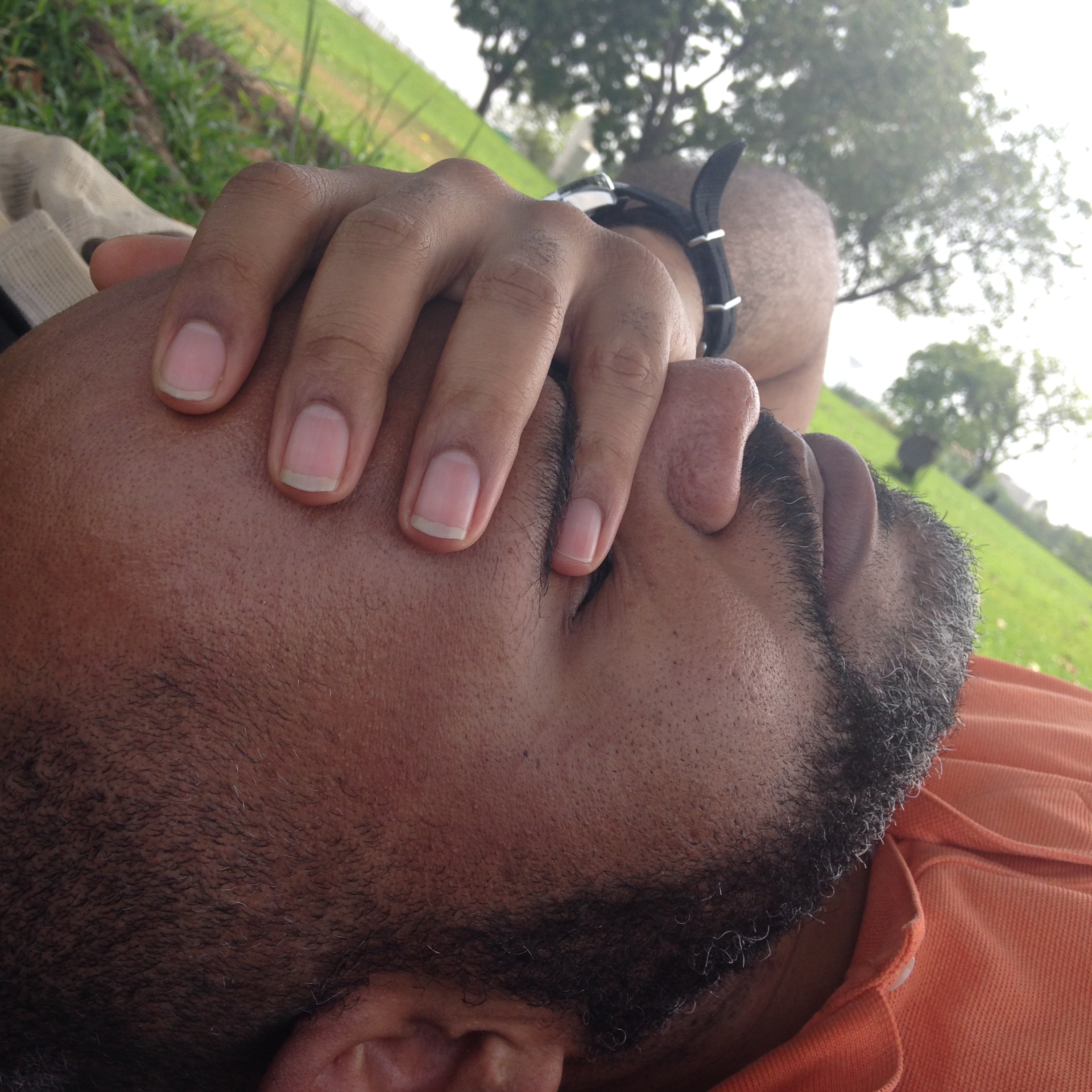
My look after suffering with Malaria for the past two weeks.
I don’t know which is worst about living on the African Continent; falling ill with Malaria or traveling on this continent by air. Obviously, you can sense another complaint directed at one of the African airlines because we all know that falling ill with Malaria is worst…I can now officially attest to that fact. Last week, I was informed by the doctor that the past two weeks of fatigue and exhaustion was not a result of my 14 hour work days but Malaria. While I did need rest, most importantly, I needed anti-Malaria medication. We will return to my Malaria diagnosis later in the blog but instead back to my rant about Ethiopian Airlines.
Sheila came to visit me this weekend. While I would admit we purchased the ticket at the last minute, everything initially seemed to go smoothly. I was able to track her trip from Kigali to Abuja and the flight actually arrived on time. However, after I dropped her off at the airport on Monday for her return trip, I decided to track her flight from Abuja to Kigali so I could keep her brother informed of her travel plans. I was unable to locate the flight on any travel websites. I then became concerned that I had dropped her off at the airport on the wrong day and she would be stranded at Abuja’s lack luster international airport. So I decided to consult her itinerary.
What I discovered was that Ethiopian Airlines had changed her travel plans with absolutely no notice. Instead of departing at 1:40pm for Addis Ababa, Ethiopia, she was scheduled to depart at 1:00pm for N’Djamena, Chad then on to Addis Ababa. Her goal was to catch a connecting flight to Kigali. Well, I think you know where this story is heading. Thanks to Ethiopian’s lack of customer service and desire to treat travelers as cargo and not passengers, she missed her connecting flight to Kigali and had to spend the night in Addis Ababa. I think my biggest frustration is the treatment of airline passengers by some African carriers. If you are comparing American carriers to Middle East carriers like Emirates and Qatar, then yes, flying on an American carrier is like riding a bus but if you are looking at customer service and passenger rights, American airlines run circles around African carriers. If I complain to an American carrier (and I often have), I have always received some form of compensation. My international complaints have fallen on deaf ears here in Africa. I recognize that sometimes airlines changes routes, but you have to give your customers some heads up. I once received a call from Delta telling me that they had to cancel my flight and was rescheduling me on a later flight. While not happy about the change, I appreciate the call and update. Maybe I am asking for too much, but I just want to be treated like a paying customer and not cargo. I think I have done a very good job of settling into my life here on the continent but I still find myself frustrated by air travel…I will keep praying for patience and strength in this process. 🙂
Back to Malaria…my luck ran out and I was recently diagnosis with a bout of Malaria. For those of you not familiar with living in hot and humid climates with the threat of tropical diseases, Malaria is like getting the flu. For some, the flu can be life threating, for others, it’s just an unpleasant state of being for a week or two. And that has been my last three weeks…an uncomfortable feeling of being fatigued and exhausted. It wasn’t until last Wednesday that it hit me and boy did it hit me. Although I went to work, I felt horrible. I had trouble using my eyeglasses, my gums hurt and I had no desire to eat. On Thursday, my colleague suggested I go to the clinic to run a Malaria test. At first, my response was, “I’m just tired. I just need a full night’s rest.” On Friday, I was in a fog and the body just didn’t feel right. So my colleague told me that she would take to me to the clinic to have my blood tested for Malaria. I would admit, I was concerned about the state of the Nigerian health care system, but I was pleasantly surprised. While it took an overnight to get my test results, I was informed that I was exhausted because I had Malaria. So the doctor put me on medication and now I am “hopefully” on the road to recovery. At least Sheila was here to cater to my every need…

My “nurse” who came to my rescue in my time of sickness…we had a great time exploring Nigeria’s Millennium Park.

Well…a year ago, I was planning to make my return to the Gulf Coast to celebrate Mardi Gras. I had it all planned out but along the way, my return to East Africa never happened and instead I was sent to Nigeria to work on programs in the lead up to the General Elections. Sadly for me, the General Elections were scheduled on February 14, the Saturday before Fat Tuesday. So, I had to change my plans and disappoint people, which I really hate to do. And on February 9, 2015, the Election Commission in Nigeria delayed the elections until March 28…if only I could see into the future.
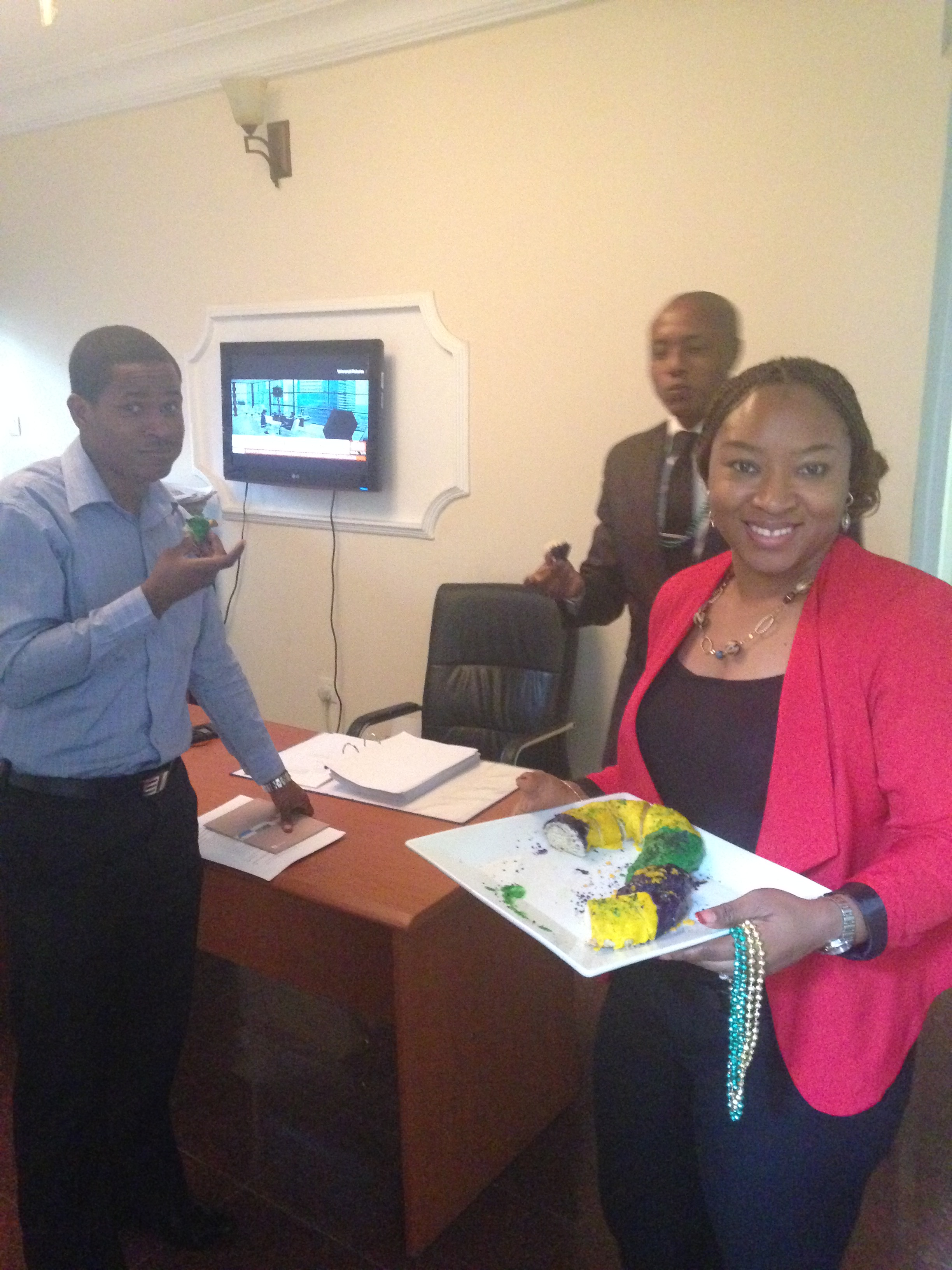
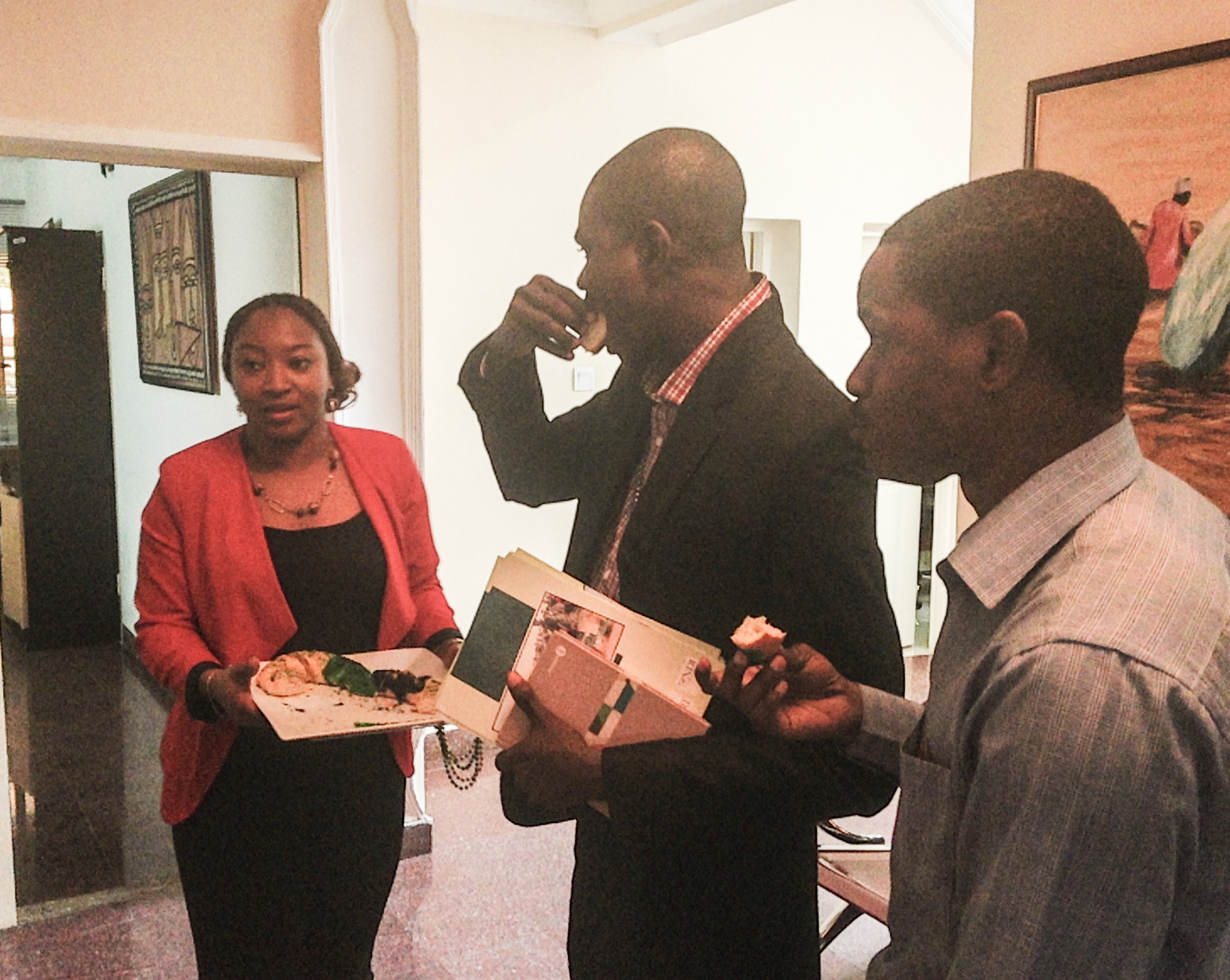
So instead of walking around with my head hung low, I decided to introduce my Nigerian colleagues to our annual celebration of the period before Lent. It was rather funny as they were completely clueless to the beads, moon pies and my homemade king cake. It was difficult making the King Cake as it is hard to find sour cream in Nigeria. So, thanks to Google, I made an imitation sour cream with powder milk and apple cider vinegar. My knowledge of food has grown on the African continent because I am unable to get items like sour cream and butter milk. I have had to find ways of creating my own version of these items. So far, things have turned out well. So as they say along the Gulf Coast, Laissez Les Bon Temps Roulez!
Thanks to my wonderful mother who shipped me three boxes of moon pies! Without her help, there is no way I could have had a Mardi Gras celebration in Nigeria.
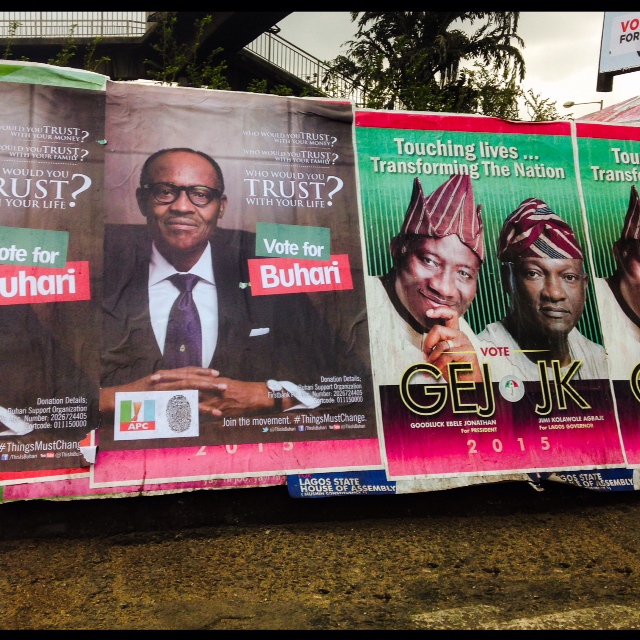
I had been looking forward to February 14 since my arrival in Nigeria. On February 14, 2015, Nigerians were supposed to go to the polls to select a new president and members of the Senate and House of Representatives. When my organization told me they were sending me to Nigeria to manage programs leading up to the election, February 14 seemed so far away. However, this very important date is right around the corner.
Enter the Independent National Election Commission, or better known as INEC in Nigeria. On early Sunday morning, INEC announced that they were delaying the election for six weeks because security officials said that they would not be able to provide security for the election because of Boko Haram. It is true that Nigeria has a problem with Boko Haram but the insurgent terrorist group has been causing problems not only in the northeastern states of Nigeria but in Abuja and other large cities for years. It is nice to know that finally the government of Nigeria sees Boko Haram as a threat. Sadly, they are using the security situation as a political solution for delaying the elections.
Most people who follow Nigeria thought that a delay in the elections would lead to violence because for the first time since its return to democracy, Nigeria is facing a very competitive and contentious election. The presidential race is a dead heat between two candidates, incumbent President Goodluck Jonathan of the Peoples Democratic Party (PDP) and former head of state General Muhammadu Buhari as the flagbearer of the recently formed All Progressives Congress (APC). General Buhari is what we would call in the United States a perennial candidate. He has run for president in every election since 2003, each time receiving only 12 million votes (out of around 36 million votes casted). The exception was in 2007 when the major candidate was also a Muslim from the same state. But the situation is different in the upcoming 2015 election. The Jonathan Administration is unpopular because of corruption and the inability to deal with Boko Haram. General Buhari and the APC has tapped into the mood of the country to take advantage of the woes of the PDP. Many people on the ground believe that the delay was a political decision to allow the PDP to continue canvassing for votes.
The country has been relatively quiet and Sunday started like any other Sunday in Nigeria. However, early Sunday morning, after INEC made its announcement, I received a bit of a scare. As I was preparing to go to bed, I heard a loud pop outside my window. At first I didn’t think much about it but then I heard a series of gun shots. I would admit, I panic. The first thing that crossed my mind was the night the conflict started in South Sudan. So I jumped from my bed and ran around the room trying to decide what to do. I quickly dressed and then laid on the bed, remembering that bullets have no names. I was trying to think of the people I should call…my parents…my brother…and finally I decided to call my Nigerian colleague who told me to calm down and reminded me that I lived near a government officials that had police who patrolled the streets. He said that its possible that they were firing warning shots. After about 15 minutes, I calmed down but decided to sleep fully dressed in case I needed to run during the night.
My response was a complete overreaction but I realize maybe I have not completely put away those emotions from South Sudan. Or maybe I just don’t enjoy random gunshots…
All in all, the situation in Nigeria has been relatively calm and it looks as though people are waiting until the new election date to exercise their voting rights.
My recent blog for IRI. In the lead up to the Nigeria election on February 14, 2015, IRI is running a Nigeria Election Series on their blog, Democracy Speaks. You can check it out at http://www.democracyspeaks.org/.
Nigeria Election Series: Building the Bridge between Elected Officials and Constituents
Prior to joining the International Republican Institute (IRI) and shipping out to the African continent, I worked for three American politicians. Each one had developed an intensive and effective method for reaching constituents. When I arrived in Nigeria, I was completely shocked by the number of politicians who lacked structures for handling the numerous constituent requests that are often directed at their offices. I learned very early in my professional career the importance of constituent service. If I wanted to keep my job as an assistant, then I had to make sure that my elected official was on top of the mountain of letters, emails and phone calls that flooded into the office.
Last month, I was visiting Minna, the capital of Niger State, just a few hours’ drive from Abuja. We were in Minna to conduct a series of meetings and workshops regarding the Score Niger State Good Governance program that is supported by the International Republican Institute (IRI) and the National Endowment for Democracy (NED). The program is designed to develop the capacity of Niger state’s political parties and civil society by allowing constituents to evaluate the performance of their elected officials using a web and SMS based digital score card. The objective is to promote more effective, representative, and accountable governance by assisting state and local elected officials to understand the constituents’ needs and expectations and improve their responsiveness to constituents’ feedback.
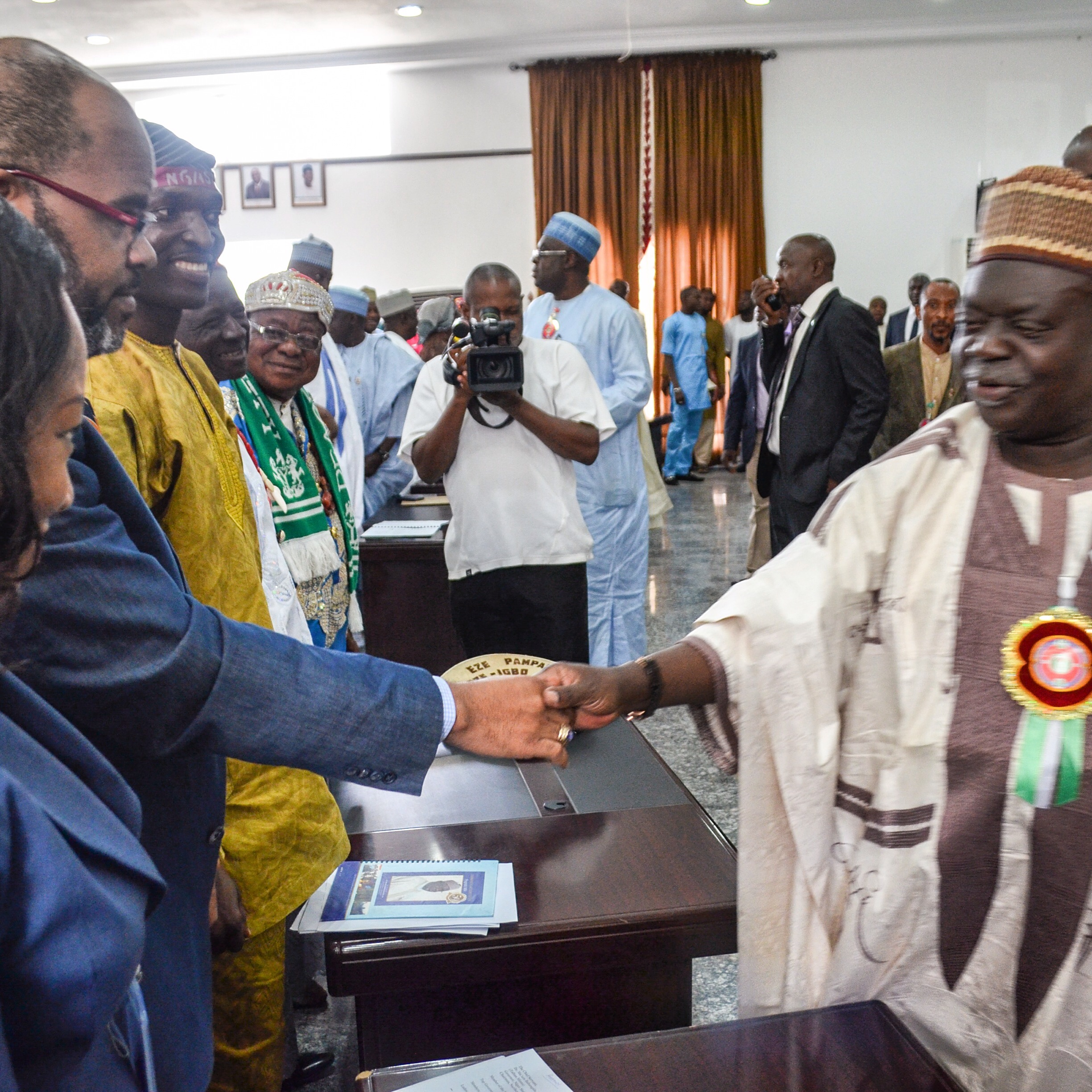
Meeting with Governor of Niger State, Mu’aza Babangida Aliyu
One of the meetings that had been organized was with the Governor of Niger State. Well, it wasn’t exactly a meeting but more like a town hall that allowed IRI and other groups to address the governor. I have had the opportunity to meet governors in Nigeria before but what impressed me about Governor Mu’aza Babangida Aliyu was his willingness to not only interact with the citizens of Niger State but allow citizens to address complaints about government programs. One in particular was brought to his attention by a teenager who was thanking the governor for his support of their sport teams. She said that her coach and parents were still waiting for the money that his administration promised her school. The governor then asked his assistant who was sitting next to him to address this issue and explain why the school had not received the funds. After about 15 minutes of back and forth between the assistant and the coach a solution was proposed and the governor promised follow up on this issue. I was impressed with his willingness to not only take questions but to address concerns on the spot. It is not often that you see that in Nigeria or in other parts of the world.
The Governor stated during the townhall the importance of quality democratic governance and declared that all political office holders including political appointees should be rated by the public on their performance. The governor also noted during the meeting the importance for elected officials to pay attention to the constituents, who made it possible for them to occupy their political offices. According to the governor, projects that aim to strengthen democracy can only succeed with participation by citizens.

The IRI team with Governor Mu’aza Babangida Aliyu after the town hall.
The stakes are high in the coming election. For the first time since Nigeria’s return to democracy, Nigerians have a choice between two strong candidates among the 13 men and one woman running for the office. Each candidates and their political party has had to canvas for votes throughout the country. Four years ago when General Muhammadu Buhari was the candidate of the Congress for Progressive Change (CPC), he lacked the structures and political network to canvas for votes in all geographic zones in Nigeria. Today, the All Progressives Congress (APC) and the Peoples Democratic Party (PDP) has the ability to put poll agents at every polling unit in the country creating a tense and competitive process. At the state level, governors throughout the federation have been creating new programs and replicating successful programs of their fellow governors to address the needs of citizens and potential voters in hopes to winning their votes in the coming election. Citizens are slowly filling their roles as the kingmakers of democracy, supporting politicians that are meeting the basic needs of the voter and kicking out of office those they feel are not fulfilling their role as an elected
I would admit, I am guilty of “googling” people to learn more about them. Especially when I initially meet people, I find myself spiraling down the black hole of the internet – LinkedIn, Facebook, news articles, even Wikipedia if they have a page. But when you discover that someone has googled you, it seems strange and a little intrusive…I know, double standard. But that’s the age we live in…
A few weeks ago, I was traveling with some IRI colleagues, two from Washington, D.C. and one from the Nigerian office when somehow, we got on the topic of leadership. My Nigerian colleague said, “Sentell, there was something you recently said about leaders serving others and building relationships and it really stuck with me.” I was amazed that she was quoting me but I did not remember having the conversation with her. After she finished, I asked, “When did I say those things because I don’t remember it.” She looked at me and smile and said, “well, maybe you didn’t say those things directly to me but when they announced that you were coming to Nigeria, I googled you and ran across an interview you did and you were talking leadership.” I laughed because I was surprised that she had googled me but I confessed that I often google people too. She continued on to say that she was impressed with what I had said because especially after working with me for the past eight months, she could see that I was a man that put his words into action. I was honored by what she was saying and what stuck with me from the conversation was people are always watching you and looking to make sure what you say is how you live your life.
Like many people, I have read numerous leadership books and followed the lives of successful people. But Moses is one of my favorite examples of a leader. He was chosen by God to lead God’s people out of Egypt and eventually to the Promised Land. You would initially think that if God called Moses to leadership, God would ensure that the people leaned on his every word. However, Moses encountered unruly followers, survived an attempt to overthrow him as a leader and never fulfilled the vision of reaching the Promised Land.
Exodus 17:2 “So they quarreled with Moses and sad, “Give us water to drink.” Moses replied, “Why do you quarrel with me? Why do you put the Lord to the test?”
Exodus 32:1 “When the people saw that Moses was so long in coming down from the mountain, they gathered around Aaron and said, “Come, makes us gods who will go before us. As for this fellow Moses who brought us up out of Egypt, we don’t know what has happened to him.”
Numbers 14:1-4 “That night all the people of the community raised their voices and wept aloud. All the Israelites grumbled against Moses and Aaron, and the whole assembly said to them, “If only we had died in Egypt! Or in the desert! Why is the Lord bringing us to his land only to let us fall by the sword? Our wives and children will be taken as plunder. Wouldn’t it be better for us to go back to Egypt?” And they said to each other, “We should choose a leader and go back to Egypt.”
In today’s terms, Moses would be considered failed or at least an inept leader. People would not be lining up to purchase his book on leadership, he would not be invited to share his advice on CNBC and he would not be cutting the ribbon at his new leadership institute. But in God’s eyes, he was the right person at the right time. There is so much we can take from the life of Moses. Moses was an unorthodox leader, especially when compared to today’s criteria for leadership. I was once told that God does not call us to be successful but to be faithful. Moses was a man of faith and even when he realized that he would not be the one leading the children of Israel into the Promised Land, he kept the faith and followed God’s instructions.
I also have to thank my dear friend Carlos for providing me with the platform to express my leadership principles. He also made me feel young by referring to me as a millennial. Carlos is an enterprising and entrepreneurial individual and I am sure God has great things in store for him and his family. He was a stable and insightful voice during a difficult time in life and I am delighted to call him friend.
The link to the interview… https://www.youtube.com/watch?v=orsLVooY7_U
I have been blessed to travel around the world…literally around the world (Africa to Asia to Australia to North America to Europe and back to Africa) and while the earth seems a big and vast planet with people scattered all over, in the end, as the say in Disney World, “it’s a small world after all…”

Sebastian and I after meeting up in Abuja.
Two recent episodes have caused me to reflect on how small the world really is. Before Christmas, I was in a meeting with a gentleman who was visiting from Europe. When he heard my name he said, “My wife has a friend named Sentell.” I froze as I have never heard anyone utter those words before – NEVER. I have yet to meet anyone with the first name Sentell, so I was a little taken aback when he said that his wife had a friend named Sentell. “Oh really” was my response. He said, “Yes, he lives in D.C.” Now, we were too close to home as I lived in DC before moving to South Sudan (and then on to Nigeria). I then asked, “Who is your wife?” As it turns out, his wife was a dear friend from my United Nations Alliance of Civilization (UNAOC) program. Annika and I (and nine others) traveled to Morocco, Egypt, United Arab Emirates and Azerbaijan in 2012 and 2013 as fellows with the UNAOC. She also made several trips to DC when I was living there and I gave her a tour of the US Capitol.

My cousin Tim and I at the Frankfurt train station in Germany.
Episode two: While I was on my Christmas break in Frankfurt, Germany, I discovered that my cousin Tim was making his way across Europe and would be in Frankfurt the day of my departure. We discussed getting together the day he arrived in Frankfurt but his jetlag set in and he overslept our meeting time. It was difficult finding time to fit him in as I was out with my friend Andrew. In order to see Tim before I departed for the African continent, I rushed back to Andrew’s house to quickly pack and sprinted off to the train station to meet Tim. It was great seeing him as the last time was in 2011 when I was in Michigan.
However, this is not the first time that this has happen…Last year, I was in Frankfurt for Christmas when I discovered that three friends were also in Frankfurt for the Christmas holiday. Two of them, Joelle and Jodi were just two streets over from where I was staying. How funny…You just never know who you might run into…even when you feel so far away from home!
Turns out, the Nigerian postal service works in typical Nigerian fashion. After my friends Jon and Liz paid $60 for my shipment to leave Wisconsin and arrive in Nigeria, the delivery guy demanded a fee (or bribe) for releasing the package. He demanded 2500 Naira which is roughly $14. Nigeria doesn’t run unless palms are being greased…Its both frustrating and deeply annoying and sadly the way things get down here.

I had the most amazing Christmas and New Year’s break but I was completely floored by the gift that was waiting for me when I returned to Abuja. I received my first care package through the US/Nigeria postal system. My friends, Jon and Liz Hoelter of Wisconsin, a few months ago asked for my address. They told me that they wanted to send me a package of all my favorite things from home. I was concerned that the package would never arrive but while I was on vacation, I got a message that a package had indeed arrived for me. It was such a surprise – however, the day before I received the message from my office that the package arrived, Jon let the “cat out of the bag.” I didn’t have the heart to tell him that the package had not arrived but lo and behold, it was waiting on my desk! I feel much loved…Thanks Jon, Liz, Emmy and Hansel!
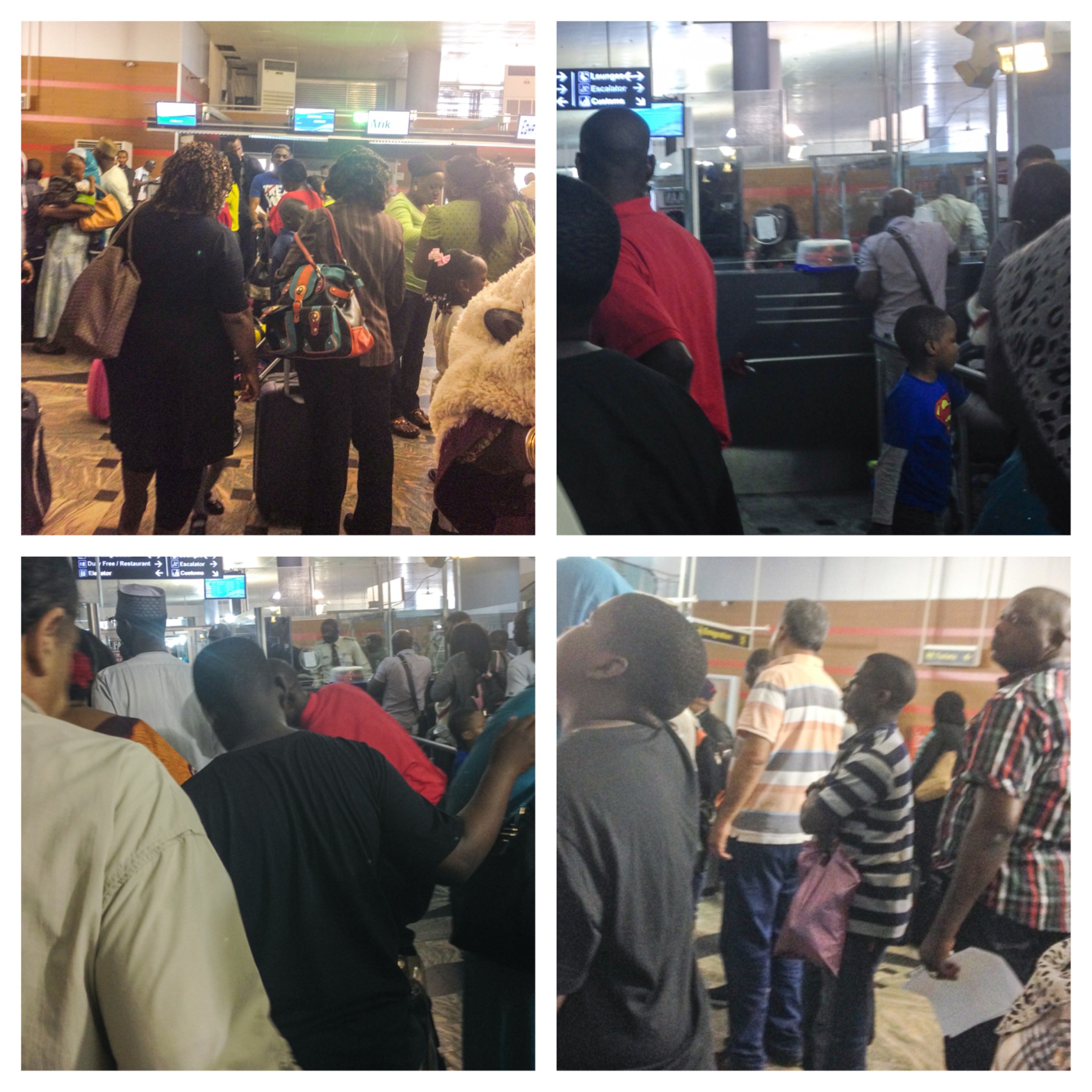
This blog will sound like a repeat of my last vacation…a stressful situation in the Abuja International Airport and a close call catching my flight. After my trip in September, I thought I was ready for the airport’s inefficiencies and absolute chaos. But lighting struck twice and this time, the situation was much different. I arrived at the airport at 11:30am for my 1:40pm flight to Addis Ababa, Ethiopia. There was a long line outside the airport to enter, then another line to enter the ticket counter area and a line to weigh your luggage. By 11:45am, I had breezed my way through all three lines and was now queuing at the ticket counter. It was at this point, that the entire process went downhill. People were not in lines but instead a huge cluster. Each time someone processed through the attendant checking passports, the crowd surged forward…sometimes you moved closer to the attendant, at other times, you moved back. After clearing the processing attendant, I was now in the check-in for my flight to Ethiopia.
Nigeria suffers from a “big man” complex. The country goes out of its way to accommodate men and women who are supposedly “very important people.” So, as you wait patiently for your time to come up in the line, some “big person” comes along to circumvent the queue. When I finally got to the ticket counter, I had to wait for the agent to process another passport someone had “bribed” an airport official to have his documents processed. I was finally given my ticket and passport and told to go to Emigration. The queue situation was the same as at the ticket counter…four clusters but no official line. What made the situation worst was that Ethiopian Airlines announced a final boarding call for flight 910 to Addis Ababa. The people panic and everyone surged forward causing quite the scene. My position in the queue was in jeopardy because the little order that existed was no longer and it was every man for himself. It was now 1:30pm.
If airport officials would have communicated to the passengers that the airplane would not leave until all checked in passengers had made it to the plane, it would have changed the situation. Instead, there were no announcements and the people panic. As a frequent flyer, I know that if a person does not board the plane, than the airline has to remove your bag from the plane, causing even more delays. I figured that the airline would wait to we had cleared Emigration. But confirmation would have been nice…
I finally boarded the plane at 2:05pm…These airport experiences, and my Nigerian experiences all together has helped me put Nigeria into perspective. If I had to compare the country to the life-cycle of human beings, Nigeria is a teenager that wants to be seen as an adult but has no self control or rarely takes responsibilities for its actions. Each day presents new challenges and the country stumbles along, sometimes getting it right, other times completely failing to meet the demands of its people and the international world. It then becomes frustrated with how others are viewing its actions and throws a temper tantrum. And so the circle continues…the country inches along but never fully understanding its role and resources it possess.
 A FREDAY in AFRICA!