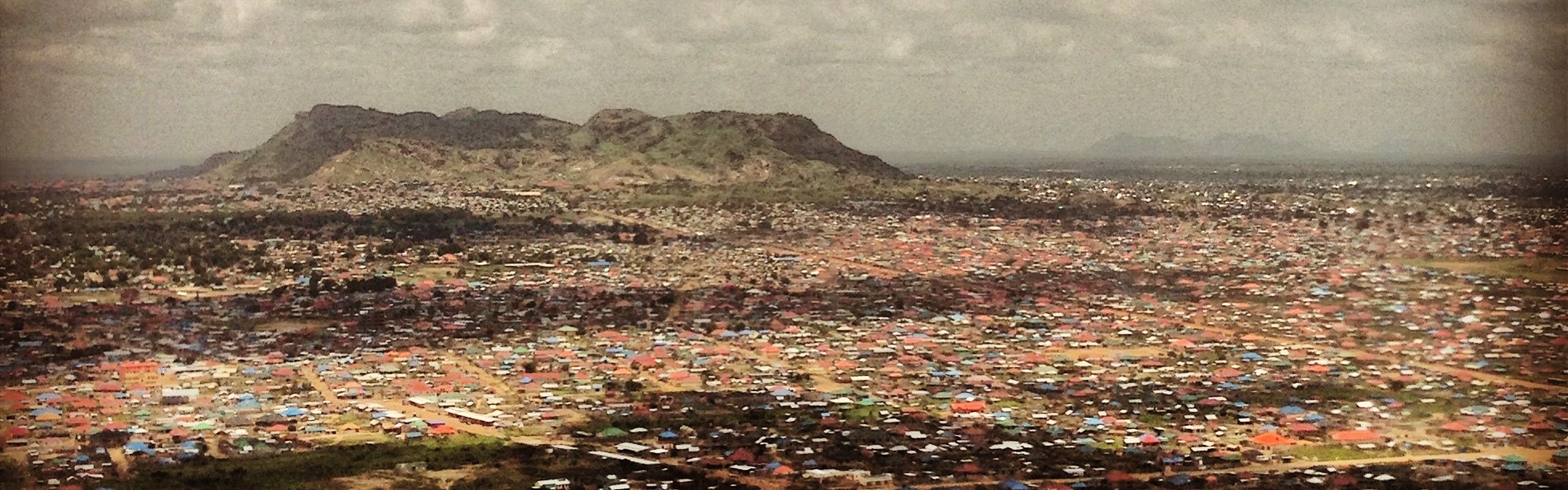
![IMG_2913[1]](https://fredayinafrica.com/wp-content/uploads/2014/09/img_29131.jpg?w=300&h=300)
After four months of adjusting to Nigeria’s unforgiving culture and it’s often chaotic ability of accomplishing a task, I departed on Wednesday night for a well deserve three week leave. It has been one frustration situation after another! I have had to raise my voice numerous times (which is something I do not enjoy doing), my external hard drive meet an untimely death at the hands of a colleague (I was informed that the contents are unrecoverable-pictures lost forever), and I spent two days in the dark before my trip because no one told me or my office that we needed to recharge the electricity card! Again it was one frustrating situation after another…but as they say “Africa Wins Again.”
The final straw came when I arrived at the airport to board my Emirates flight. The ticket agent did not want to allow me to proceed to the ticket counter because he claimed I did not have proper paperwork to travel to Australia. What he didn’t know is that I had spent the past 45 minutes fighting my way to the ticket gate so I had little patience for nonsense. Prior to ticket gate you have to have your bag weighed and present the coupon to the ticket agent. It was a circus because no follows the queue. People just pushed their way to the front. So I was already frustrated from the chaotic process.
His claim was that i did not have a proper visa in my passport to enter Australia. What I tried to tell him in a very calm manner was that the USA was a country that was able to obtain an electronic visa. I only had a receipt to show that I had purchased the visa but not a physical visa. We went back and forth until he escalated the situation by raising his voice to make his point. I again told him in a very agitated voice that I DID NOT NEED A PHYSICAL VISA AS I HAVE AN ELECTRONIC VISA. He told me that I need to go print the visa. I told him to let me proceed because I had did what was asked of me and it was now on the airline to know the process. He continued to go back and forth until I demanded my passport so I could proceed. Initially he refused but eventually handed over the passport because he could tell I was unrelenting in this process-I also think he was trying to make a point thinking I would be returned by the ticket counter. I then had to bulldoze my way through the crowd of Nigerians that were hovering around the ticket desk. The gate agent never asked me about my visa…
![IMG_2928[1]](https://fredayinafrica.com/wp-content/uploads/2014/09/img_29281.jpg)
It was the last hurdle before my leave could officially start…I finally boarded my Emirates A340 flight in route to Melbourne Australia! The 23 hour flight included two connections-Dubai and Bangkok-before arriving in the Australian Outback.
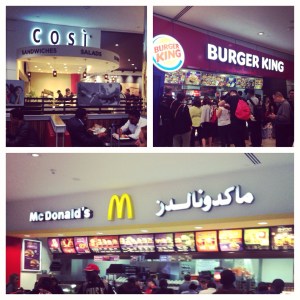
However, in Dubai, I faced my most challenging decision-which American institution would I chose to remind me of home-Cosi, McDonalds or Burger King! Judging on the fact it was 7am, I ruled out Cosi. Eventually McDonalds won out because it has a chicken Big Mac. How nice to savor the familiar taste of home…
As we were deplaning in Bangkok, it was announced that if you were traveling from West Africa you needed to declare it with the ticket agent. In Dubai they put the passengers traveling from Abuja on a bus and deposited us into the airport…no infrared lasers pointed at my head to determine my temperature or unnecessary paperwork. We were given an all access pass to roam the airport. However, Thailand wanted to track us. I tried declaring my arrival from West Africa but the woman could not understand my English. So the airports methods were useless…now I wait for my last flight to the Australian Outback…the last 9 hours of a 23 hour trip…

As frustrating as it is sometimes adjusting to the “Nigerian way of life”, I like the sense of community that exist in Nigeria and in many other African countries. Cities and town are often chaotic centers of commerce. People are out in markets, men purchasing livestock and women enjoying outdoor beauty salons. In the US, markets have become oversized shopping centers that are designed for individuals rather than the community. Some days I enjoy the haggling that takes place for fruit and vegetables. It’s an experience shared between me – the customer and the seller. But then there are the days when I want to be quick and just want to see a fixed price! I do miss the American supermarket. In the shops in Nigeria if you find something you like, it may not be in stock the next week and you may never find it again. You just have to write it off. On Saturdays, everyone is out engaging in some form of commerce. Young Nigerians are enjoying each other’s company at the local ice box and children are selling items along the road way. Life is vibrant and inclusive of all.
However, there are the aspects of Nigerian life that I just don’t understand. Case and point – On the night of August 30, 2014, our IT consultant was at home when he was robbed by armed men. They came into his house, demanded he and his family lay on the floor and began to take items from their house. When he thought the armed men were gone, he began to yell out of the window to alert his neighbors. In an attempt to quiet him, one of the men fired the gun into the window striking our IT consultant in the neck. His family and friends rushed him off to a hospital but in Nigeria, you have to have a note/permit from the police to be treated for a gunshot wound. So, initially they were turned away from several hospitals before they were able to find a hospital that would permit him. By then, he had lost too much blood and after two hours, he was dead. He left a grieving wife and two small children who will now grow up without a father. It’s a horrific situation. He was young, talented and a hard worker. He was making a professional career of consulting and helping organizations with its IT concerns. His short career is over and a life cut short.
Why would a hospital not treat an individual in need of medical attention? I am unable to fathom how someone could die because a hospital would not treat him…Sometimes I feel as though this place is a walking contradiction, taking one step forward while at the same time taking two steps back…
I was challenged by Shami Mugisha to take the “Ice Bucket Challenge.” I accepted and have posted the video as proof. I was hoping I would not get called out for this challenge. And, I take a cold shower two or three times a week as I fight with the sometimes ineffective hot water heater in my apartment. I was hoping that would count for my challenge! I would also like to point out that the bucket (or pot) did not include ice…that’s quite the “hot” commodity in Africa!
While I usually don’t get involved in internet or Facebook crazes but in the end, this is for a cause that affect the lives of many people and my donation will help those individuals. In an effort to make me feel better, instead of using Facebook to post the video, I used my blog which in turn will drive traffic to my blog. You can continue to follow me in Africa and around the world!

Yesterday was my 35th birthday! I now meet all the qualifications outlined in the constitution and I am now eligible to run for President. On this day, I announce my candidacy for President of the United States!
On a serious note, this marks my second birthday on the African continent. And I have been surprised both times by unexpected birthday celebrations. It’s nice to know that people think of you when you are so far away from friends and family. This important occasion is also a good time to continue my overview of the last year. I would have never imagined last year, at this time, that I would be in Nigeria to celebrate my 35th birthday. When I arrived in South Sudan, I was hoping to be in the country through the 2015 election. While South Sudan was a difficult physical environment to thrive in, I was truly blessed with a community of friends. Prior to arriving in Juba, I was put in touch with countless people who either gave me insight into what to expect or put me in touch with people to look up when I arrived in country. I also had a mutual friend in Juba from a network that I joined in 2008. In addition, I stumbled onto an expat church called “Pub Church.” The church was held at a restaurant/bar called Central Pub. I discovered the church while googling “places of worship” in Juba and came across a mission organization that ran a girls orphanage in the city. The organization gave the twitter handle of one of the missionaries so I reached out to her and she invited me to church. Within two weeks of arriving in Juba, I was building a community of friends. In addition, I was a quick flight from friends in Rwanda so I spent Thanksgiving and New Years in Kigali to rejuvenate my spirits.
Professionally, I was slowly getting a better understanding of the difficulties of the politics of South Sudan. The South Sudanese were friendly and inviting and appreciative of the work IRI was doing in South Sudan. The politics of the country was much more difficult to manage. The country was a one party state with several smaller parties mostly led by disenchanted leaders of the ruling SPLM party. The only opposition that existed in the country was within the SPLM. The party was unable to unity the various wings of the party which eventually led to the conflict that broke out on the night of December 15 that has left countless numbers of people dead and others displaced.
I met so many fascinating people in South Sudan. I learned stories of hardship from my colleagues at the IRI, visited two areas outside of Juba and went tracking for elephants in the only national park in South Sudan. In Rumbek, I learned why all the women at one of our workshops was fascinated by the spaces between my teeth. Turns out, it was an attractive element of men in that region. In Yei (pronounced Yay) I met members of the SPLM that were working to not only change their community but also change their party. But the December 15th conflict disrupted the work that my organization was doing in South Sudan and sent the country into civil war. There were horrific reports of ethnic killings and compete devastation of communities. Members of certain ethnic groups were forced to seek shelter at United Nation compounds where many of them still reside. South Sudan is a country on the brink of various types of epidemics and starvation. For me, after just four months in South Sudan, my life was about to take several unexpected journeys. The first journey started the afternoon I was evacuated from South Sudan on a United States chartered flight…

Today marks one year since I touched down in Africa! And boy, what a year it has been. I remember making the comment when I was preparing to depart for South Sudan that I was looking forward to the move because the past six months had been so unsettled. The person I made the comment to laughed and said “I don’t know many people who move to Africa seeking stability.” When I made that statement last year, I had no idea what was in store…
To truly appreciate this story, you need to understand how I ended up in Africa. Since arriving in Washington, D.C. and getting plugged in at McLean Bible Church (and the Global Impact Ministry), I wanted to not only travel abroad but eventually live abroad. I initially thought that it would be as a missionary in some far off land. And at the start of 2011, I was having that conservation with several people about various organizations. But in April of 2011 I was offered a job working as a legislative assistant to a Mid-western Congressman. By January 2013, I was pretty satisfied with my professional career. While I didn’t think I would be in the Congressman’s office for a long period of time, I just assumed that I would take the next year and figure things out. Again, life was good…and I was the Congressman’s point person on very important issues.
You know, when life “seems to be going your way” you are unable to notice the cracks in the foundation…or maybe you notice the cracks but don’t think much about them. Capitol Hill was becoming a difficult place for Member offices. Sequestration had cut the office budget by nearly ten percent and several offices were forced to make drastic cuts. I guess the “cracks” in the foundation should have alerted me that January afternoon when I was called into the Congressman’s office by the Chief of Staff. But I had no idea what he wanted to talk about so to me, it was just another meeting. But ten minutes into the conversation my world has been flipped upside down. While I tried to understand the difficult decision the office was making in letting me go, inside my pride was taking a beating. Maybe if I was always late, never completed a project or constantly gave the Congressman bad information, I could see why they would let me go. But I was always the first in the office and next to the last person to leave the office late at night. I always had a smile on my face and tried to encourage others during the difficult times in the office. And while the Congressman and Chief of Staff continued to let me know that it had nothing to do with my work performance, my pride was wounded and hurt.
I went through a series of interviews, often getting call backs for second and third round interviews, only to have the door closed in the end. I had a conversation with my old boss at the American Bankers Association and when I told him that I was confused and not sure what direction to pursue, he told me that he thought that I would be in Africa by now. His comments didn’t help the situation but it did make me think.
The job search was wearing me down and I needed a break. In March, I needed to get away so really good friends in France and Germany opened up their homes to allow me to take a much needed vacation (picture from those trips above – top France/bottom Czech Republic). After I returned in April, I had a better outlook on my situation. Around that time, I became aware that the International Republican Institute (IRI) was looking to fill two positions – one in South Sudan and the other in the Middle East. I applied for both but the African Division was faster in responding to my application. I was invited in for an interview and received a job offer in July.
I truly believe that if you look closely at this process, you would see God’s fingerprints on every step of the journey. When I accepted the job in the Congressman’s office, I was asked why I would go back to Capitol Hill. I would be taking a salary cut and would be losing all of my “free time.” I told the friend that returning to Capitol Hill would open up the opportunities to live abroad or reconnect with my roots in Alabama. While I didn’t expect the “unemployed desert” for five months, I ended up right where I wanted to be – in Africa. But even when you eventually realize your dream, life isn’t always what it seems…(to be continued)
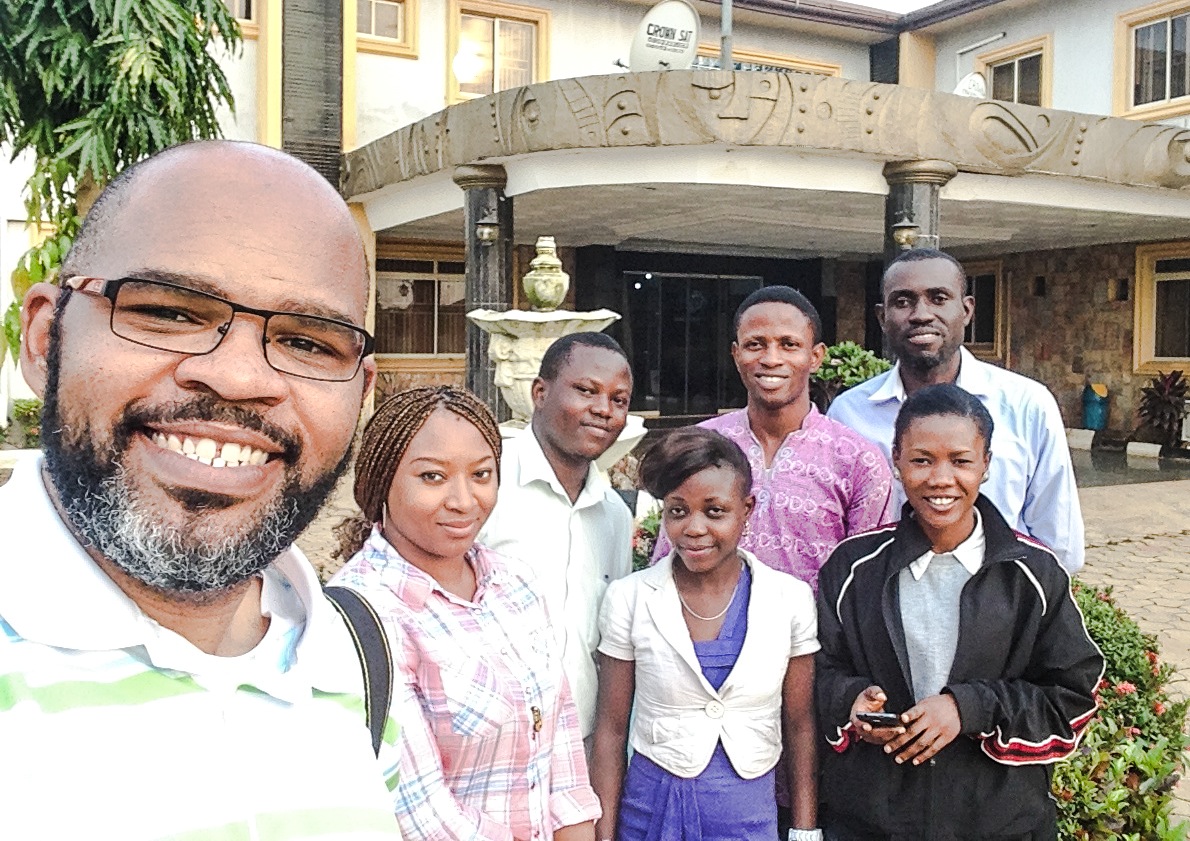
Election Day in Osun State started with an unusual quietness that had settled over the bustling state. Osogbo (pronounced ‘O-shog-bo’), the capital city of the state was a bustling hub of commerical activity the week leading up to Election Day but on this particular morning, Osogbo was no more than a quiet village. For an American used to the 48 hour Get-Out-The-Vote campaign that often precedes an Election Day, this strange quietness was usual. Instead of parties searching every nook and cranny for votes, political activity was halted and the state put on an 11pm curfew the night before Election Day.
My views on democracy have evolved since moving abroad and living in countries whose people long for a democratic society but whose leaders are more interested in protecting their status. In some ways I have become a stronger advocate for free and fair societies where the government serves the people (and not the other way around). While the diner owner in North Carolina may not be able to offer a discount for patrons who pray or mediate before meals http://www.bbc.com/news/blogs-trending-28712827 (which some may think is unfair or unjust), she can freely attend church on Sundays, hold a bible study in her home or become a Muslim if she sees fit. In other parts of the world, this diner owner would face prosecution from her government or even the threat of death. At the same time, I recognize that the democracy in Nigeria, South Africa or Kenya may not look like the democracy that I have experienced in the United States. A few years ago, I took a course called “Perspectives on the World Christian Movement.” During one of the sessions, the teacher explained that while we (Christians) share the same tenets of faith, it will look differently to the Coptic believer in Egypt or the underground church in Southeast Asia. While I may relate to Jesus’ sacrifice on the cross, another believer may relate to the story of Jesus’ resurrection or his virgin birth. Democracy is the same, each region of the world may relate to a various aspects of the tenets of democracy but it will look different depending on your experience with democracy. The American experience can’t be put in a bottle and transferred throughout the world. Simplifying democracy and bottling it up to transfer throughout the world does not take into consideration that the United States fought a Civil War over slavery, refused to give women the right to vote until the 20th century and battled blacks for full citizenship rights. Democracy is not pretty and it takes practice…and often time.
Despite the heavy militarization of Osun state and the restrictions on movement in and around the state, people flocked to the polls in large numbers, often overwhelming election officials and in a morning rain. People in Nigeria desire a free and fair election environment. However, it is often the work of a few corrupt leaders and their followers that incite violence and vote buying to induce voters to vote a certain way. The recent elections in neighboring Ekiti State and Osun State have been ground zero for the world as observers have tried to gauge how the Independent National Electoral Commission, political parties and security forces respond to these two elections. Going forward, it will be hard to predict the outcome of the 2015 national elections. Beyond the typical Election Day issues, Nigeria has three states under emergency declarations because of Boko Haram and facing a threat from Ebola. It sometimes seems that the cards are stacked again Nigeria.
I am just ready for the eight-hour car ride back to Abuja. I have literally been on the move for the past three weeks – Osogbo, Lagos, Nairobi and back to Osogbo. I am looking forward to a few weeks in Abuja before a possible long weekend in my favorite place in Africa (Kigali – and some of my favorite people in Africa) and a vacation back to the homeland…
You would think it was the final round of the World Cup but we were not on a football field. The emotions were all the same, the victors cheered and celebrated and the defeated tried to hang their heads high but the expression on their faces revealed their anguish and sadness. The walk of honor or shame, depending on the results took place inside a sterile office building, one that lack the flavor and often over the top decorations of a Nigerian office and the room reminded me of home. I was on the grounds of the U.S. Embassy in Abuja.
Last week I had to go to the US Embassy to increase the number of pages in my passport. Living and visiting countries that require a visa quickly fills up your passport. Kenya is the worst culprit as I currently have three Kenyan visas in my passport (all from the past six months). And, I did not mention that I received my new passport in October 2013 while living in South Sudan. In addition to the three visas from Kenya, I also have my expired visa from South Sudan and my Nigeria visa, for a grand total of five unusable pages. I was concerned that I would find myself in Kenya again in the near future and no page for another visa!
The cheering and celebration was taking place on the other side of the large room that I was sitting in. It was as if the room was set up for those with passports from the U.S. to have a prime view of the visa extravaganza. Nigerians were queuing outside, waiting for the next available window to make their case for a visa to the United States of America. In typical American form, the process was an impersonal experience that often left the loser to make the walk of shame. It reminded me of the Department of Motor Vehicles (DMV), if you have ever gotten a U.S. driver’s license then you understand the reference…it’s nice to see that we are replicating the infamous DMV experience in the rest of the world.
Visa applicants were forced to approach a window where the consular teller, in an American accent would shout a series of questions through the microphone… “Where are you traveling?” “Why are you traveling to the U.S.?” “Where do you plan to visit/stay?” “What is your occupation?” “What is your salary?” While I recognize the importance of these questions in determining whether someone will be approved for a visa, I would be a bit embarrassed discussing my financial background for everyone to hear (and maybe discussing my trip in general with a crowd of spectators listening in). After all the questions were answered, a decision was immediately announced for the room to hear…
“I’m sorry to inform you that your visa request has not been approved” the microphone would reverberate. After a few minutes to collect documents, the defeated individual would turn and begin the humiliating walk from the counter to the door, having to smile at those who nod to show their sympathy. Once outside the door, the person would collect him/herself and exit the embassy. My heart ached for those rejected because after witnessing the excitement of those approved, I realized that in some ways, the U.S. visa process was crushing dreams. These Nigerians had dreamed about traveling to the U.S. and probably heard stories from friends and relatives who had made the journey. The consular agent knows the rules and I would like to believe trained in what to look for when approving/rejecting visa request.
Rejections were fairly common during my hour glimpse at the visa process, especially among young men. But just before my name was called to pick up my visa, two young men, I assumed they were brothers were met with the words, “Congratulations.” They were unable to hold their excitement and raced to exit the building (maybe they assumed the news was too good to be true and if they lingered too long, the visa would be recalled). While we were unable to hear their cheers because of the bullet proof doors, you could only smile as they jumped and high-five each other at their new status. These two now had what others in the room wanted, a small document that granted entry into what we call the “Free World.”

Spending my first 4th of July outside the United States makes me reflect on what it is to be an United States of America(n) and how I should look upon our annual Independence Day celebration (I refrain from calling myself an American out of respect for my North and South American brothers and sisters who are technically also Americans. Officially, if you have a blue U.S.A. passport, your nationality is United States of America. I once had a long discussion about this with a friend in Africa.). I would be the first to say that I am proud to carry a blue U.S.A. passport. Despite how we are viewed in some parts of the world, I am always happy to hear the Customs and Border Protection Agent say welcome home!
I have come to believe that the U.S. is exceptional…not in a proud “I’m better than you” arrogance but rather as the Tuskegee band use to say, “Often imitated but never duplicated.” (That’s different right?) As I talked with political leaders across Africa, I am always confronted with the question, “how can we take the lessons of the U.S. and apply them to our situation.” Each time I am asked this question, I often reflect on the brief history of the United States. While the words,
“We hold these truths to be self-evident, that all men are created equal, that they are endowed by their Creator with certain unalienable Rights, that among these are Life, Liberty and the pursuit of Happiness”
are imprinted on the minds (and hearts) of most U.S.A. citizens, it has taken 238 years for those words to resonate with certain segments of the population. Today, we continue to redefine who are guaranteed what rights and what does the pursuit of happiness look like.
I was talking with my Nigerian colleague today about the 4th of July. We joked about how I am often addressed in a local language because Nigerians think I am one of them. And today didn’t help when I dressed in traditional Nigerian clothing. His smile became very serious and he said “you should be happy that your ancestors were taken from Africa and replanted into the United States. Their suffering led to a comfortable lifestyle in America.” This argument has been used many times but tonight, he made me reflect on their sacrifice. While they did not choose this burden, they persevered and endured in hopes that the God of Abraham, Isaac and Jacob would set them free as Moses freed the Israelites. Each time the U.S. reneged on a promise, my ancestors found a new way to overcome and reclaim the distinction of being a citizen. And while the legacy of slavery, racism and broken homes continue to cast a dark shadow over the descendants of slaves, we are reminded that our ancestors had enough faith to move mountains. And while hundreds of years of living in the U.S. has altered our connection to the African mainland, each day that I meet another person, I am reminded that my ancestors once walked the red soil of this land. Whether they came from the land we call Nigeria, or Ghana or even the Democratic Republic of the Congo, I occasionally feel a connection to this land. Its people feel familiar and the culture has a relatable quality. But then again, I notice things that seem out of place to me and I think…you will never see that at home.
While friends back in the U.S. celebrated by taking an excursion to the beach, or putting meat on the grill or enjoy a sunny day with friends and family, I celebrated the (U.S.) American experience by meeting with political party leaders in Nigeria discussing how to ensure that elections are free and fair in Africa’s most populous nation! In the words of Ice Cube, “Today was a good day!”


If you love cars then Nigeria is for you! Every make, model and brand of car found in the United States and Europe can be found in Nigeria. Nigerians love cars – all types of cars – new, old, used, it does not matter. Any conversation I have with my Nigerian friends/coworkers end with a discussion about how much it will cost to purchase a car in the United States and have it sent to Nigeria. Nigerians think of themselves as the U.S.A. of Africa. Because my organization is primarily funded by USAID, we are required to adhere to U.S. regulations which requires us to purchase goods made in the U.S. So we are the proud owners of three Ford Explorers. They are actually really nice Ford Explorers but in Nigeria, the three vehicles are difficult to fix. Toyota is the most popular car in Nigeria because it is easy to find a spare parts. While I understand the regulation and the desire to support American brands, the reality is much different when you are on the ground. And not to mention the cost to U.S. funded programs.
I will be the first to confess that I know very little about cars. I can proudly say that I have changed flat tires, assisted my dad when he changed the oil in my car and replaced my car’s headlamps. Despite the fact that my father and brother can take a car apart and re-assemble it, my knowledge is pretty limited. But my limited knowledge of cars recently came in handy in Nigeria.

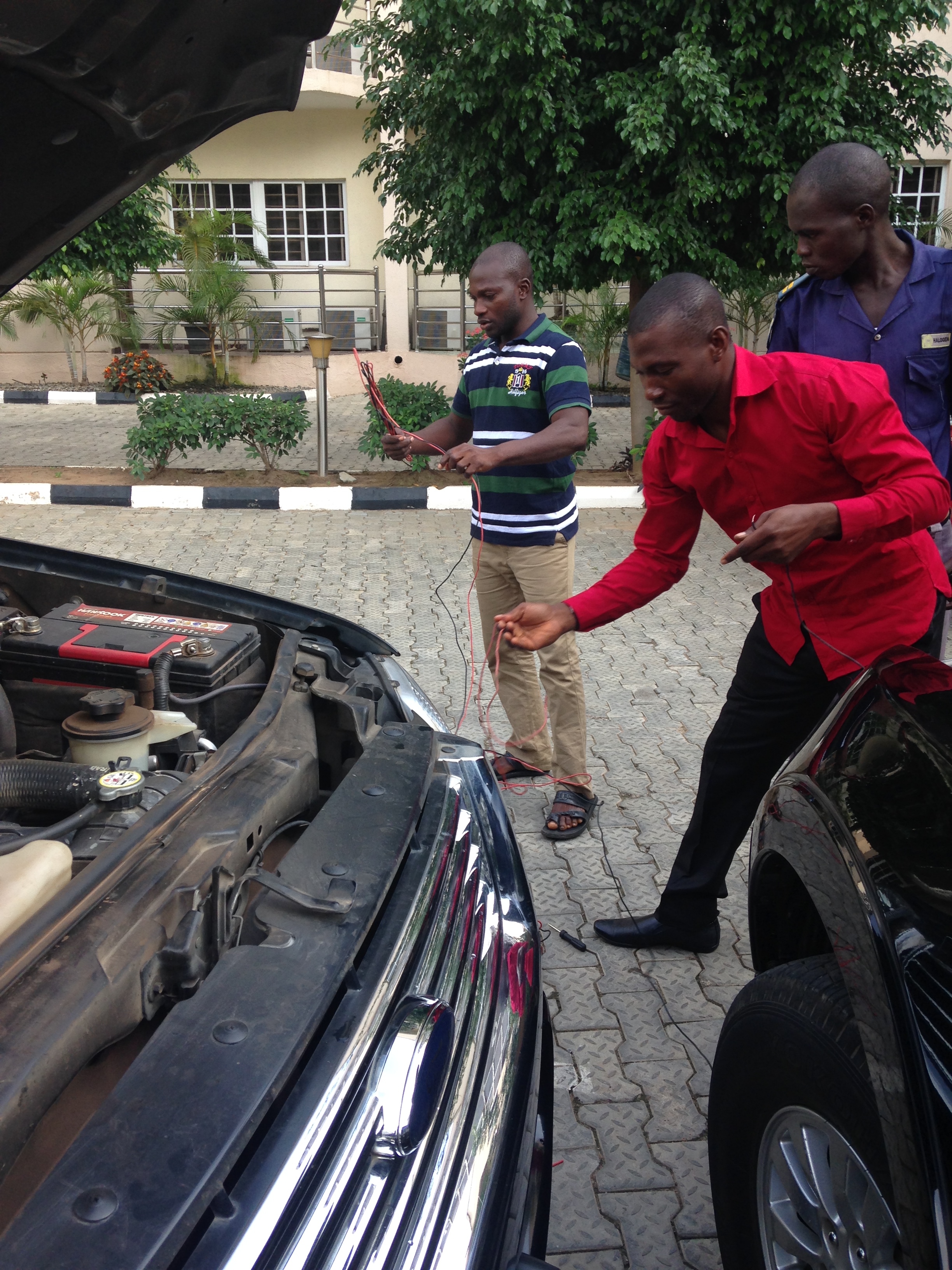
I was being picked up from home this week when the SUV would not start. I told the driver that I thought it was the battery because each time he tried starting the car, the sound of the car starting diminished. He got out the car and poked around under the hood. Eventually, men sitting nearby walked over to help my colleague. Each one of them poked and prodded under the hood to no avail. Finally, one of the men suggested the car needed to be “jumped off.” He parked his car in front of our Explorer and got out with two wires – I call them wires because the only similarity they had to jumper cables was the color. The wires were thin with no clip on the end. To connect the wires to the battery, he removed the cable attached to the battery with no tools. A light bulb went off in my head. The reason the SUV would not start was because the cables were not properly connected to the battery. That was a lesson I learned from my dad. When I suggested that the cables needed to be properly secured for the car to start, the men ignored my comments and continued to try and start the car with the wires. After another 15 minutes of fidgeting with the battery, the men followed my advice and found a unique way of securing the cable – especially since we didn’t have the proper tools. My dad would be so disappointed that we were not prepared for this situation.
I have repeatedly told my brother that he needs to quit his job at Hyundai and move to Africa to open up a garage. The few mechanics around charge astronomical rates, especially to NGOs. He could come in, provide superior quality at a reasonable rate and still make a pretty penny (or Naira) at the end of the day. I would be his business manager…no reason I shouldn’t make a cut of the profits. Of all the places I have visited in Africa, Nigeria is one of the most developed places on the continent. However, there are still a few services related issues the country needs to work out…
Please find below a blog I co-authored regarding the recent elections in the Nigerian State of Ekiti.
http://www.democracyspeaks.org/2014/06/ekiti-election-test-for-nigeria-2015.html
Ekiti Election: A Test for Nigeria’s 2015 Elections
By Milica Panic, Deputy Director, Africa and Sentell Barnes, Resident Program Officer, Africa
Ekiti state is rather small state for Nigeria standards, with an approximate population of 2.8 million, the state is situated in the South West (SW) geographical zone. For the past month, the state has held the attention of the entire nation. The SW is an opposition stronghold, governed by the recently formed All Progressive Congress (APC) party. Usually, gubernatorial elections in Ekiti are quiet affairs, but this time the international community was carefully watching the election process, trying to predict trends for the upcoming Nigeria national elections in February 2015.

The creation of the APC has set into motion what many people are saying will be the most contested and sensitive elections in recent Nigeria history. The ruling People’s Democratic Party (PDP) party has been on the offensive as they have been trying to break the APC stronghold in SW. Both the PDP and APC needed a victory in Ekiti. For the PDP it was important to elect a governor in SW and for APC to tighten their grip on the SW. The stakes from both sides were high. All eyes were watching Ekiti last Saturday.
The elections were fairly peaceful throughout the state, with no major incidents reported. Voter turn-out was fairly impressive with about 47.9% as recorded by the Independent National Electoral Commission (INEC). INEC performed exceptionally well, opposed to their efforts in the last year’s Anambra gubernatorial elections. Unlike in the past elections, poll materials and personnel were deployed in a timely manner. This was the first election that Nigerians used the new permanent biometric voter cards. INEC officials in Ekiti learned their lesson from the Anambra election, where voters complained of missing names and election officers being absent. Though biometric voter cards were in place, the election did have a few low points including attempts being made by both parties to entice voters with cash and bags of rice, particularly before election-day.
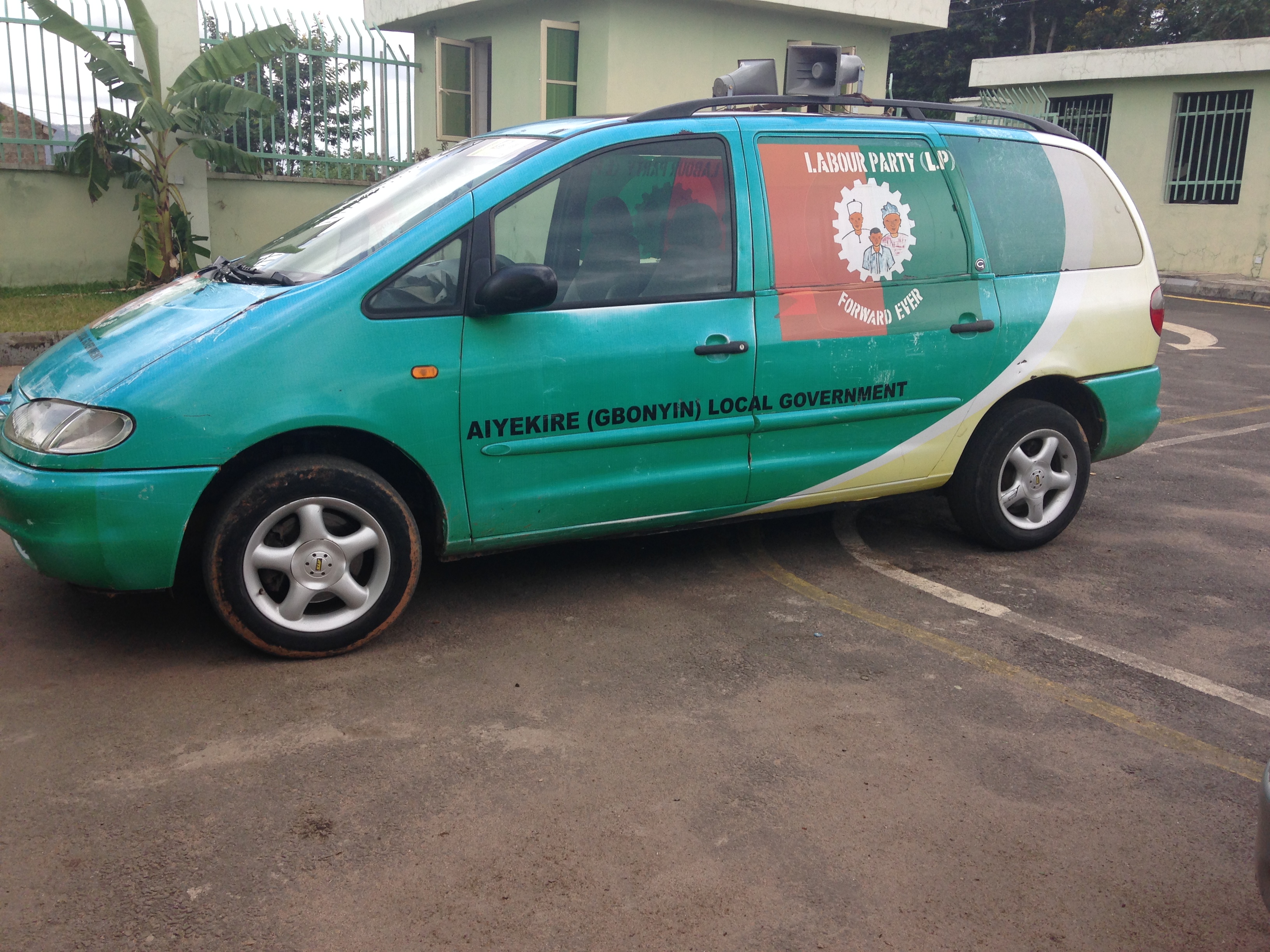
In the early hours of Sunday morning, INEC announced that the PDP candidate, Peter Ayodele Fayose had won the gubernatorial election in Ekiti State. He defeated incumbent Governor John Kayode Fayemi of the APC. Fayose received 203,090 votes, nearly two-third of the total votes cast. He also won in all the 16 Local Government Areas and 158 wards out of 177. The manner of the victory shocked most outside analysts and political watchers who never gave Fayose a chance of knocking off the incumbent. Governor Fayemi was widely believed to have performed his duties fairly well during his term– enough to earn him a second term in office.
Fayose`s victory also came against the advantage of Fayemi’s incumbency, the perceived dominance of the APC in the SW, as well as the endorsements by several high-profile individuals and groups, including the national workers body. Fayose`s triumph equally rankled political purists and all those who expected that his controversial tenure as governor of the state between 2003 and 2006 – particularly the corruption charges pending in the courts – would work against him.
In a rare display of sportsmanship, Governor Fayemi conceded defeat and personally congratulated Fayose, who pledged to work together with his predecessor. Fayemi’s response to the election has gained him accolades from Nigerian officials and the international community. However, there has been some anguish within the APC over Fayemi’s concession to Fayose. However, the APC has not publicly stated its desire to contest the results.

The elections in Ekiti went peacefully, but with a strong military presence. Days before, APC governors from neighboring states were denied entry into Ekiti to campaign for Governor Fayemi. The military stopped them because of “security reasons.” And therefore the question remains, how free and fair can these elections be when the polling stations are surrounded by soldiers who are loyal to the government?
Leading up to the Ekiti elections, IRI held several events to assist political parties in preparation for the gubernatorial election. IRI worked with over 600 political party agents to enable them to understand and comply with the election laws and to observe the electoral process. In addition, IRI also held a campaign management training to help parties develop and communicate their platforms and messages to voters. In response to this workshop, IRI developed a Manifesto Radio Hour to provide an opportunity for parties to addresses various issues and allow callers to interact with party officials.
 A FREDAY in AFRICA!