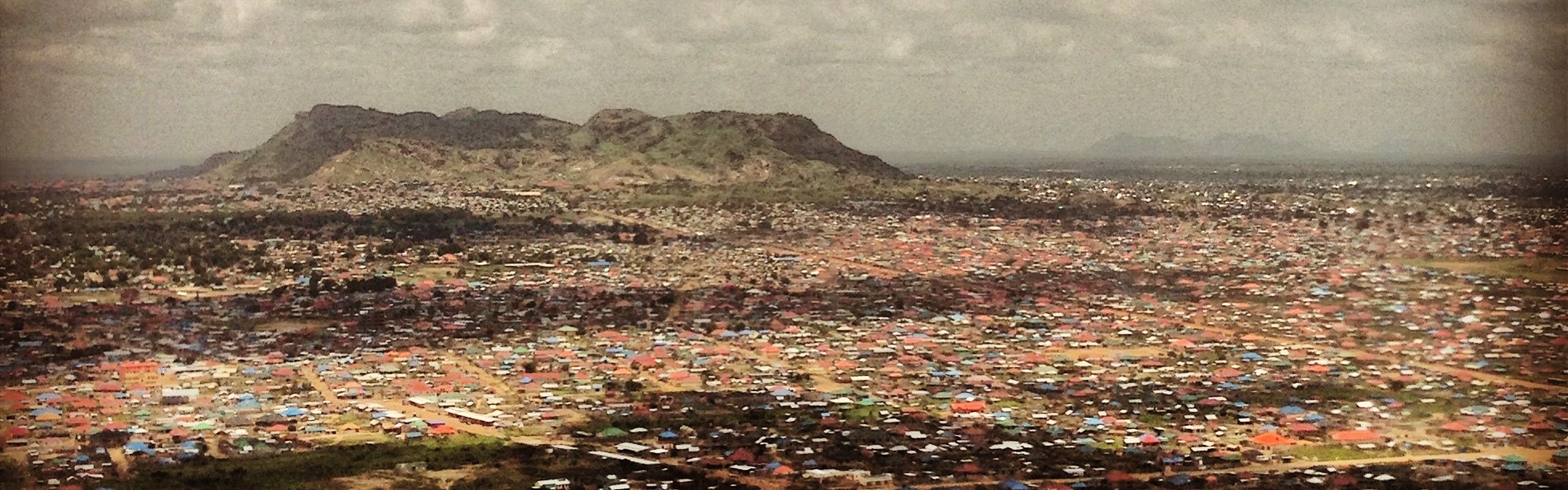
I have received a lot of “checking in on you” messages so I wanted to let everyone know that I am doing just fine. Earlier today there was a bombing at a shopping center in a neighborhood in Abuja (the capital of Nigeria). My office is located on the other side of town so there were no impact on our side of town. Because of the Nigerian football match today, our staff lingered in the office to follow the World Cup. So we were able to quickly account for staff. I have heard (and read) that a bomb was dropped at the exit location of the mall which was also near a location where people were waiting for taxis and buses. The bombing in Abuja happened hours after an explosion in Adamawa State in northeast Nigeria.
It is truly sad that these senseless killings continue in this country. Boko Haram continues to terrorize citizens in their attempt to rid this country of “Western education.” This is the same group that has kidnapped the Chibok school girls. It is also sad that the Nigerian government/military has been paralyzed to stop this group.
Please pray for the people of this country and for the government. Pray that the government will start to value the lives of its citizens and the innocent people who find themselves caught up in this struggle between Boko Haram and the government of Nigeria. I am reminded in times like these “not to be anxious about anything, but in everything by prayer and supplication with thanksgiving let your requests be made known to God. And the peace of God, which surpasses all understanding, will guard your hearts and your minds in Christ Jesus.”
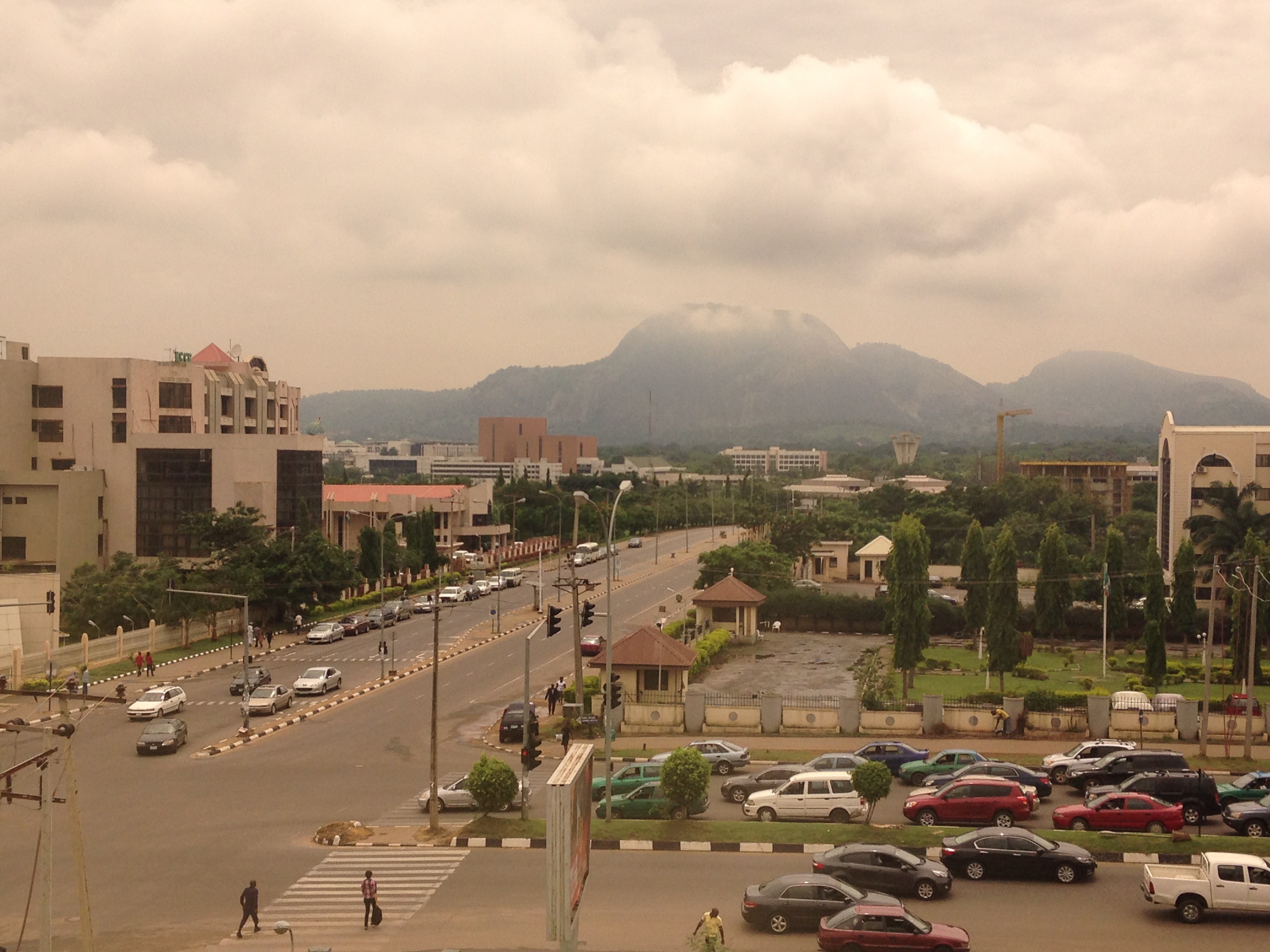
Since arriving in Abuja, I have been impressed with the condition of the roads, expressways and streets in the capital city of Nigeria. But I was warned that once you leave Abuja, the condition of the roads quickly deteriorate. While there is some truth to this statement, the conditions of the roads do not change as quickly as one would think. It’s best to describe it this way, the further you get away from Abuja, the worst the roads become. Three hours outside of Abuja, the road becomes a treacherous pothole laden lane with stalled trucks and fast moving cars. Every driver is seeking a precarious opportunity to overtake the car ahead. The right of way is littered with reminders of the dangers that exist on the road. Cars and trucks involved in head on collisions are abandon along side the road. It’s a scary reminder of the hazardous of driving in Africa (and around the world). But especially in Africa where people often disregard the rules of the road. We safety arrived in Ekiti but will have to make the return trip on Thursday…

When I put my thoughts down on paper as we were traveling, I did not expect an overturned truck would also present an obstacle for reaching Ekiti. However, as you can see, we had to navigate this truck using the right of the way.
It has been two weeks since I landed in Abuja, the capital city of Nigeria. And the best way to describe my first two weeks is OVERWHELMED! While the way of life in Abuja will be easy to settle into, the work will be by far, significantly more challenging. South Sudan was a new country and the political parties often sought the advice and assistance of IRI and its staff. Nigerians are a proud people and often looked upon as the elder sibling in Africa. There is a lot of pressure from other African countries, from European nations and the United States for Nigeria to “get Democracy right.” There were numerous accusations of fraud and significant levels of violence surrounding the 2011 elections. The Nigerians have been working since 2011 to prepare for the 2015 elections but institutions still lack the funding and capacity to ensure free and fair elections.
The government continues to struggle with the security threat of Boko Haram. It’s was reported this week that since last Sunday (June 1), the group has killed hundreds of people in the northwestern states of Nigeria. In one instance, the group appeared in a town dressed in military uniform and told the people they were there to protect them, only to turn their guns on the people and slaughter them as they were fleeing the chaos. The number of people who were killed is hard to estimate as the entire village fled into neighboring Cameroon. The situation in northwest Nigeria is becoming desperate as Boko Haram continues to target vulnerable citizens and government institutions.

This weekend, I spent the day at the Hilton Hotel sitting by the pool and enjoying a very American meal – pizza and a Coca Cola – actually, it was a Coke Zero. I was initially warned about the food in Nigeria but I have tried on multiple occasions to give it a chance. To me, the food is too spicy. Nigerians make everything so spicy that it lacks flavor and you don’t enjoy the taste of the food. Chicken, fish, potatoes, rice, etc.it is all too spicy to enjoy. So I was happy to eat an overpriced pizza at the Hilton Hotel.

The exchange rate is 160 Naira to 1 dollar…typical hotel prices for a soda and pizza.

I was invited by a colleague to attend a Nigerian church. Nigeria is a very religious country, divided evenly between Muslims and Christians. Muslims live in the north and Christians in the south. In Abuja, I have seen more churches than mosque, but it is not hard to locate a house of worship. The central city district of Abuja houses the National Mosque and National Christian Center, monuments to the impact of religious institutions on the lives of Nigerian citizens.
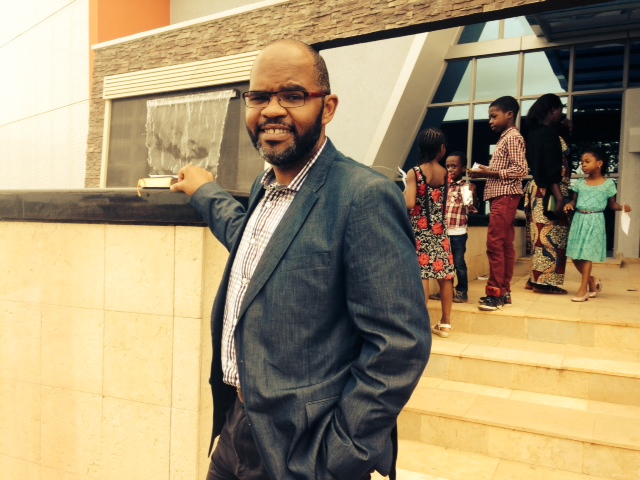
A quick photo after the church service.
After 15 weeks of displaced status in the United States, I have finally returned to Africa. I arrived in the United States thinking I would only be in my native land for two weeks but nearly three months later, I have returned to the field. Sadly, the situation in South Sudan is very complex and constantly changing. For that reason, I am being reassigned to Abuja, Nigeria where I will be working with political parties in preparation for the upcoming elections (February 2015).
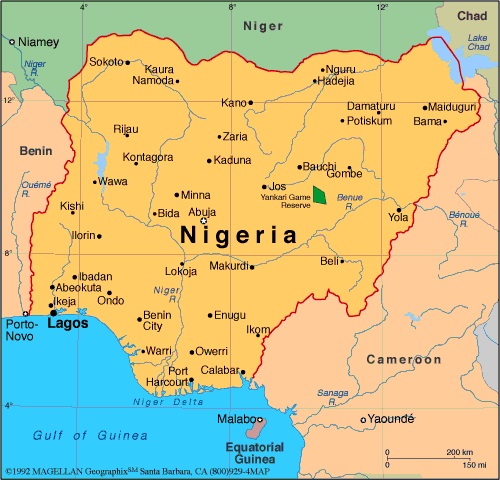
This is the second time in less than a year that I have moved to a country sight unseen. While I justified the move to South Sudan by saying I have traveled in East Africa prior to moving to Juba, I also had friends who were just a quick flight from Juba. Nigeria is a beast of a different color. I have never been to West Africa and my friends in Rwanda are now an eight hour flight away (including connection). So, in some ways, Nigeria feels like an island. The bright side is that Kenya Air will start flights to Nairobi from Abuja in June, so that will make traveling a little better.

Initial Impressions on Abuja –
- Abuja has a standard international airport unlike Juba. The Juba airport can best be described as a house. It is also important to note that the Juba airport does not have lights, so no flights in or out between 7pm-7am.
- Certain neighborhoods in Abuja have sidewalks which I did not see in Kenya or South Sudan. I do recall seeing sidewalks in Rwanda.
- Abuja has massive expressways that whisk travelers from the airport to the city. The expressways are well maintained and new construction projects are everywhere. It is easy to see the influence of oil on Abuja.
- The security threat with Boko Haram is real and people are aware of the situation. As people have welcomed me to Nigeria, they have apologized for the actions of Boko Haram.
- Bryon Cage, a gospel artist from the United States performed in Abuja on Tuesday night. If I would have been here longer than a night, I would have went to the concert. This would have never happened in South Sudan…

My post on the IRI Blog – Democracy Speaks – http://www.democracyspeaks.org/2014/05/laying-ground-work-in-south-sudan.html
Buried deep within the news cycle this weekend was the surprising news that the leaders of South Sudan had agreed to end the five-month conflict that began on the night of December 15. In the first face to face meeting between South Sudan President Saliva Kiir and former vice president and rebel opposition leader Riek Machar, on May 9 the two leaders agreed to end the fighting and begin laying the groundwork for an interim government. The agreement was a surprise to the international community. International leaders had warned observers not to expect much from the first meeting between the two men. The recently signed agreement called for an immediate cease fire between the two sides, an interim government lasting for two years and unrestricted access throughout South Sudan by humanitarian organizations.
While this new agreement is the first considerable movement towards peace since the cessation of hostilities agreement that was signed in January, it is important to note that South Sudan was operating under a “transitional constitution and government” when the country disintegrated into a near civil war in December. The power sharing agreement that was in place between President Kiir and former Vice President Machar ended in July 2013 when Machar and other leaders were removed from their government position by President Kiir. In addition, it is not clear how inclusive the interim government will be once and if it has been formed as called for by Friday’s announcement. There is a concern among political leaders in South Sudan that the interim government will only include leaders from within the ruling SPLM party, and not representatives of the opposition. President Kiir and other SPLM leaders have made it clear in speeches that the conflict started because of an internal issue within the party and a solution should come from within SPLM. Although opposition political parties have played a very limited role in the peace talks in Addis Ababa, Ethiopia, an informal coalition of opposition political parties have been meeting at the International Republican Institute’s (IRI) Political Parties Resource Center in Juba, South Sudan in an effort to bring about lasting peace in their country. In March, this informal coalition of opposition parties first proposed the idea of an interim government of national unity to President Kiir and his advisors.
Friday’s agreement was a step in the right direction in establishing peace in South Sudan but if the interim government is not inclusive of all actors in South Sudan, a long lasting peace will not be sustainable. In addition, fighting continues in South Sudan despite the fact that both leaders have called on their armies to respect the cease fire. It will be difficult for both sides to control the various groups that have taken up arms in this conflict. This agreement is only a step on the long road to peace and reconciliation.
“I have been called a lost boy but I am not lost from God, I’m lost from my parents.” Abraham Yel Nhial
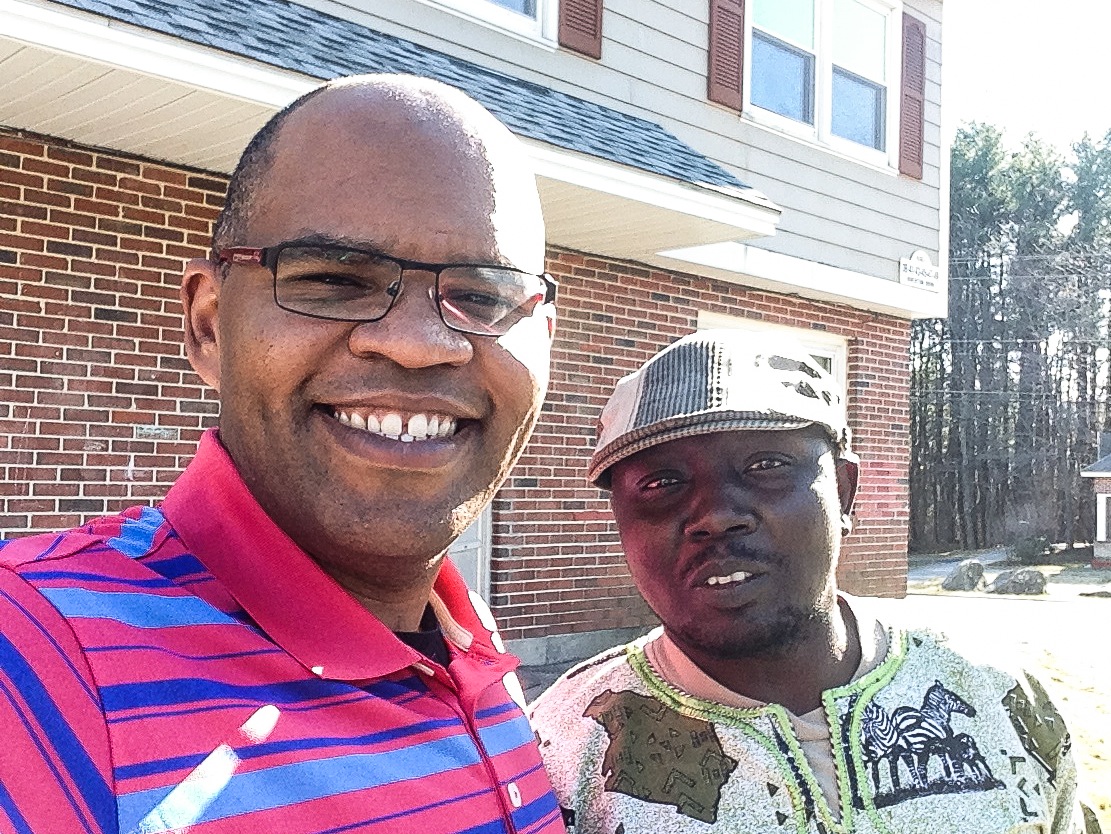
Wilfreid and I in Portland, Maine in April 2014
Long before I knew that I would one day live in South Sudan, I became familiar with the plight of the “Lost Boys of Sudan.” In 2003, a documentary was release that told the story of Sudanese boys from the southern region of Sudan that were forced to flee their villages during the Second Sudanese Civil War. The boys initially ended up in a refugee camp in Ethiopia but were force to flee again when the Ethiopian government collapsed. During their years on the run, many of the boys died of lack of food and water, were forced to fight as child soldiers and were attacked by animals that prowled the African landscape. Eventually the boys who survived that horrific ordeal ended up in a refugee camp in Kenya after crisscrossing Sudan. The film crew also followed the boys as they were invited to start a new life in various cities in the United States. These boys would initially struggle to fit into the new American culture but many of them eventually graduated from high school and college and pursued professional careers. When Sudanese citizens living in Southern Sudan voted in 2011 to separate from Sudan and form the world’s newest nation, many of these “lost boys” returned to their homeland to contribute to the building of the new nation.
When I arrived in South Sudan in August of 2013, my desk mate was a South Sudanese named Wilfreid. Wilfreid is quiet and south spoken and has a great sense of humor. Over the course of my short time in South Sudan, Wilfreid and I discussed everything from college and professional American football to the 2013 World Series (he was delighted that the Boston Red Sox won the 2013 World Series). I started to piece together Wilfreid’s story and discovered that he was a “lost boy” who went to the United States in 1994. The oldest of seven children, Wilfreid’s parents were killed in the civil war. His parents were refugees when he was born, and when they repatriated to Sudan, the Second Sudanese Civil War begun. Young Wilfreid was only eleven years old. By the time he was seventeen years old he had lived in displacement camps inside Sudan, jailed by the government in Khartoum, escaped and lived in refugee camps in Uganda and Kenya, and finally came to the United States in 1994. Once in the United States, Wilfreid completed his education and received a scholarship to attend the University of Maine. In 2002, he received his Bachelor of Arts in International Relations and quickly returned to Portland, Maine where he volunteered in the South Sudanese community. In 2004, Wilfreid was able to cast his vote in the US elections after obtaining his American citizenship. He also continued his education receiving his Masters from Southern New Hampshire University.
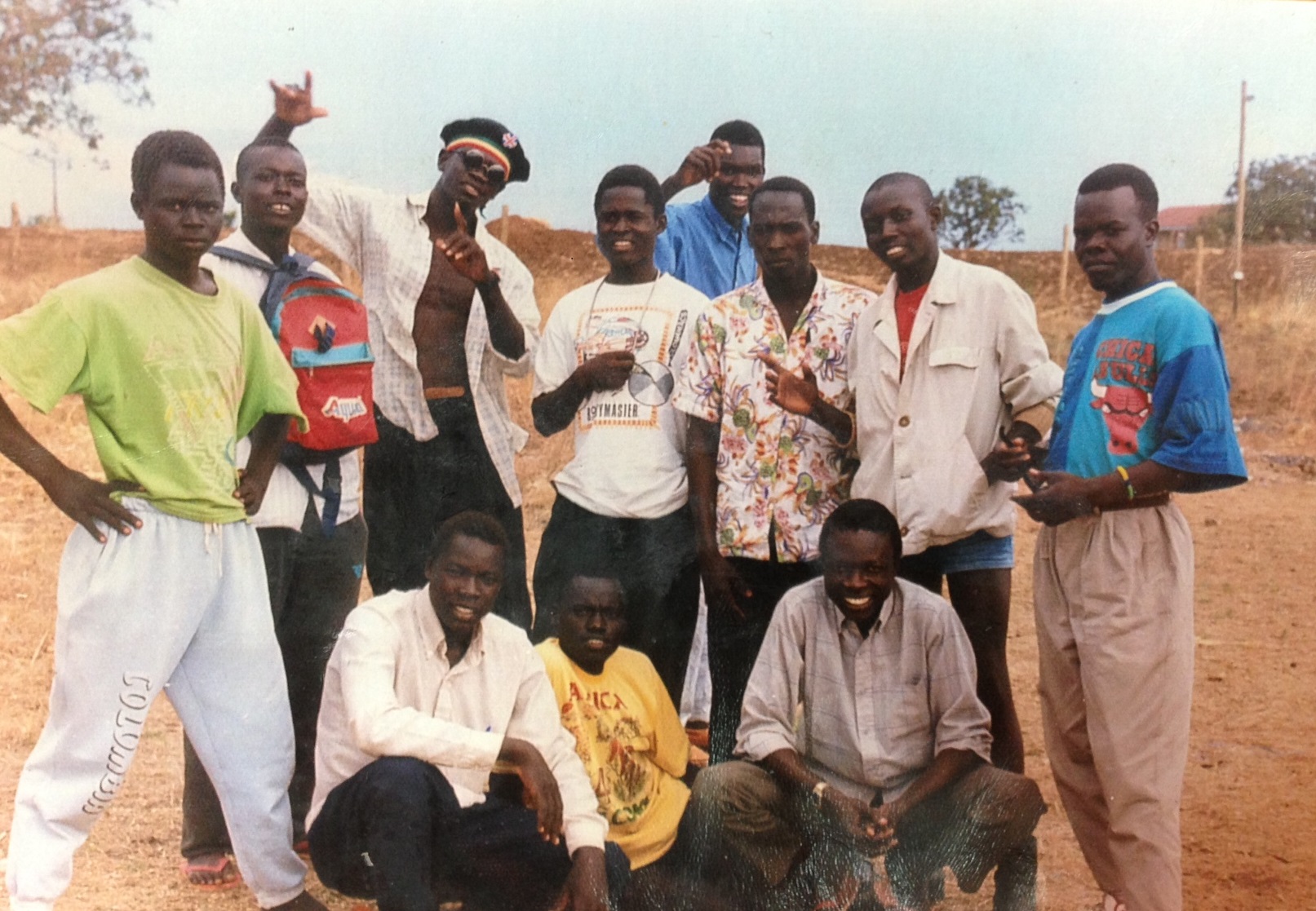
Wilfreid (Standing 2nd from Right) with other “Lost Boys” in the refugee camp (circa 1993)
After eighteen years, Wilfreid returned to South Sudan to start a youth development project. The project engages war-affected youth ex-combatants in reconciliation, conflict resolution, and reconstruction of the country through building and construction projects while, at the same time, providing basic education, job training, and leadership practice. With the help of Rotary clubs in the United States, Wilfreid was able to build a library in his village that currently houses 1,000 books. In addition, Wilfreid started working at the National Legislative Assembly as a research assistant. It was in this position that he became familiar with the work of the International Republican Institute (IRI). In January of 2013 he joined IRI’s Governance team building the organizational capacity of national legislators and a few months later I had the pleasure of sharing a desk with Wilfreid.
In any great novel the next section would be the biography or if this was a feature length movie based on the journey of the “lost boys”, the credits would start rolling. How can you top the story of a person that overcomes war, famine and perpetual displacement and eventually returns to his homeland? But we live in a broken world and after a short time of being back in his home country, a conflict erupted that force Wilfreid (and many other South Sudanese) to flee for the second time. But this time, he had a family waiting in Maine for him to return. In Portland, his wife and two young sons waited patiently for dad to return home. Last month, I had the pleasure of visiting Wilfreid in Portland, Maine and meeting his lovely family. While my time in South Sudan was short and it is highly unlikely that I will return to South Sudan with the International Republican Institute, I have been encouraged and blessed by all the people I have met through this experience.
This is one of my favorite quotes –
Some people come into our lives and quickly go.
Some people move our souls to dance.
They awaken us to understanding with the passing whisper of their wisdom.
Some people make the sky more beautiful to gaze upon.
They stay in our lives for a while,
leave footprints on our hearts,
and we are never, ever the same.
[Anonymous]
It best describes my brief time in in the world’s newest nation…I have been encouraged by the people and their ability to persevere despite horrific circumstances, frustrated by the cultural differences that sometimes presented me with unusual challenges, and saddened by the senseless deaths and overwhelming displacement of South Sudan citizens. And because of this experience, I will never, ever be the same…
The situation in South Sudan is sinking deeper into an all-out ethnic crisis. South Sudan watchers and analysts are watching the country very closely as the current fighting is showing early warnings of a great problem – ethnic genocide. Recent fighting in the world’s newest nation is refocusing attention of the international community.
The situation in South Sudan is no longer one of the top stories in the headlines. New international issues have taken the interest of Americans and most of the world. Russia’s land grab in Ukraine and the missing Malaysian flight has dominated the mainstream media. On the more “fair and balance” networks, New Jersey Governor Chris Christie’s “bridgegate” and the roll out of Obamacare are on hourly rotations. South Sudan has returned to its place in the pecking order – out of sight and out of mind. But the situation in the world’s newest nation is unstable and a peaceful end to the conflict is uncertain.
Despite the fact that the two sides fighting in South Sudan have signed a cessation of hostilities, fighting continues in Jonglei, Upper Nile and Unity States. Last week, it was reported that the SPLM/N-in-Opposition (the rebels) had attacked Bentiu. Bentiu is the capital of Unity State, an oil rich region in the north of South Sudan. The leaders of the opposition group stated that they wanted to cut off the government’s access to oil. South Sudan is very reliant on the cash they received from oil production. The fear is that if the opposition cuts off the oil supply, then the government will not be able to pay soldiers who in turn will not fight for the government. The situation is becoming dire for the entire country.
The events following the fall of Bentiu have sadly gotten the attention of the international community. The United Nations is reporting that gunmen associated with the rebels separated civilians by ethnic tribe and began a horrific killing rampage that has left over 400 South Sudanese dead. Messages were broadcasted over the radio urging certain groups to leave town and instructing men to commit crimes against women of a non-Nuer tribes. In one mosque where citizens sought refuge from the fighting, over 200 people were killed and another 400 wounded. The senseless killings in South Sudan are heartbreaking and sinking the country closer to an ethnic civil war. While the crisis in the country started as a political disagreement within the ruling party, the killings between the two sides have fallen along ethnic tribal lines. The international community has been engaged with the peace talks taking place in Addis Ababa, Ethiopia but have kept a distance from the events inside of South Sudan. Earlier this month, President Barack Obama signed an executive order opening the door for sanctions against leaders who are delaying the peace process. The recent fighting and senseless killing in Unity State should start the ball rolling towards sanctions in South Sudan. The United Nations has estimated that more than one million South Sudanese have been displaced by the fighting in the country. UN camps have been overwhelmed by the number of people flooding into their compounds.
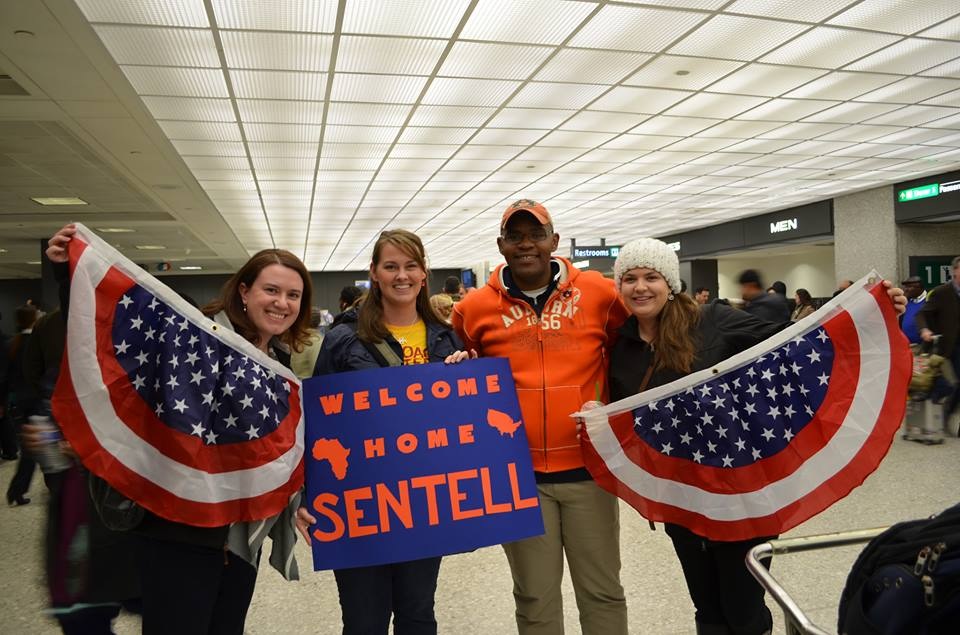
I was met at the airport by friends who welcomed me home with a little taste of Americana!
The situation in South Sudan has not changed very much and most organizations that were based in South Sudan are working from offshore. After being evacuated from South Sudan, I spent a month in Nairobi, Kenya before returning to the United States a few weeks ago for a work conference. I am now temporarily based here as I await approval from our funders. In some ways I am happy to be back in the U.S. The past two months have been probably the most unstable two months in my life. I calculated that since December 15, 2013, I have slept in 16 different beds, the longest stretch were three weeks in Nairobi. However, the apartment in that three week stretch was on a busy highway and the window was the only cool air producing mechanism. So I didn’t get much sleep.

I was also able to enjoy the start of Mardi Gras in Mobile, Alabama.
At least by being back in Washington, D.C., I am in the city where I lived in for over a decade before moving to South Sudan. I have been able to fall back into my community and create a routine that has been beneficial to my temporary life status. Not only has it been nice to take advantage of America’s many conveniences but I have truly enjoyed spending quality time with friends and family members. If you have lived in Washington, D.C. for any length of time, then you understand the transit nature of the capitol city. In my ten years living in the region, my friend network cycled about every three to four years. While I was only in Juba for four months, people were coming in and heading out all the time. There was always a new face in town and a missing person. It was really difficult to recreate the community that I had establish in Washington, D.C. My community of friends was what I missed most in Africa and what I was looking most forward to when I returned to DC in February. Since arriving, I have been on a non-stop tour of neighborhoods visiting old friends and family members. I have had some great conversations and been encouraged by all the people that were praying for me and thinking about me during the conflict and the past three months.
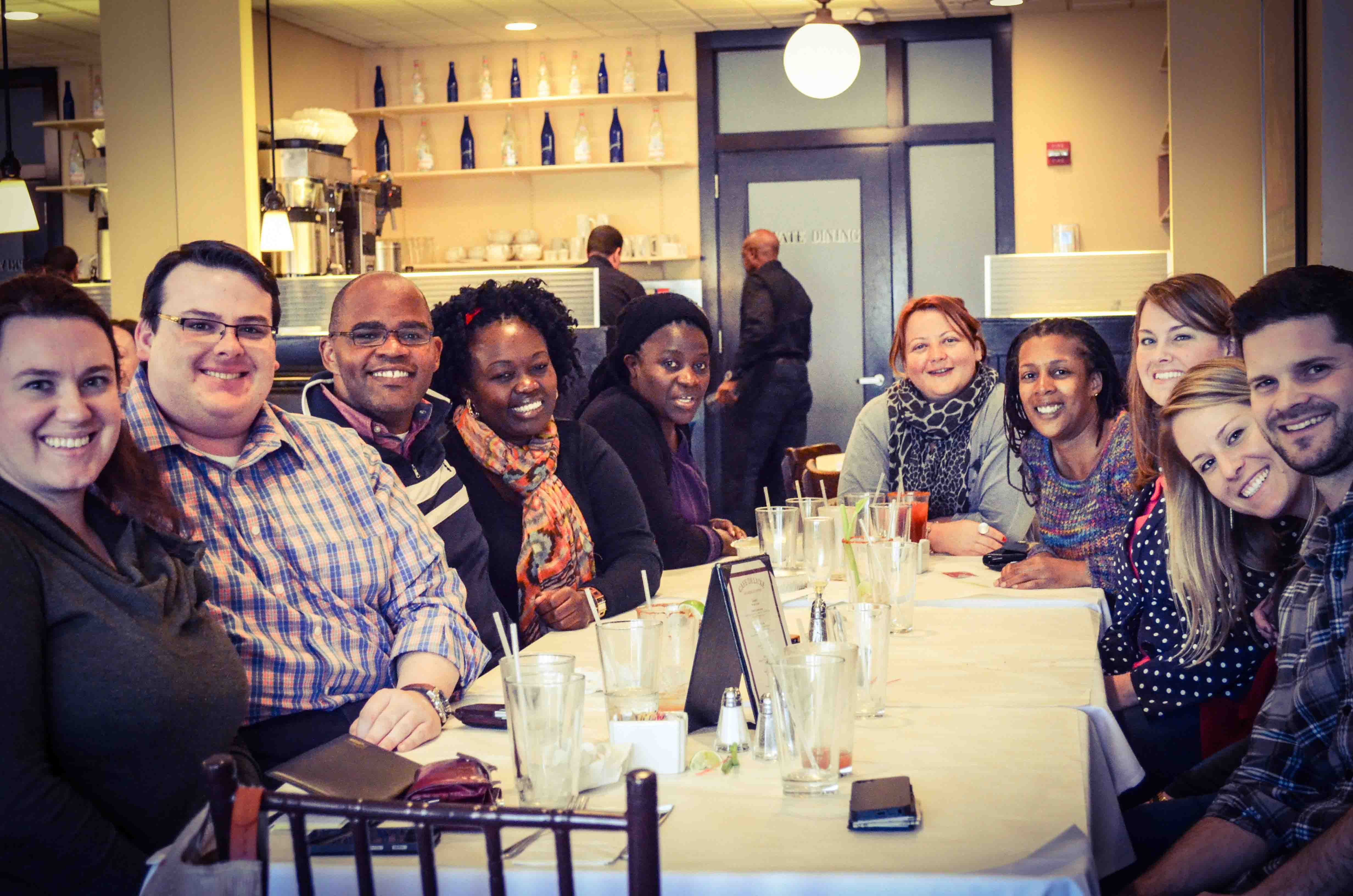
A welcome home brunch at one of my favorite Sunday morning locations.
And not to be outdone, the hard to predict weather of the Mid-Atlantic region still seems to amaze me. I think Washington, D.C. is experiencing its wettest and probably snowiest winter since 2010 when the region experienced 56.1 inches of snow (142.5 centimeters for my international friends). The snow does make everything nice and pretty before turning into deadly mounds of ice and slush. I think I have had my snow fix for the next decade and looking forward to enjoying the warm/tropical temperatures of Africa once again.
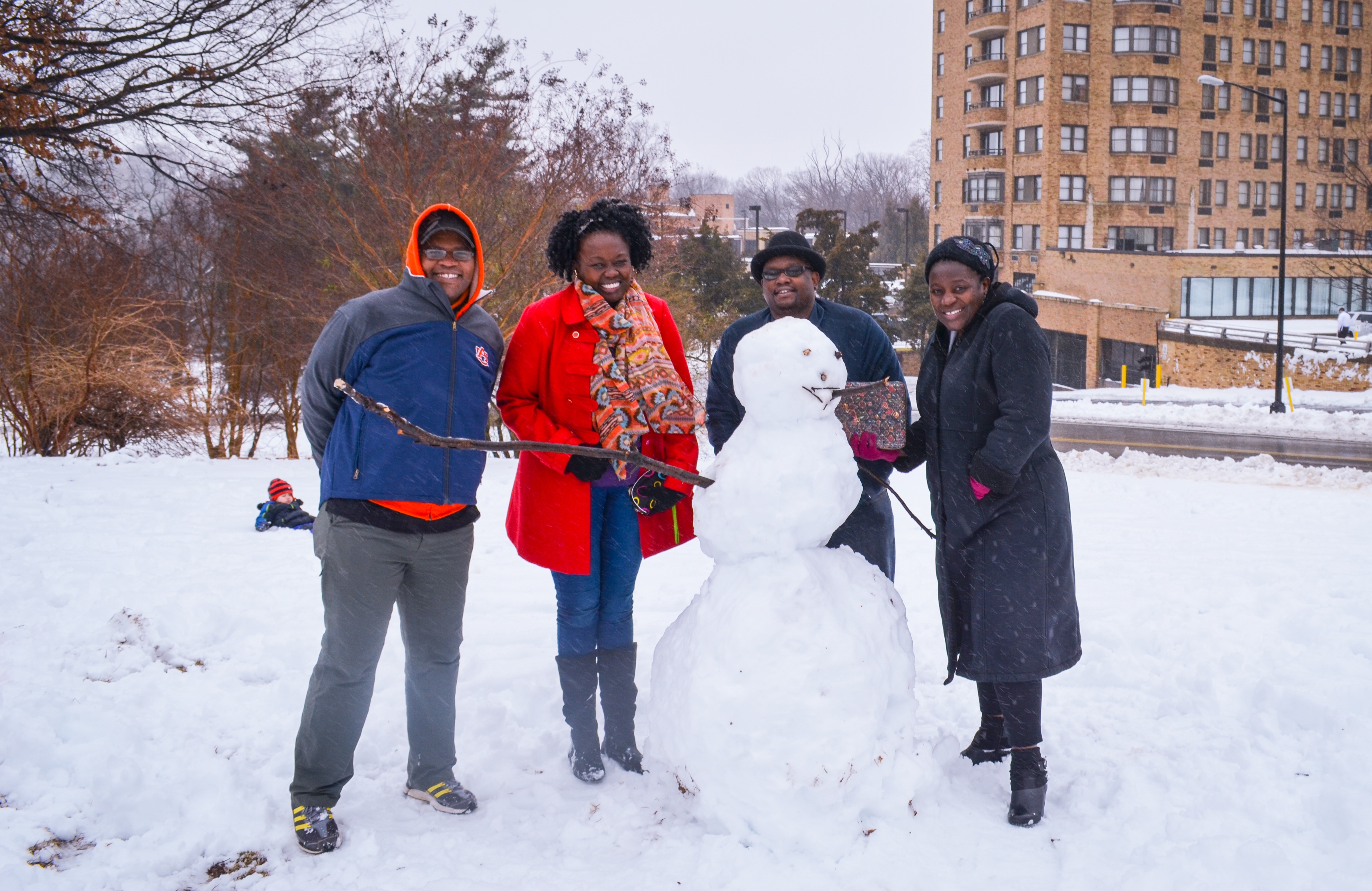
I enjoyed watching my African colleagues frolic in the 10 inches of snow that blanketed the Washington, D.C. region.

The Dr. Martin Luther King, Jr. Memorial buried in snow (Washington, D.C.)
I was talking with my parents by Skype this past weekend and my mother mentioned that they had been watching a CBS 60 Minutes special on the Lost Boys of Sudan. I tried to find the 60 Minutes report and in my search I ran across this video from the New York Times. I was truly moved to tears watching this video because of the overcoming nature of the human spirit and Jacob Mach’s obedience to God. I was so encouraged by his faith and his willingness not to give up that I wanted to share this video to encourage others.
Today marks one month since my evacuation from South Sudan. It is hard to believe that the conflict continues to rage in South Sudan. I was a bit naïve when we departed Juba in December. I was thinking that I would go on my two week Christmas holiday, the fighting would subside and we would be back in Juba by mid-January. Little did I know that the fighting that started in Juba would sweep the country and reopen old ethnic wounds that have plagued the region for years.
Living in South Sudan, I always knew that the smallest spark could ignite a civil war. But it breaks my heart that a political dispute within the ruling party has cost the lives of thousands of innocent victims. Last week, an overcrowded boat with people fleeing the violence in Malakal, a city in the northern part of South Sudan sank killing more than 200 people. The exact number of people on the boat is unknown but what we do know is that these innocent victims died fleeing the fighting between the pro-government and anti-government forces. International organizations put the death toll from this conflict over 10,000 with more than 500,000 displaced in various refugee camps.
We had a staff member that was forced to flee the fighting, hiding for days in the forest until it was safe to enter the UN camp. We had another staff member robbed and another shot. Many South Sudanese have escaped to neighboring countries. The United Nations High Commission for Refugees (UNHCR) estimates that over 32,000 South Sudanese citizens have sought refuge in neighboring countries, the bulk, around 24,000 in Uganda, entering at a rate of 3,000 a day.
I do not know when this conflict will end. Both sides do not seem interested in bringing the fighting to a quick end. There was an announcement today of a possible cease fire agreement but the hard work will be finding peace. Innocent citizens have borne the brunt of this conflict. I continue to lose hope that South Sudan will put away its weapons and instead choice the voting box to make changes in the country.
 A FREDAY in AFRICA!