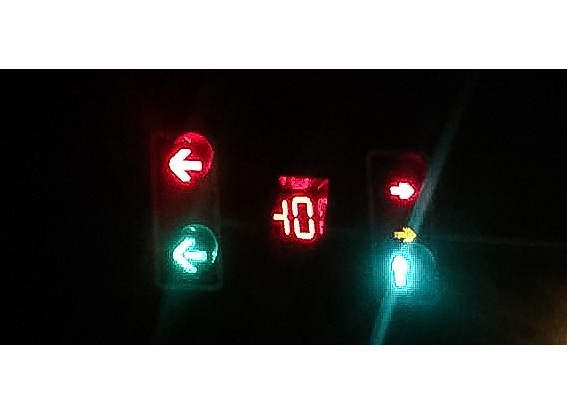
I can be pretty hard on Nigeria sometimes but I couldn’t pass up posting this photo from a random traffic light in Abuja. Now, it is important to note that the majority of Nigerians don’t follow traffic lights anyway. Prior to arriving at this malfunctioning traffic light, Sheila and I were patiently awaiting at a red traffic light only to watch as Nigerians disregarded the traffic light and continued on their way. At first I was confused when I arrived at the light but just decided to continue on my way…At least if I was stopped I could say, “hey, the light is green!”
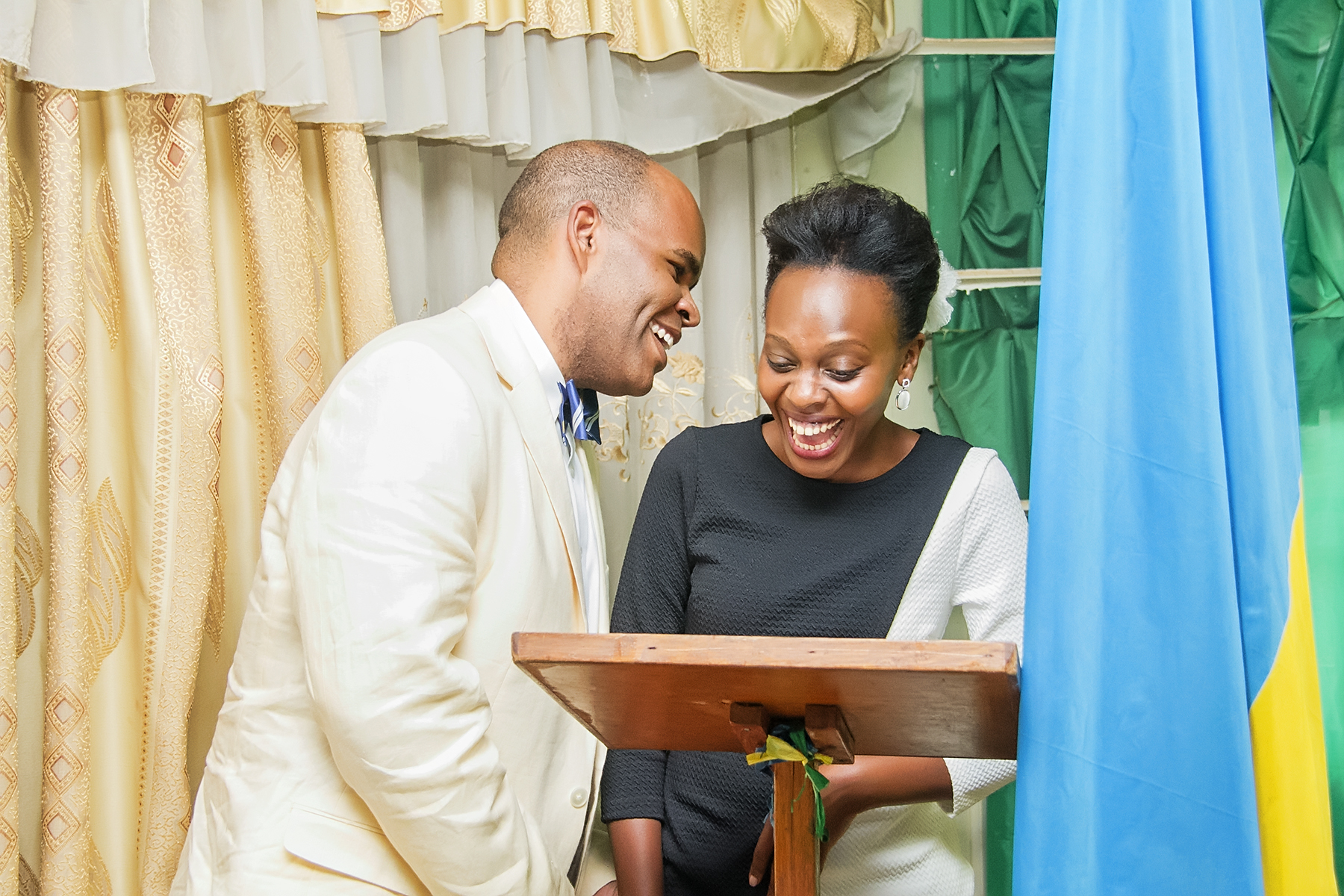
In Rwanda, you have to go before a local government official to be recognized as husband and wife by the government. So officially, we had three ceremonies in Rwanda! During the civil ceremony, two officials representing the local authority read the Rwandan law that addresses marriages. The law addresses everything from how couples share resources to what are the legal grounds for divorce. At one point, the speaker provided me with what qualifies for a couple to divorce but then told me “in Rwanda, marriages are forever…” I was thinking, then why legalize divorce? We were extremely grateful for the men for conducting our ceremony but the lack of sleep that week and the rising temperatures in the small room didn’t help my present condition. Within 15 minutes of the start of the civil ceremony my eyelids were closing fast. I tried my best to stay alert but sleep was quickly overtaking me. At one point, one of the officials asked, “Bar-nes, are you listening?” I quickly retorted, “YES.”


We are finally getting around to posting photos from our wedding. It has been a busy two months but we wanted to celebrate our two month anniversary by inviting you in to see photos from our wedding. We had numerous ceremonies, so bear with us!
Gusaba is a Kinyarwanda word meaning ‘to ask’ and is the ceremony where the family of the groom-to-be officially requests for a girl as a bride. The Gusaba is a fascinating event that includes all members of the community who come together to negotiate the marriage of the bride. The two families go back and forth debating why the bride or daughter should be release to marry the potential suitor. One Rwandan historian said that the in the past, “the Gusaba was a battle of wits, often involving traditional tongue-twisters as well as riddles and pranks from the girl’s side to test their intelligence and patience and it is on this day where whoever had a reason that should prevent the two from getting married would be given room to put it across.”


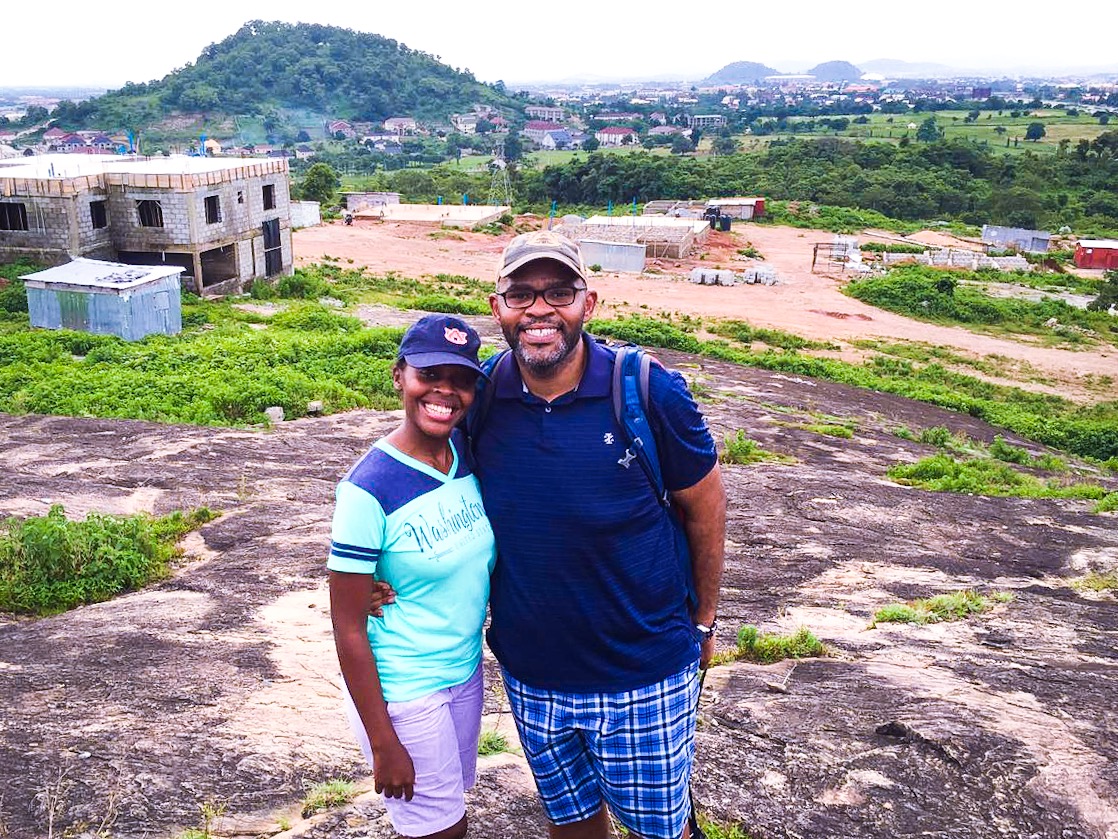
…The current situation in Nigeria is no laughing matter. The economy seems to be heading towards a recession and the cost of food has escalated since Fall 2015. When I arrived in May 2014, the Naira, the local currency in Nigeria was 167 to one dollar. Later that year, it rose to 199 to one dollar. Today, the Naira is around 313 to one dollar. The currency has continued to deteriorate because of the decrease in the cost of crude oil and the militant attacks in the south of Nigeria that has decreased oil production. Nigeria was once the largest producer of crude oil on the continent but now stands at number two behind Angola (who is having its own economic issues). The situation in Nigeria is difficult.
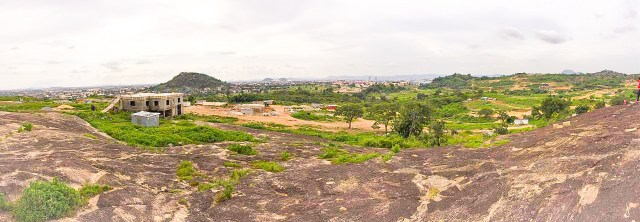
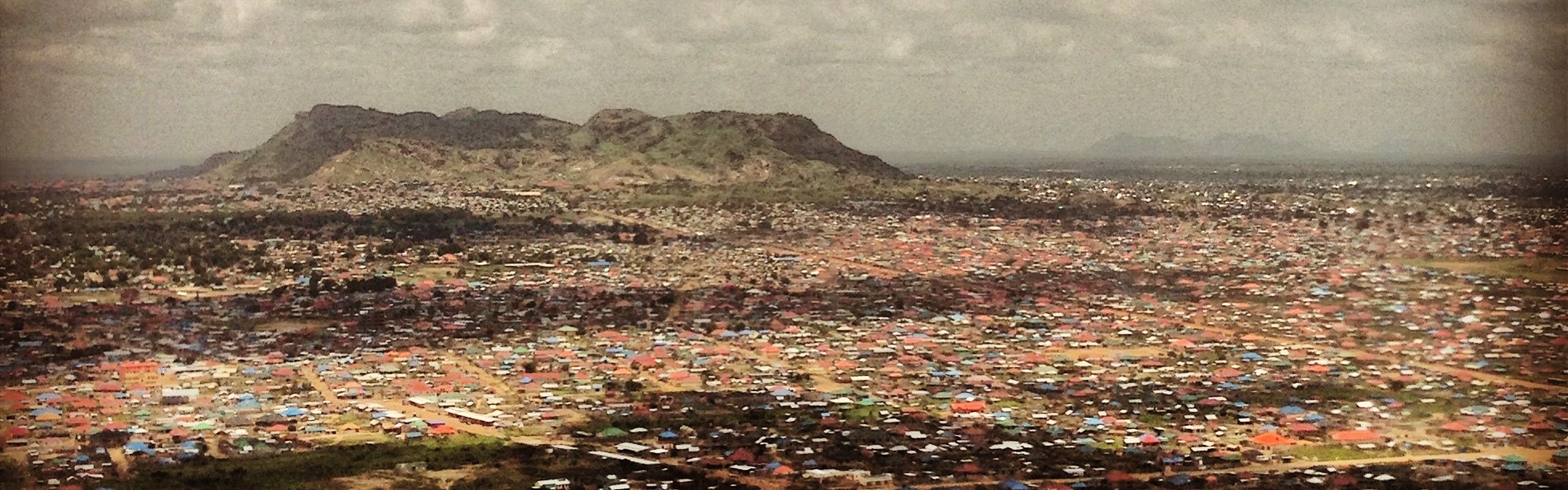
A view of Abuja (in the distance) from one of the hills that surround the Nigerian capital.
IRI recently released a public opinion survey that stated that 54 percent of Nigerians feel that their country is headed in the right direction. However, 57 percent of Nigerians reported that their personal economic situation has gotten worse over the past year. And I am sure if you conducted that survey today, that number would be higher. The survey was conducted in April/May and since that time, the government removed the subsidy from the fuel price and the Naira has been on a free fall. The cost of rice has become so expensive that I have stopped buying rice. Rice is a staple in every house in Nigeria and if you don’t have rice on the menu then you don’t have food in your house! In addition, it has been extremely challenging getting tomatoes in Nigeria. Tomatoes are another staple in this country as everything has tomatoes in it.
Last week, we attempted to send a team to Edo State, a state in southern Nigeria. When the team arrived at the airport, they were told there was a delay and the plane would be departing very soon. A few hours later, it was announced that no flights would be departing because there was no jet fuel available. Because of the devaluation of the currency, the pump price of aviation fuel increased from N120 to N240 per liter, representing almost a 100 percent increase. Given the collapse in the value of the naira and given the scarcity of foreign currency, fuel importers have struggled to secure enough fuel to meet demand. The devaluation of the Naira has also affected the cost of international airline tickets. Foreign airlines like Lufthansa and Emirates have increased the cost of tickets by 70 percent to reflect the rising cost of doing business in Nigeria. The cause of the increase is the high cost of foreign exchange (forex) as well as the inability of most foreign airlines to “repatriate” their incomes out of Nigeria. Basically, Nigerians buy their airline tickets in Naira and the foreign airlines exchange those Naira for dollars. Because of the scarcity of dollars, Nigeria has been unable to convert the Naira into dollars. What has happened is that some airlines will only sell tickets in dollars, adding an addition cost to the ticket (and violating the law).
President Buhari has been laser focused in his fight to end corruption in this country. But you will find that most Nigerians are complaining because the corruption fight has turned off the free money that has littered the Nigerian economy for the past thirty years. The “Oga” or Nigerian big-man was once very free with how he spent his money. While I may pay my cook only 350,000 Naira a year, the “Oga” paid him 800,000 Naira because the money he acquired was from illegal means (corruption). The “Oga” also tipped everyone from the man who opened the gate at the shopping mall, to the door greeter at the supermarket to the street sweeper. This has created a situation where everyone now is asking for money. I once went to a meeting at an office complex. When I exited the vehicle a man spoke to me and welcomed me to the complex. Later that afternoon when I was departing, he came up to me to say, “Oga! Remember me? I welcomed you to the meeting. What do you have for me?” He was asking for me to tip him for just saying “welcome.” Can you imagine…

Sheila and I are back in Nigeria for the long haul. After a busy May, June and July, we are looking forward to rest and relaxation as we settle in to our marriage. But it doesn’t take long before Nigeria overwhelms your senses and your outlook. I have lived in Nigeria for exactly two years. May 26 marked two years in Nigeria. When I arrived, I was only planning to stay for nine months but twenty-six months later I am still here…We will leave that discussion for a later blog. I have come to learn that Nigeria is what you see and the country can care less how you feel about your experience in their country.
In May, my parents arrived in Nigeria for a brief visit before my wedding in Rwanda. On arrival, like every other visitor, my parents had to wade through a hot and steaming airport with little to no instructions on what they needed to do. I can imagine what they went through because I have entered that airport on countless occasions only to become frustrated and overwhelmed by the lack of efficiency and customer service. When I met my mom in the airport she joked that she was “about to start crying.” Yes, the Abuja airport can bring a grown woman (and man) to tears…
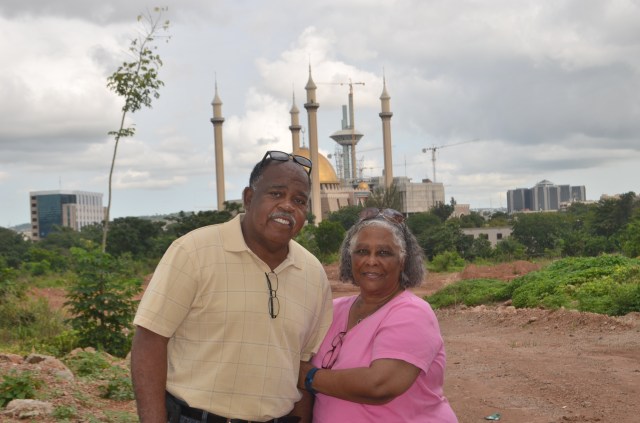
It was difficult for my parents to see Nigeria outside of their American lenses. To be honest, at times, it is difficult for me to see Nigeria outside of my American upbringing and cultural background. But when you live here, you begin to understand why this happens and why that happens…so for me, I have been able to analyze and understand Nigeria for what it is worth. I once described the country as a teenager; not exactly sure what it wants to be so it swings back and forth trying to figure out life. While my view of Nigeria has softened, I do believe the country is confused and not sure exactly what it wants to be. In 2015, the country voted to change the leadership of the country saying it was time for new leadership and a crack down on corruption. However, the people are now upset with the current president because of the sagging economy and challenging living conditions. Many of these challenges are a lack of planning and vision from previous administrations. For too long, leaders enriched themselves without considering the needs of the people.
My parents have experienced the crazy driving that makes you cringe and close your eyes in fear. They have witnessed Nigerians treating the sidewalk as their own personal toilet and yes; they have experienced the constant asking of “what do you have for me today.” Maybe I thought that Nigeria would take a holiday when they arrived, recognizing their naivety in traveling and giving them a break. But Nigeria doesn’t take a holiday. Just ask any of its citizens; even when you feel as though there is nothing left for Nigeria to take from you, it squeezes in and removes whatever is left. It’s not easy-oooo (as my friends say). During our tour of the slave sites in Badagry, my dad was trying to relate with our Nigerian tour guide about the difficulties of Nigeria. My dad said, “when I was a boy, we experienced the same thing. We had bumpy roads and random power outages.” What our tour guide heard was, “in the 1950s, I lived the same way.”
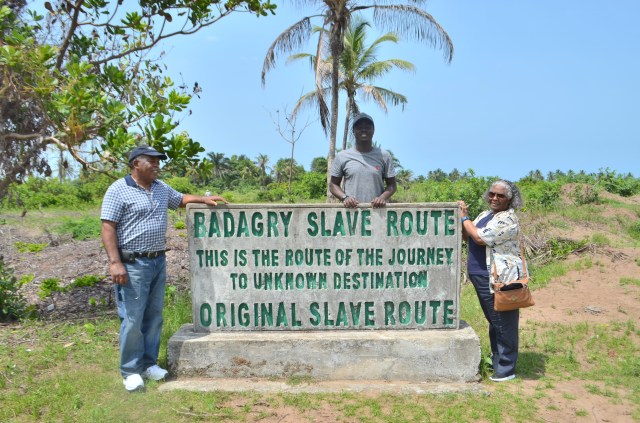
I would like to believe that my parents enjoyed their time in Nigeria. I do know that it was mind opening for them having never traveled out of North America. And for me, it was important for them to first experience Nigeria before heading east to Rwanda. I wanted them to see the contrast and understand that while Africa is a continent of 54 nations, it has diverse people with different cultural backgrounds that make it unique and fascinating to visit.
I have to relate one final story. While the Abuja airport will make you cry, the Lagos airport will cause a nervous breakdown. Just to get from the entrance door to the immigration counter will take you one hour. Your checked bags have to be inspected before you give them to the gate agent. This process is easy for those with personal items but for most of the passengers, they are carrying items to sell at their destinations, Dubai, Kigali and beyond…so it takes a significant amount of time to check all the bags being processed at the gate. Luckily for us, immigration and security was a breeze and we were at our gate just as they were starting to check in. The Lagos airport is old and in need of an upgrade (Turns out that they are building a new airport). Air conditioning works sporadically in the old terminal which means for the most part you are sweating and gasping for air.
As we boarded our Rwandair flight to Kigali, we noticed that the plane was as hot as the terminal. After everyone was on board, the pilot announced that the plane was experiencing a technical issue with the engine and was unable to use the air condition. He mentioned that the ground staff was working to correct the issue and hoped to resolve the problem very soon. This was insufficient for the Nigerians on the plane who DEMANDED that either they start the air conditioning or they would leave the plane. Now, I fly all the time in Nigeria and when there is a delay, I am only told it is because of operational reasons – no other excuse. So my first thought is, “the Nigerians should be used to this…and to a certain extent, impressed that the pilot informed them of what was going on.” But instead, they were starting a revolt on the plane. About twenty Nigerians jumped up and started to the front of the plane only to be told that they were not opening the doors and they needed to sit down. Eventually, they came back to their sits grumbling how unhappy they were. Twenty minutes later the issue was resolved and we were off to Kigali…As much as I might complain about my life in Nigeria, I am always entertained…
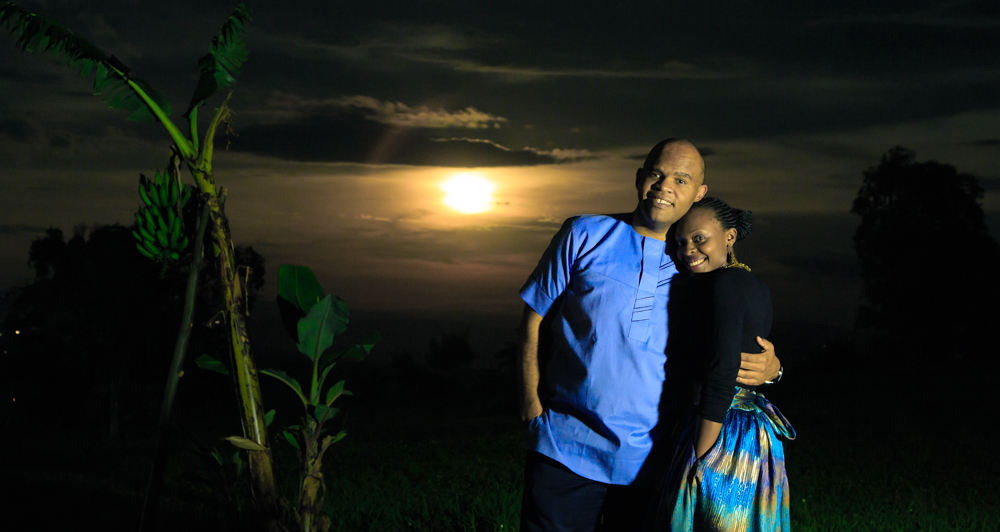
What an amazing photo taken by some truly amazing photographers!
Sheila and I have been intending to post our engagement photos but we were so overwhelmed with wedding planning that we never could find the right time to post. These photos were taken in April, just five weeks before our wedding at one of the “other” garden we considered for our wedding.
We asked our friends Shami and Olivier to help us in capturing these moments. Sheila and I only wanted one or two photos of us that we could share with friends and family. Instead, the session became a two day photo shoot where we captured these amazing shots. And before you say ‘what a nice sunrise!’…that is actually the moon. I know… INCREDIBLE! However, Sheila and I had to remain completely still for about 25 seconds during each one of these moon shots to ensure we got a flawless photo. After seeing the finished product, it was well worth it!
Sheila and I have been extremely touched by all the help we received on our wedding day(s). We have some amazing friends with some extraordinary talent (including Shami and Olivier).


When you are stuck in the airport for more than 24 hours, you have to find ways to entertain yourself. As much as I wanted to take Sheila out into Frankfurt and show her the city where I spent two Christmas, an Easter and two short stopovers, we were held captive in walls of the Frankfurt International Airport. We made countless references to Tom Hanks’s movie, “The Terminal” where a man becomes trapped in an airport terminal when he is denied entry into the United States because his native country has experienced a military coup. Sheila and I have differing opinions on how good the movie is but it took on new meaning during those 24 hours in Frankfurt.
Sleeping in an airport also has its challenges. For the most part, there were very few announcements as no flights arrived after 11:00pm and before 5:00am. However, during these six hours, the airport is busy with cleaners, construction workers, airline staff re-arranging gates, etc. At one point, I got up to go to the bathroom and when I returned, I noticed that Sheila’s blanket had fallen off. As I tried to re-arrange it, she made a strange noise. At first, I thought she was dreaming because I couldn’t see her eyes to know exactly what was going on. When I eventually saw that she was awake, I asked what was wrong. She told me that she thought I was a strange man standing over her so she was making a sound to scare them away. However, the sound she made was neither scary nor startling. It sounded more like the squeak of a mouse.


As part of our 24 hours, I wanted to highlight some of the things we experience while waiting in the third busiest airport in Europe.
- The comforts of the Lufthansa Senator Lounge in Terminal 1 Concourse B. After our 8 hour flight from Washington, D.C. to Frankfurt, we were happy to settle into the Lufthansa Lounge. We were provided with endless food, drinks and couches to nap and rest on. Sadly, the Lounge closed at 10:00pm and we had to relocate to the terminal to sleep. However, at 5:00am, Sheila and I were waiting at the door to re-enter the lounge. Lufthansa was helpful enough to give us pillows and blankets for the long night in the terminal.

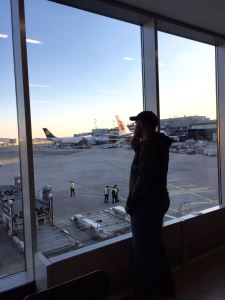
- Plane watching at Terminal 1. Since my first airplane ride in 1993, I have become fascinated with air travel. I often watch documentaries on the manufacturing of aircrafts and why airplanes crash. I once wrote a paper on the 1996 crash of Valujet Flight 592 and how workers’ disregard for company policies led to the disaster in the Florida Everglades. In Frankfurt, I was extremely fascinated watching the various planes arrive in Frankfurt. It was also interesting watching how the Lounge changed over the course of the day. There seem to be an uptick in the number of blacks in the lounge in the morning as flights were arriving from the African continent and the United States (Sheila and I fit into both categories) and East Asians in the afternoon. We watched planes arrive from the United States, Canada, Vietnam, Singapore, Qatar, United Arab Emirates, Japan, Korea and China. There were numerous Lufthansa planes that arrived but we were unable to determine their departure point.
- The local cuisine. Germany is known for its brats, beers and pretzels. The Lufthansa Lounge provided unlimited Turkey Brats (perfect for me), beer and pretzels. Even though we were unable to leave the airport, we were able to experience some of the “local cuisine.”


- Duty Free Shopping. Before the lounge closed, Sheila and I decided to window shop along the concourse. Everyone raves about duty free shopping but Sheila and I were just coming from the United States where everything is typically cheaper than airport prices. For us, we were only looking for a few cheap items to change into once we took a shower in the Lufthansa Lounge.
- The Engagement. Sheila and I also stumbled on an elaborate surprise engagement in the airport. At first, we didn’t know exactly what the people were doing. There were four people blowing up balloons with bags of what looked like flower pedals. We kept walking and doing our window shopping. Thirty minutes later, the group had created a heart confetti aisle with balloons and tea candles. At the end of the rather long walkway, was a man waiting. After a few minutes, a police woman appeared and began clutching her mouth in surprise. She made the long walk along the hearts, balloons and candles before meeting her “knight” at the end of the aisle. We were too far to hear what they were saying but we could see the man was down on one knee and the crowd began to cheer. It was a sweet ending to a very long day in the Frankfurt Airport.

Delayed and cancelled flights are no fun. It usually requires numerous hours on the phone with a ticket operator and an unhealthy level of stress as you race through the airport trying to catch your connecting flights.
As we were preparing to travel back from the U.S. to Abuja, we experienced a cancellation on Air France. Around 11:00am on Monday morning, I received an email from Air France telling me that my 6:55pm flight to Paris had been canceled and Sheila and I were re-booked on a 9:05pm flight that would arrived in Paris at 10:30am. While that sounds good, our connecting flight to Abuja was scheduled for 11:00am. We would only have 30 minutes to make our connecting flights in one of the largest, chaotic airports in Europe. Knowing that Sheila did not have a visa to France, I didn’t want to spend 24 hours in an airport after we missed our connection. I called Air France and started the process of changing our booking. After nearly 60 minutes on the phone, Sheila and I were re-booked on a Lufthansa flight that would depart at 6:05pm and arrive in Frankfurt at 8:25am. I was very familiar with this flight and happy to be on a star alliance member as I have Gold Status (it came in handy on this trip).
God had other things in store for us. After getting checked in and settling down in the Lufthansa Lounge at Dulles airport, it was announced that the 6:05pm flight to Frankfurt would be delayed, as the aircraft hadn’t arrived. Thunderstorms in the DC region had forced the plane to divert to Toronto. Our flight was now rescheduled for 9:15pm, which meant there was a 95 percent chance we would miss our connecting flight to Abuja. The fear of spending 24 hours in the airport was starting to settle in…
Our flight arrived in Frankfurt at 10:30am and we were off to the races. Our arrival gate and departure gate were as far apart as any gate could be! We had to walk 35 minutes and take a 5-minute tram. We were making good time until we hit German security…I breezed through but Sheila was tagged and had to have her bags searched. As the officer took his time to go through Sheila’s bag, I was losing hope that we would make our connection. Two other Nigerian couples arrived at security and proceeded through while Sheila and I waited for the officer to inspect every inch of her bag. Finally, he finished his inspection and we were off once again. When we arrived at B60, I could tell that we were late and the gate agent confirmed that we had missed the flight. She made sure to remind us that they had “held the plane for as long as they could…” We also encountered the two other Nigerian couples…who suffered that same fate as us.
The Lufthansa lounge in Frankfurt re-booked our tickets and informed us that because of Sheila’s passport, we would be unable to leave the airport. She suggested we settle in for the long haul. Thankfully, my Gold status allow us to access the Lufthansa lounge (for the entire day).
We have been able to sleep on nice couches, eat a variety of food and drink everything from tea to beer to mojitos. We have been trying to make the best of an unfortunate situation…

Shug Avery uttered these words in the 1985 classic, “The Color Purple.” These words have taken on a life of their own as the 1985 film has legendary status in the black community in the United States. It’s not uncommon to meet a black American who can quote various lines from the movie.
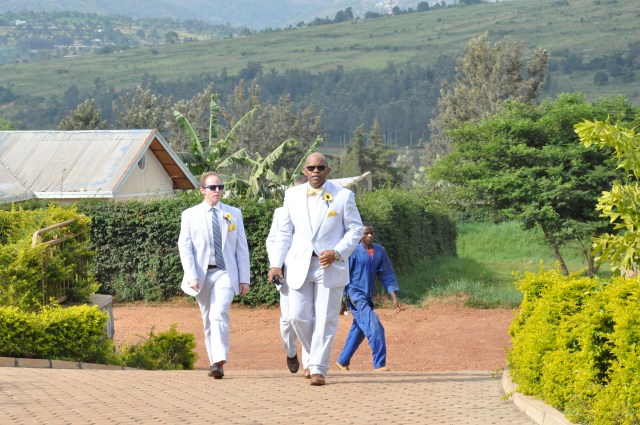
I really like this photo…minus the guy in blue.
It was those words that I jokingly uttered to my family as we were making our way back from the Rwandan civil ceremony that took place on Thursday, June 2, 2016. Marriages in Rwanda (as I have mentioned) have various ceremonies and traditions. After the Gusaba, where my family makes the request for Sheila’s hand in marriage, there was the civil ceremony. Unlike in the United States where state governments have empowered pastors and government officials to officiate wedding ceremonies, the government of Rwanda does not recognize your marriage without participating in a government ceremony. So, on Thursday we trotted down to the local government authority in Gikondo, a neighborhood of Kigali to become a legal union in the eyes of Rwanda. The local government authority had agreed to conduct our ceremony in English and separate from the larger Kinyarwanda ceremonies that took place earlier in the day.
During the civil ceremony, two officials representing the local authority read the Rwandan law that addresses marriages. The law addresses everything from how couples share resources to what are the legal grounds for divorce. At one point, the speaker provided me with what qualifies for a couple to divorce but then told me “in Rwanda, marriages are forever…” I was thinking, then why legalize divorce? We were extremely grateful for the men for conducting our ceremony but the lack of sleep that week and the rising temperatures in the small room didn’t help my present condition. Within 15 minutes of the start of the civil ceremony my eyelids were closing fast. I tried my best to stay alert but sleep was quickly overtaking me. At one point, one of the officials asked, “Barnes, are you listening?” I quickly retorted, “YES.”

A photo after our civil wedding ceremony. l to r: Andrew, me, Sheila and Walter.
Our final ceremony was a traditional church wedding or “white wedding” as they say in Nigeria. We chose an event garden (Sunset Gardens) with a view of Kigali’s rolling hills as the location of our ceremony and reception. Our wedding photos will show the amazing scenery of our location. The preparation for our wedding was stressful. Sheila shouldered most of the planning and organization, as I was thousands of miles away in Abuja. There were some stressful moments once I arrived in Kigali and at one point, I was becoming frustrated being pulled in a thousand different directions. But all the planning and organization all came together on our wedding day and I struggled to hold back my emotions as Sheila floated down the aisle on her mother’s arm. Her beauty and the responsibility that she would be my wife overcame me. While it was true that on the morning of our wedding I was struggling to control my sinuses, no one believed my excuse as I read the vows that I had written to Sheila.
At our wedding reception we were moved by all the people that traveled so far to celebrate our wedding day. We had friends from the United States, United Kingdom, Thailand (by way of the U.S.), Serbia, Nigeria, Uganda, Kenya, and South Sudan. If I am missing someone, please forgive me. But we were honored by your presence and grateful to call you friends.


Weddings aren’t easy affairs but during the ceremony/reception it all sunk in as people came together to celebrate the start to our new life as husband and wife. My brother had to fight back tears when toasting Sheila and I and Andrew House had the crowd in stitches as he tried to convince them that my baking skills contributed to his present size. He was also spot on regarding his advice to Sheila regarding my habits. Our wedding was a beautiful occasion that Sheila and I will relive over and over through countless photos and videos that capture our occasion.

For Americans, a wedding cake is an essential item for your wedding day. For a Rwandan, it’s a cow. Cows are an important commodity in Rwanda and no wedding happens without the trading and bargaining of cows. I knew that when I started dating Sheila that if we decided to get married, there would be traditional activities and ceremonies that would take place. I remembered many of these activities from when my friend was married in Rwanda in 2010. In February, I started the traditional activities when I traveled to Rwanda for the Gufata Irembo ceremony.
I was made aware of this ceremony in January when Sheila told me that my family was supposed to approach her family to declare my intentions to marry her. We both knew that it was highly unlikely that my family would make two back-to-back trips to Rwanda. Not to mention the fact that my dad, uncles and cousins would have no clue what they were doing. (That would have been amazing to watch). So Sheila and I (along with her mother) solicited a few upstanding Rwandan men to represent me to Sheila’s family. During the ceremony, my representatives negotiated with Sheila’s family for her hand in marriage. After a spirited debate, her family accepted and we could now plan the next ceremony, the Gusaba. To make sure I would be the one and only suitor for Sheila, my family representatives made a promise of cows. Never mind the ring on Sheila finger!
To an outsider’s ear, the promise of cows for my future wife may sound strange, but cows are an important resource in rural Rwanda. Cows are a source of life in rural areas and considered an economic asset and a sign of wealth. For generations, cows were traded as wedding gifts from the groom’s family to the bride’s family. When Sheila and I visited her grandmother in northeast Rwanda, not only did she offer me milk to drink but jokingly offered me a cow to take back to the U.S. Like many of her neighbors, cows equaled survival for Sheila’s grandmother.
This past Sunday, we participated in the Gusaba. Gusaba is a Kinyarwanda word meaning ‘to ask’ and is the ceremony where the family of the groom-to-be officially requests for a girl as a bride. It is the next step after the Gufata Irembo but happens before the religious wedding ceremony. The Gusaba is a fascinating event that includes all members of the community who come together to negotiate the marriage of the bride. The two families go back and forth debating why the bride or daughter should be release to marry the potential suitor. One Rwandan historian said that the in the past, “the Gusaba was a battle of wits, often involving traditional tongue-twisters as well as riddles and pranks from the girl’s side to test their intelligence and patience and it is on this day where whoever had a reason that should prevent the two from getting married would be given room to put it across.”

Sadly for me, my parents were not actively involved in the negotiations. Like me, they didn’t have a good grasp of the culture and the traditions. We were silent participants. However, we were represented and supported by upstanding members in the community who helped negotiate my marriage to Sheila. The men representing Sheila did ask some tricky questions and tried on several occasions to trip up my representatives but the men successful dodged the traps and won Sheila’s hand for me to take as my wife.
It was a beautiful ceremony and I am one step closer to having my bride as my life long companion.
 A FREDAY in AFRICA!