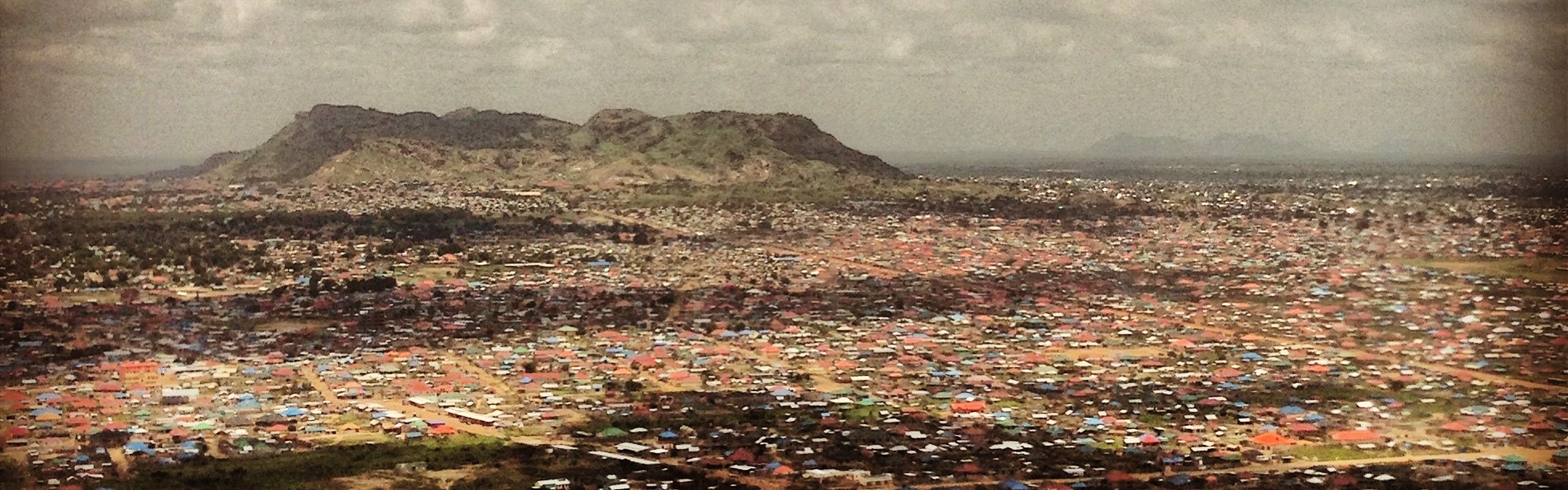

One of the things I have enjoyed most about being in Nigeria is the ancestral connection that I have with this country and West Africa. Despite the disorganization and chaos, the daily power outrageous and the lack of adherence to the rule of law, as a black American, there is an deep familiarity to this wild and crazy country. This week, my parents and I ventured down to Badagry, Nigeria, a former major slave port and an important entry point for Christianity in Nigeria. A slave market was opened in Badagry in 1502 by the Portuguese and lasted until the town abolished slavery in 1886.
![IMG_2067[1]](https://fredayinafrica.com/wp-content/uploads/2016/05/img_20671.jpg?w=640)
My parents (along with our guide Adewunmi) at the ‘point of no return’ on Coconut Island. We were facing the Atlantic Ocean.
It was a sobering tour of a dark and complex time in world history. For a long time, I blamed European colonial powers for the spread of slavery but when you start studying the background of African slavery, you soon realized that tribal chiefs and other leaders were also culpable in this horrific institution. After tribal wars, the defeated men and women would be sold to European masters for umbrellas, alcohol, weapons and gems (Can you Imagine!).
Badagry is also the site of the first Christian church. The tour guide explains that it was under an Agla Tree that Christianity was preached for the very first time in present day Nigeria by Thomas Birch Freeman and Henry Townsend in 1842. The tree was toppled during a storm in 1959. The town has since erected a monument to the Agla tree. It is also strange to think about the entangled web that ties Christianity to slavery. In most cases, slave masters used Christianity to force slaves to be submissive and to explain why this unfortunate event was happening to them.
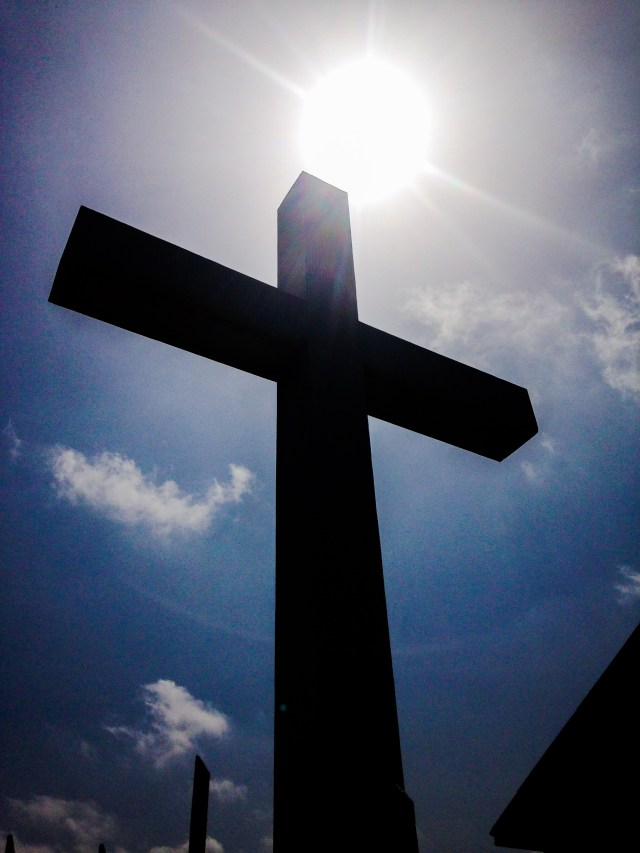
A cross at the Agla Tree Monument in Badagry.
One of the most moving aspects of the tour was the trip to the slave port. The slaves were taken to the port to be transferred to Coconut Island where they would board the slave ship. This island is also became known as the “Point of No Return.” My parents and I took a boat across the lagoon and started our slow and arduous march across the island. The trip is actually a very easy walk through a sparsely populated landscape but there is no shade from the unbearable sun. The sun felt as it was sitting on our shoulder…and eventually became too much for my mom. But it was a very small (VERY TINY) exercise of what our ancestors experienced as they were marched to the slave ship (However, we were free to move it our own pace and were not tied to each other).
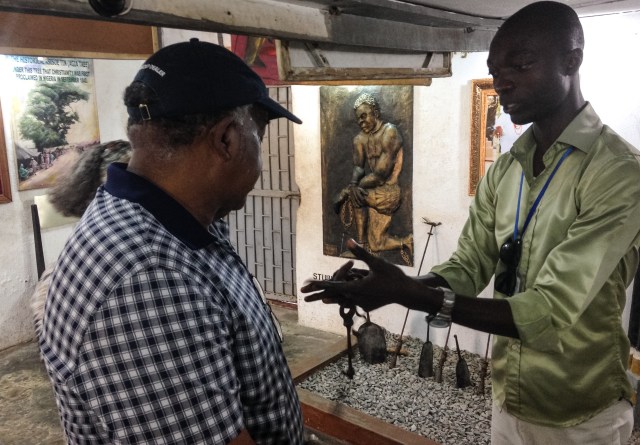
One of my favorite tour guides was at Chief Mobee’s Compound. He made the tour of the very small museum interactive and educational.
The only downside to our visit was the organization at the slave museums and sites. While it was much more organized than most attractions in Nigeria, it left a lot to be desired. There was so much more that some of the tour guides could have provided us about the community, the slave trade and Christian missionaries. When I was giving tours of the U.S. Capitol, I made a vow that on each tour, I would introduce something new to my guests. So each night I read up about the Capitol, interesting politicians that had come through the building and other facts that were happening in and around Washington, D.C. I became so good at my tours that other offices were requesting for my assistance in giving tours. This obviously was lacking on many of the tours we took at Badagry but all in all, it was a great tour and I am so happy I was able to take my parents. They really enjoyed it and had a hands on experience of the cruelty of slavery.
Once I finishing strengthening democracy in Nigeria, I will focus my attention to the tourism industry.
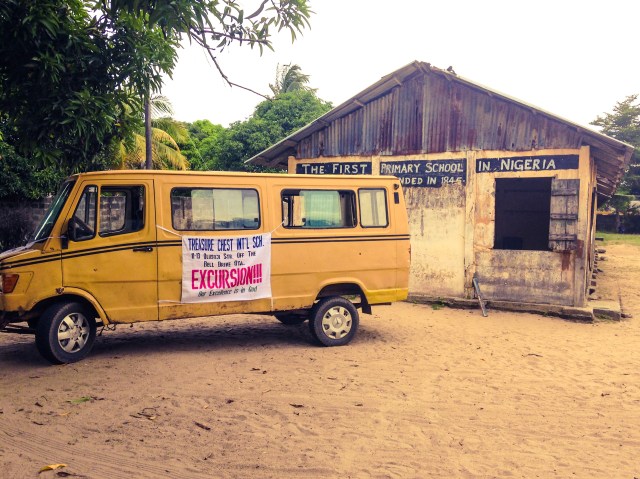
The First Primary School in Nigeria is located in Badagry. It was founded in 1845.
Very soon, my parents will make their triumphant entrance into the African continent. (I know what you are thinking, my intro is a bit over the top…but it has been three years in the making). It can also be seen as a trip back to the ancestral homeland – however, my family has been in the United States since the 1700s (based on my research) so Africa seems a bit far back in the annuals of our family. When I arrived in South Sudan, I began laying the ground work for them to consider making a trip to Africa. While we talked about potential trips to Kenya and South Africa, it has taken my upcoming wedding to force them out of Mount Vernon and onto a transatlantic flight.
In preparation for the big trip, I wanted to offer them some advice to make sure they enjoy their time and manage the busy environments of Nigeria and Kigali.
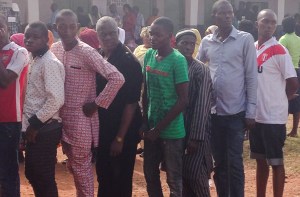
- The personal space bubble that you have enjoyed for the 60+ years of your life will be popped before you are off the plane in Abuja. Personal space is a very American concept and no one on this continent appreciates the personal space violation (PSV) rule that you have been so accustomed to in Alabama. When I was out observing the elections in Nigeria, I could not understand why the voters lined up so closely, almost as if they were stacked on top of each other. It was funny because all the international observers commented on the lack of space. What you quickly learn is that any space between you and the person in front of you is an opportunity for someone to cut the line.
- People don’t intend to be rude when they mow you down to board flights, get food or be the first in line. This also applies to a lack of adherence to a line or queue (as the British say). As a former kindergarten teacher, I know you (mom) will struggle with this as you have been teaching children that there is no reason to rush the playground or get food, as you always say, it will be there when we get there…
- There are a few common words and phrases you will hear that will confuse you. First, well done. It’s commonly used in Nigeria as a greeting and when I first heard it, I was confused. “Why is this guy telling me well done, all I did was enter his taxi? Did I do something extra special to deserve this remark?” After a while, you find yourself saying it…but mostly in a semi-correct context (well done on that project or well done for getting to work on time!). Another word is sorry…Africans tend to say it for every bad thing that happens. It took a while to train myself not to respond. I tripped while walking one day and my colleague said sorry, I said, “oh, don’t worry, you didn’t cause it!” A few days later she said sorry again when I dropped my phone. Again, I said, “don’t worry, it was my fault.” However, I was starting to see a connection, sorry was a way that she empathized with me.
- While a good toilet is easy to find in the capitol of city of Nigeria, there is a sizable population who chooses not to use these “easy to find toilets”…And with that, don’t be surprise if you encounter a person conducting “business” in the middle of a sidewalk. To the average Nigerian, this is normal but to you, this will be a shock. Just act natural and keep walking…
- Despite growing up in a very racially polarized state in the American South, you will be surprise when the first Nigerian refers to you as white. It’s not necessarily because of the color of your skin but because of your mannerisms. And to be honest with you, you won’t really know that they are calling you white. In Nigeria, they use the term Oyinbo to refer to someone from the U.S. or Europe. In Rwanda, the term is Mzungu. However, in Nigeria, because of the diversity of the people, you will quickly fit in…that is, until you open your mouth. Once you open your mouth, you will become ‘Oga’ or ‘Ma’dam’.
- As you leave the airport, your mind will be trying to process all that you are seeing. There will be hundreds of people walking down along the road carrying items on their heads and children strapped to their backs. You will want to stare as you take in this new environment. But probably your greatest shock will be how people drive in Nigeria. There is no rhythm or reason to it other than the fact that most people don’t have good driving skills. And as I have mentioned before, people in Nigeria don’t like to wait, so even if you have a validate excuse for stopping your car, the car behind you will began to make his/her way around you. This often leads to crazy traffic jams and intersections grinding to a halt. My advice to you is to close your eyes. It takes time getting use to too and your initial reaction is to yell at the driver. However, the driver is intently managing the situation and any surprising noise can distract him from his laser like focus.
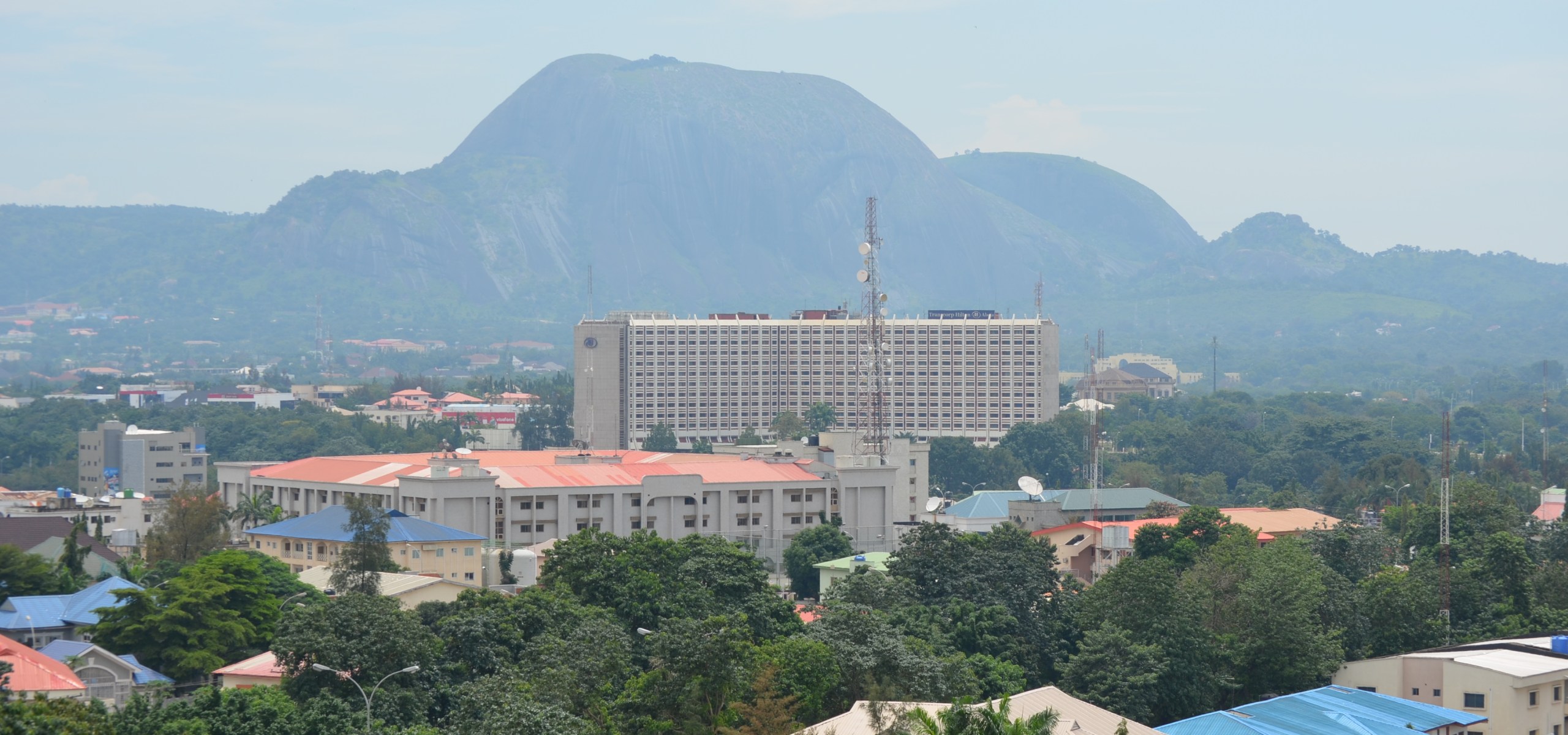
- You will also be amazed at the large freeways and expressways that crisscross Abuja. If “NEPA hasn’t taken light,” the road from the airport to the city will look like any American interstate at night. However, the chances of the street lights being on during the entire stretch from the airport to town is very slim. The planners of Abjua used the layout of Washington, D.C. as an example when laying out the streets and government building. You will also appreciate the expansive sidewalks that line many of the neighborhoods in the capital city. My neighborhood provides a quiet retreat from the busyness of Abuja.

- After a week in Abuja, Kigali will seem both small and calm. The rolling green hills of Kigali will paint a stark contrast to the rocky, sandy environment of Abuja. Rwanda has been a country on the move since emerging from a very dark past. I made my first trip to Rwanda in 2009 and since that time, the country has been changing rapidly. There were no traffic lights and many of the roads in the city were dirt in 2009. Since that time, traffic lights have brought order to Kigali roads and people actually use the Zebra crossing painted on the roads. The enforcement of traffic laws are so tight that I once stopped the car straddling the line and the man on the motorbike next to me, tap on the window to tell me to move back. Kigali (and Rwanda) is an oasis of order and development in a sometimes chaotic land.
- As I have said, Rwanda is a country on the move and has taken great strides to distance itself from the horrors of the late 1990s. For many Americans, their reference point is the Rwandan Genocide. However, the country has tried to move away from the ethnic conflict that crippled the tiny East African nation. Everyone now is a Rwandan or Rwandese…I recommend that when you arrive, you focus on the new Rwanda and not the Rwanda of the past. The scars are still visible and each April, the country commemorates the atrocities of 1994.

photo credit: http://www.slaveryinamerica.org
- I have come to believe that Nigeria (and West Africa as a whole) represents the land of our fore fathers. And what I appreciate most about Nigeria is how easy it is for me to blend in with the people. I see people every day who remind me of family back in the U.S. And there are many things in West Africa that connects blacks in the U.S. to our brothers and sisters here in Nigeria – food, family and faith.
The most important advice I can give you before arriving in Nigeria is to be open minded. Nigeria (and Rwanda) is not the United States and it is very easy to compare the two countries to the U.S. and form a negative opinion. The continent is a very larger and diverse and 90 percent of the people that you will interact with are friendly and civil. Don’t believe everything you hear about the continent. Yes, there are countries experiencing wars and ethnic conflicts but there are also countries that have had decades of peace. Nigeria has been ruled by ruthless dictators and for the past 16 years, by democratically elected presidents. I have live in both East and West Africa for nearly three years and I don’t regret taking the chance of a lifetime to experience this amazing continent and its friendly people. Just think, when you get back to Mount Vernon, you will have numerous stories and adventures to tell all your friends and family.

We are one month from the BIG DAY – June 4! Seems like yesterday, we were starting the preparation process. Now the date is here…
Sheila has been busy on the ground in Kigali meeting with vendors, visiting sites and ensuring our wedding goes off without a hitch. I have been mastering the art of the deal, looking for discounts online to save us as many pennies as possible. It has been a challenge and by the end of this wedding, we may be in the business of renting table linens and other decorative items to supplement our wedding cost (and trying to figure out what to do with 25 table cloths)!
I have been slammed between work and wedding planning and my blog has suffered. Since getting back from the United States, I have been running full steam ahead ensuring that everything is ready for our June 4th date. I was recently in Kigali trying to get registered for our marriage. In Rwanda, unlike in the U.S. for my American readers, a preacher or man of the cloth is unable to certify your marriage. So you have two ceremonies, one before the local government office and one before the church. The challenge is meeting all the bureaucratic processes and red tape that comes with government process. Its like trying to get a driving license in the U.S. You prepare yourself for a full day experience and are pleasantly surprise when after four hours, you are free to do. (Everyone hates the DMV) Despite the trip to Kigali, we were unable to get registered with the local office. The registrar demanded a birth certificate from me. So I called my mom at 7:45 in the morning to race to Mobile, Alabama to get a copy of my birth certificate. By 9:00am (3:00pm Rwandan time) she had the birth certificate in hand and had sent it to me by WhatsApp. Sadly, it was too late and we would have to wait until the next day!
We will complete the process when I return to Kigali later this month. But rest assure, we will be getting married on June 4th!
Now this was a first!
I am often assumed to be Nigerian and on one occasion Ghanaian but never Angolan!
Maybe it was because he couldn’t quite place my name – which didn’t seem like a typical Nigerian name or from the Francophone countries of Africa. To him, I must be from the former Portuguese colony of Angola.
It was a funny exchange and I thanked him for thinking I was from the continent. I then corrected him and told him I was an American. He said, “Really!” – Obviously confused by my strange accent and unusual name.
While Angola is a first, I have these conversations all the time. When I was in California recently for the wedding of my friend Vartan, I was often asked how long I had been in the US and whether I studied in the US. At first, I wanted people to know that I was an American and extremely happy to be in the homeland. But after a while, I soon realized that people couldn’t place my accent and just assumed that I was Nigerian. Once I told people that I was from Alabama, people were either shocked or amused…the next question was, how did you get from Alabama to Nigeria!
I think the longer I stay in Nigeria or even on this continent, the farther removed I become from home. My accent continues to change on my need to communicate with my colleagues and my mannerisms take on new forms to reflect how I interact with Nigerians. What was once loud and colorful is now normal! A car beating a traffic light is normal and an individual relieving themselves on the side of the road is commonplace. Sometimes I often feel like a man with no home but one call back to my mom and I am reminded that home is in Mount Vernon, Alabama.
I was in the U.S. for two weeks between March 18 and April 3. I arrived on a 16 hour Emirates flight that took off from Dubai and landed in Los Angeles. While 16 hours is a long time to be in the air, it went by rather quickly. And it helped that I had a row to myself.
Once I arrived in the homeland, I caught a second flight from Los Angeles to Las Vegas for Vartan’s bachelor party. Vartan and I met in the airport and caught up before boarding the quick flight to Las Vegas. I booked a first class ticket because I had bags and it was cost effective to buy first class and not a regular economy ticket.
Traveling between Los Angeles and Las Vegas, you never know who may also be on your flight. And our brief flight carried two stars from different generations.
After boarding our flight, I got a message from Vartan about a particular individual seated in first class…

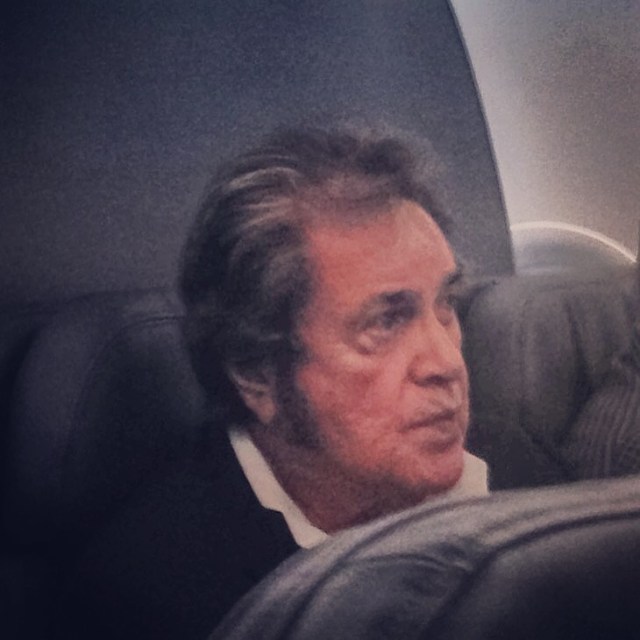
I honestly had no clue who Engelbert Humperdink was…I actually had to google him to make sure I was looking at the right person.
A few minutes later, I got another text from Vartan. This time, he was referencing another celebrity on our plane.
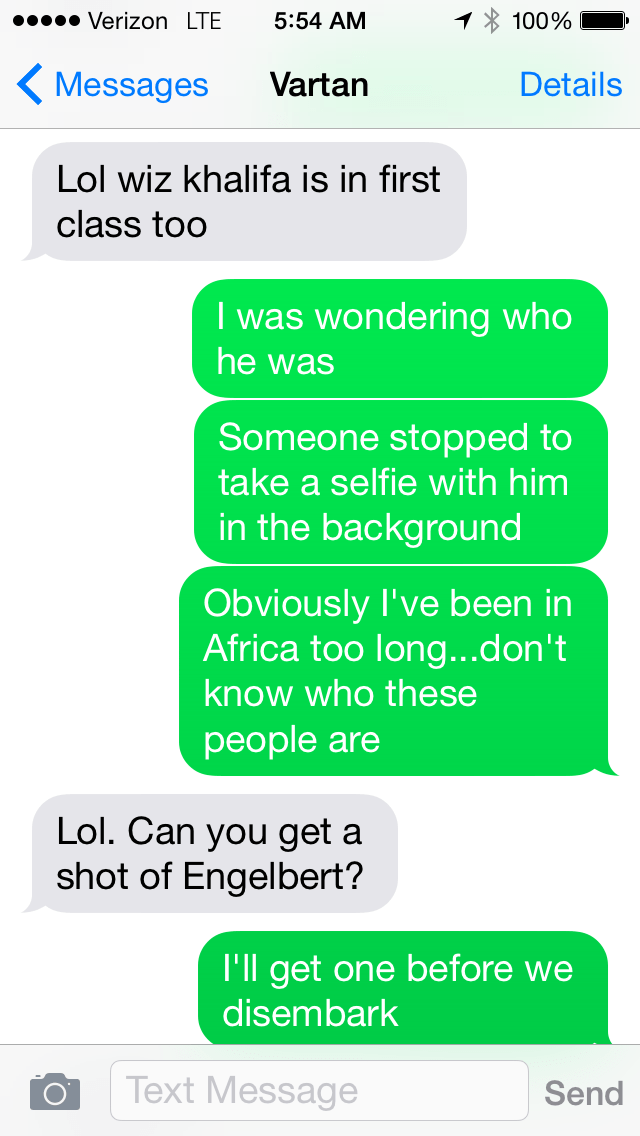
What was funny about the Wiz Khalifa discovery was how Vartan found out. He was settling into his seat in economy when a woman, who was sitting next to him said, “Do you know who is on this flight?” Vartan responded and said, “Yes, ENGELBERT HUMPERDINK?” The woman froze and starred at Vartan, probably having no idea who Engelbert Humperdink was, and said, “No, Wiz Khalifa!” So he sent me a message and I captured this image.

This weekend marks the start of busy season in my life as it signals the two and half month sprint to the wedding on June 4. I am also embarking on a two week journey back to the United States that will take me from Las Vegas to Washington, D.C. to Mount Vernon, Alabama to Los Angeles, California and back to Abuja Nigeria. As usually, it will be another world wind visit back to the homeland. I am returning to the United States for two reasons. First, there are wedding details that I need to take care of and the Easter break presented a good time to spend time with my family and do some wedding cake testing. (SMILE) Secondly, a dear friend is also “jumping the broom” (which I have learned is a tradition that probably should be retired) or getting hitched as others say.


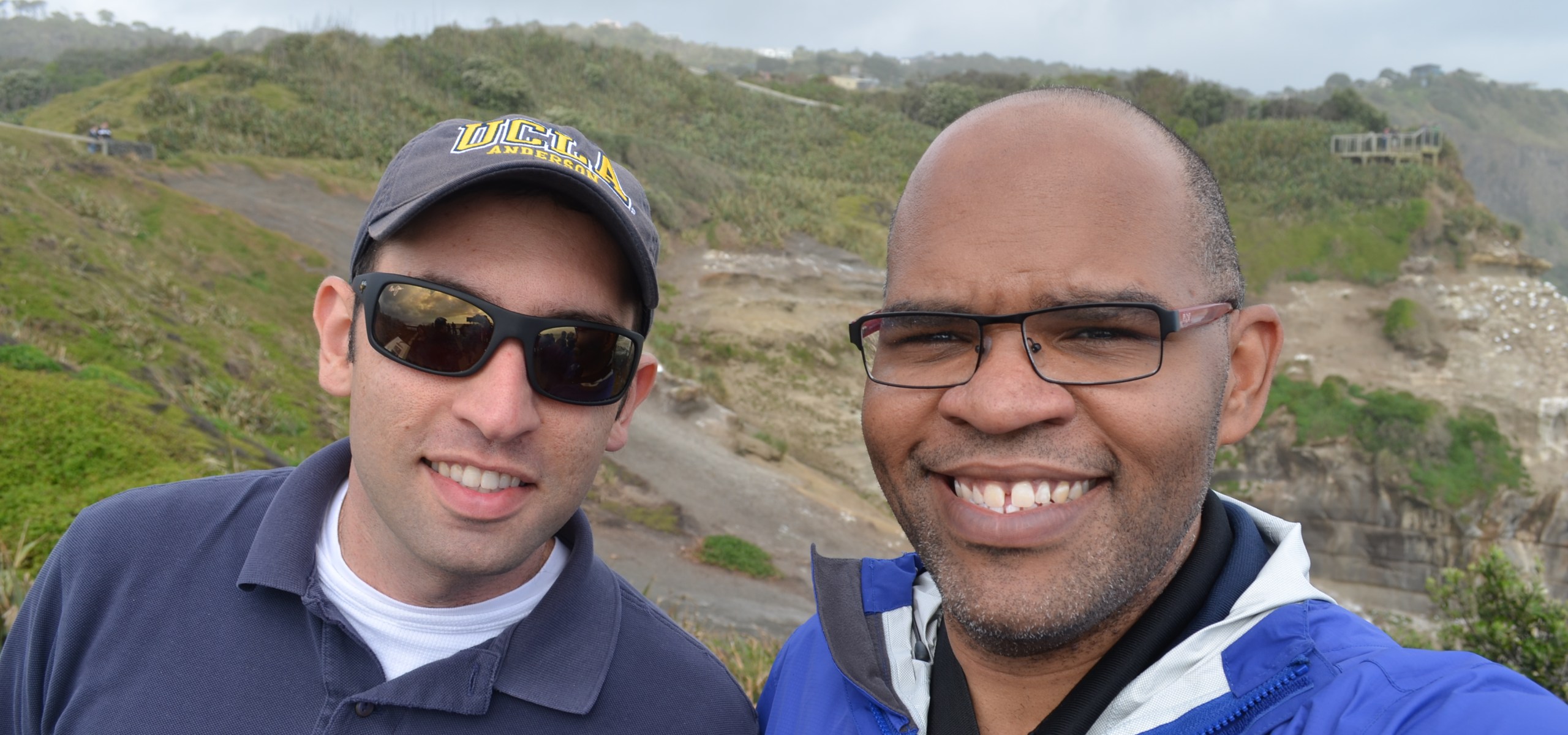
(Left) Vartan, Myal and myself at a Washington Wizards basketball game in 2004. For three months in 2003, we all worked in the office of Congressman Tom Feeney. (Right) Andrew, myself and Vartan at the Guinness Factory in Dublin Ireland.
In some ways, Vartan and I have been in a race to get to “the alter.” I say that jokingly but as I think back to our conversations over the past two years, we have been coaching each other in various aspects of our dating relationship – discussing dating, engagement rings, weddings, etc. We started our dating relationships around the same time and have been encouraging each other through the process. I pulled the trigger first and got engaged in November and planned a wedding for June. Vartan got engaged in January but made sure that he would beat me to “the alter” by planning an April wedding.
Subconsciously, Vartan and I, along with our other friend Andrew have been competing against each other since the day I met them in 2003. It has now become a running joke among us. I met Vartan in the Spring of 2003. I had just moved to Washington, D.C. and was looking for a job. I applied for an internship in the office of Rep. Randy Forbes but they had enough interns and forwarded my resume to Congressman Tom Feeney’s office. When I got the call from Vartan to come in for an interview, I didn’t know who Tom Feeney was and had no clue who I was talking to on the phone. Obviously my interview went well because they eventually brought me into the office and I quickly befriended Vartan. Vartan is a very talented person and it was clear that he was on the move. After a few months, Vartan left the office to take on the role of press secretary for a Member of Congress from California and the office promoted me from unpaid intern to full time staffer. Thanks to Vartan, I got my foot in the door on Capitol Hill.
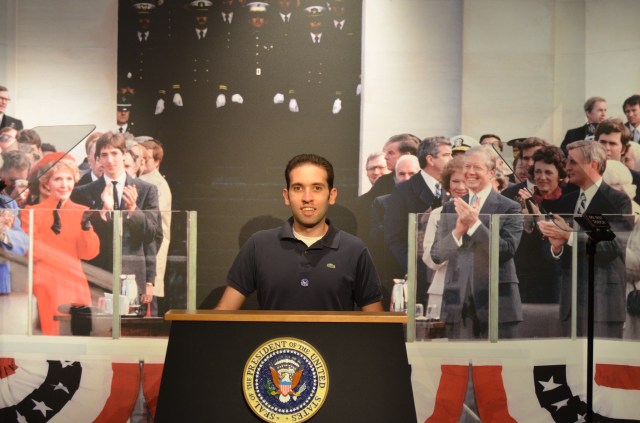
At the Reagan Library in 2012. Vartan was showing me around Los Angeles.
Over the years, Vartan and I have seen the highs and lows in each other’s life. We were accosted by drunk gypsies in Ireland in 2008 and witnessed amazing scenery along the New Zealand coast. I traveled around the world to meet up with him in 2014 and I am flying across the North Pole to meet up with him in Las Vegas. He slept on my couch as he was transitioning between political campaigns and comforted me as I was trying to find employment after leaving Congressman Duffy’s office. Now, we will be privileged spectators as we both take the next step in our lives. I am truly glad to call Vartan a friend and watch him marry the love of his life.
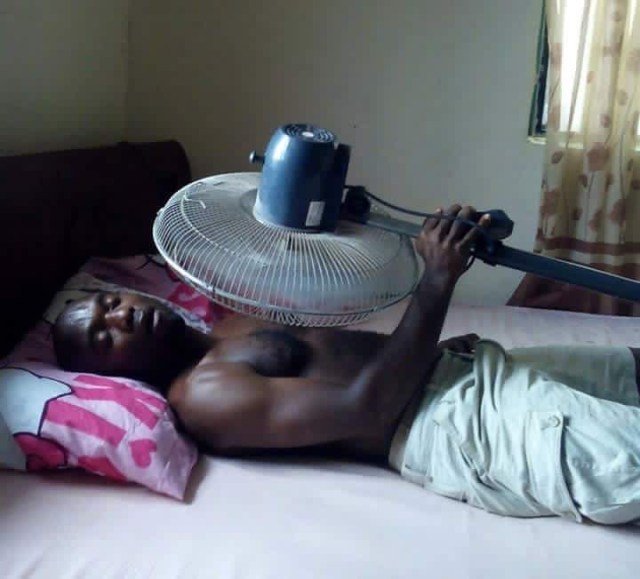
This picture sums up my nights in Abuja! (Picture from a friend’s Facebook post). Photo credited anonymous.
Since the end of January, the weather in Abuja has been down right horrific. What was once cool mornings and evenings quickly turned into sauna like days and nights of temperatures above 100 degrees Fahrenheit (40 degrees Celsius). It has been downright uncomfortable just commuting to work in this heat. What has compounded the issue is that as the temperatures soared in Abuja, the strain on the already inefficient power grid in Nigeria has led to difficult nights of trying to sleep in muggy filled homes.
Now, some of you are thinking, “Sentell, you live in a compound that has not only one generator but two generators to ensure that you don’t spend a night in the dark. Why are you complaining?” And yes, you are correct! And I know my complaint sounds like a spoiled American who is use to accessing his air condition at any time. However, because of the strain on the power grid, our generators have been working overtime which has led to the generators breaking down a few times causing some difficult nights of sleep. Since the start of this unbearable heatwave, I have not been able to sleep through the night. I often wake up thinking I am swimming in a pool only to discover that the bed is soaked from sweating through the night. While usually the generators start within 15 minutes of the lights going out, my air conditioner does not restart once “NEPA takes lights.” So, eventually I wake up drenched in sweat after sleeping in a hot and stuffy apartment.

This was the temperature at night a few weeks ago. I actually played tennis that night and it was extremely hot and muggy.
But I have to put my uncomfortable few hours of sleep in context and face the fact that I probably live like the 10 percenters (or less) in Abuja. While many middle class Nigerians may own a small generator to power important appliances in their home, for the most part, most Nigerians don’t own a generator so most suffer through these unbearable nights of heat. Colleagues have complained of their children suffering through the night as heat makes sleep even more difficult for little ones. One friend told me that he and his wife face a very tough decision each night, do they sleep with the windows open and risk someone coming into the house to rob them (actually not sleeping at all because of fear) or close the windows and try sleeping through the heat. Again, I don’t face those challenges at night…
What is nice to know is that relief is on the way and it seems that it will be here before we know it. The dry, dusty Hammattan season is coming to an end. On Friday night, as I was finishing my tennis game, the wind and dust started to swirl around the court and lightening could be seen in the distance. It was a sign that the heat wave would be ending and this dusty climate that we have been suffering with since November would be lush and green again. I woke up that night because of the lack of air in my room but could hear the rain falling outside my window. I just laid there listening to the sound of the rain drops fall to the payment. For that brief moment, it was amazing. You don’t miss the rains until everything you own is chalked in a reddish dust.

Last Friday night, I was invited out for roasted fish and chips. It is a typical hangout on Friday nights across Nigeria. If you head out to any of the local “gardens” in Abuja, you are bound to find Nigerians enjoying roasted fish. What is so unique about this experience is that you go to a bathtub or barrel to select your fish and then they roast it for you. Usually in enough pepper sauce to clause a five-alarm fire. The first time I did it, I was in complete awe (and my mouth was on fire)! On this particular night, I was invited by an American friend that I have gotten to know here in Abuja. It was a nice crowd of individuals and when I sat down, I felt like I had known the group for a long time. In the midst of our conversation, my American friend asked me about the wedding. I gave her details about our planning process, the traditional activities that I have/will participate(d) in (for later blog) and the various ceremonies. One of the gentlemen sitting at the table bluntly asked, “Why did you wait so late in life to get married?” Everyone chided him for asking such a blunt question but his question made me laugh because it made me think back to all the conversations and uncomfortable situations that I went through when I arrived in Nigeria. And honestly, no one had ever asked me “why did I wait?” Most of the questions I face here in Nigeria is when…
First, I told him that I appreciated his question because no one had ever asked that question before. Secondly, I don’t think of myself as old…I mean, yeah I didn’t get married in my 20s but in my circle of friends, I am right on time. Again, I’m 36, which doesn’t feel that old to me. I told him that I faced many situations where people were trying to fix me up when I arrived in Nigeria. No one could imagine that I was still single. Unlike in the U.S. where your career often gets in the way of “settling down,” marriage is the next step after getting a job for most Nigerians. It’s common in the urban areas of Nigeria to meet men and women that waited until their early 30s to get married but once you cross 35, it can be challenging finding other single individuals.
What I have also found intriguing is that many Nigerians are very quick to push you into a marriage but are difficult to find once the marriage begins. As I have said before, my Nigerian colleagues “assumed” that something was missing when I arrived in Abuja since I was not married so they conspired to set me up at every turn. Never once asking me my likes and dislikes. Just pushing me into hilarious and uncomfortable situations. Their good intentions often fell on death ears.
Marriage is a challenging and complex relationship that requires years of understanding (as I am told). In Nigeria, the quickness to marry often leads to unsatisfactory marriages where people resign to the fact that this is what marriage is all about. It seems that some churches exacerbate the situation by telling you “it’s your season for prosperity in your marriage and your home” without helping you understand the fundamentals of marriage. In some instances, men (and sometimes women) seek the emotional and physical satisfaction that they are not getting at home in other individuals. When a man picks up a mistress, it is often common knowledge among friends and family, forcing the wife to be the care giver of his children but not the receiver of his affection.
Marriage in Nigeria is not unlike marriage in the U.S. The biggest difference is that the culture of divorce in the U.S. allows people to leave marriages with little to no recourse – no fault divorce or irreconcilable differences. A Nigerian colleague once mentioned to me that if you had “no-fault divorces” in Nigeria, many marriages would end overnight. It was a funny comment but a sad possibility.
After returning to Nigeria after my Christmas break, I decided to step up my exercise routine. You know with a wedding coming up, I need to impress my future wife with my determination and athletic physique (I made myself laugh with that comment). Since September 2015, I have been playing tennis three-four nights a week and decided to start a morning routine. After about a week, I noticed a reoccurring sensation in my abdomen. For weeks I just thought the sensation was because I overextended my muscles along my stomach. After a trip to Kigali to visit Sheila to do some wedding planning, the sensation became even more pronounced. Again, I assumed it was from the 24 hours of flying across the continent. But like most modern-internet savvy, I started to investigate my symptoms on WebMD. My research and symptoms led me to an appendicitis. Without fully reading all the symptoms, I started to panic…what if the appendix ruptures? Where do I go to get good quality service? Who do I call if something goes wrong? Five minutes after diagnosing myself, I was physically sick. I went to sleep that night hoping that nothing would happen overnight. When I arrived in the office the next morning, I nominated Chika, my office manager to take me to the hospital.

I saw this photo on Facebook…I thought it was appropriate for my medical scare. (credit: Anonymous)
Now, it doesn’t help that the medical industry in Nigeria leaves a lot to be desired. Even Nigerians of modest means often leave the country for medical reasons. The President of Nigeria recently spent a few weeks in the United Kingdom for medical reason. For me to decide to venture off to the hospital for a checkup suggested that I was seriously concerned about my well being. Chika and I decided to go to the hospital in my neighborhood. What I found most interesting about the hospital was that you chose your level of care. You could choose to meet with a doctor (which was the highest cost), a senior medical consultant (the next level) and various lower level medical personnel. Your level of care was based on your ability to pay. I chose the senior medical consultant. I didn’t want to tell her that I had already diagnosed myself and just needed prep for surgery so I sat quietly and answered all her questions. When she started to investigate my symptoms by pressing on various areas of my abdomen, I told her that I thought my appendix was swollen. She told me that I didn’t have any of the symptoms for an appendicitis but sent me for a scan to ensure that everything was working properly. All test came back showing nothing was wrong. She told me that maybe I stretched the muscle and it would need a few weeks to heal. After discovering I didn’t need surgery, it completely changed my mental state. It was as if a cloud had been lifted from over me. Maybe I should let the medical professionals diagnosis me before I start prepping for surgery…And the sensation/pain has subsided…

For the past six months, I have had the pleasure of hanging out with my dear friend Kury. Sadly, two weeks ago, her time in Abuja came to an end and she boarded a plane and headed back to Washington, D.C. I met Kury when I moved to South Sudan in August 2013. At the time, she was the country director for the National Democratic Institute. I quickly discovered that Kury liked having a good time…not in a “let’s get smashed and swing from the roof”…but “let’s find something to do to keep our mind off of our living situation.” Living in Juba was not easy and Kury always found things to do – she swam in the mornings before work in the AFEX pool, played tennis on the weekends and took salsa lessons. On Friday and Saturday nights, you could always find her dancing the evenings away. I appreciate that she would often drag me along on her excursions. It was these fun experiences that help me (and others) get through our time in Juba.


In August, she found her way to Abuja to do some consultancy work. While I had lived in Abuja for over a year when she arrived, it was Kury that was inviting me to social gatherings and introducing me to the tennis courts at the Transcorp Hilton. Once again, Kury was always in motion. So to celebrate Kury’s brief time in Abuja, I decided to highlight our top three moments in Abuja.
- I have to say it was playing tennis with Kury. It’s not that we are both great (I would say that Kury is better), but it was through Kury that I learned that you could take lessons from the tennis instructors at the Hilton. And compared to the cost in the United States, it was a very good deal. Since August, my tennis game has improved significantly. However, I have not been able to beat the tennis coach but I am sure by the August I will have a few sets under my belt.
- Before Christmas, a few of my colleagues wanted to go dancing. So I called Kury and she and a friend met us at a place called “The Bank.” The fireworks started with Kury even before we entered the club. As I have mentioned in earlier blogs, Kury is not shy in sharing her opinion and on this night, it had to do with her shoes. As we approached the door, the bouncer told Kury that she could not enter because of her shoes. I know, you are thinking that she had on athletic shoes and was trying to enter a club on a Friday night. But that was not the case. Kury and her friend both had on a very nice pair of flat shoes. The bouncer was demanding that they needed heels – as that was the dress code for women. For Kury and her friend, this was the most ridiculous thing they had ever heard (and I agreed with them). Kury began to debate the merits of such a ridiculous rule constantly expressing her displeasure for the “dress code.” As she was making her point, two men walked by and one of them was wearing Nigerian dress. Kury then said to the bouncer, “so you will let him in, wearing his pajamas and flip-flops but you won’t let me in.” The man was wearing a stripped Nigerian outfit reminiscing of pajamas that my father often wore at night and a pair of leather scandals. Her comments must have resonated with the bouncer as he then told us to proceed.
- One Saturday, Kury and I ventured to Silverbird to watch a movie. The night before, there were Boko Haram attacks in outlying areas of Abuja. In response to these attacks, security at the Silverbird Mall was much tighter than usually. Usually, they check your bag and you walk through a metal detector. But on this particular day, security was tight and requiring people to re-walk through the detector when the warning sound went off. So, Kury stepped through the detector and was asked to step through again. As she waited for the security officer to wave her through, a woman walked up, threw her purse on the table and began to proceed through the detector at the same time as Kury. Maybe I am exaggerating but I remember Kury physically removing the woman from the detector and then stepping through. Kury told her, “ma’am I was going through the detector.” The woman responded saying, “Well you were just standing there!” Till this day, whenever I go through the detector at Silverbird, I chuckle.
It was sad to see Kury venture off into the sunset but I thank her for making the past six months in Abuja enjoyable…She was always a woman in motion!
 A FREDAY in AFRICA!